As an Amazon Associate I earn from qualifying purchases. Links in this article may be affiliate links. How we choose gear
A dealer comparison from WatchesOff5th, updated in March 2026, reports that in-production Omega models resell for roughly 32 percent below US retail on average. The practical reading for Omega watches in 2027 is to buy for the wearing rather than the resale, and to budget for service and accessories from the first day. This guide draws on Omega’s own pages, Swiss government sources, dealer data, specialist-press reviews and owner threads on Omega Forums, so each claim traces back to something you can read yourself. Six decisions come first, then the mistakes that cost the most, then four Amazon listings matched to those decisions.
Six decisions, in the order that protects your budget
- Build the budget from ranges, then add the running costs.
How much Omega watches cost depends mostly on the collection. Bob’s Watches lists new entry-level pieces starting between $3,000 and $3,500, and Luxury Bazaar reports that most Seamaster retail price points fall between $5,000 and $10,000. Bucherer’s US page shows Seamaster Diver models between about $6,300 and $11,300 and most Speedmaster Moonwatch Professional models between about $7,800 and $9,000 before the gold references.
Omega’s US site and several dealer pages together place a steel Seamaster Diver 300M between roughly $5,000 and $7,000 new, and a steel Moonwatch between roughly $6,500 and $8,000. Pre-owned prices run lower, since Bob’s Watches lists entry pieces from about $1,200 to $1,800. WatchCharts and Chrono24 place the secondary market for the Diver 300M reference in this guide between roughly $4,300 and $5,400. Bob’s Watches urges setting a firm number before browsing, because the wide range makes upward drift easy.
Ownership adds two costs that a sticker figure hides. Omega has covered every new watch with a five-year international warranty since July 2018, and its care page recommends a yearly water-resistance check plus a full service every 5 to 8 years. The Watchology puts the interval for Co-Axial Master Chronometer movements at 8 to 10 years, so the sources disagree by up to five years, and a cautious budget plans for the shorter figure.
A short computation shows why warranty length matters when two brands are compared. Spread across five covered years, a Seamaster between $5,000 and $7,000 works out to about $1,000 to $1,400 per year. A Rolex Submariner priced near $10,000 according to WatchesOff5th comes to roughly $2,000 per year under its own five-year warranty, which Gear Patrol notes replaced a two-year term. These figures treat warranty years as a rough proxy for ownership cost, not as a measure of quality.
- Pick the collection and the case size before the reference number.
Omega men’s watches cover a wider range of sizes than the Speedmaster-versus-Seamaster shorthand suggests. Bob’s Watches lists the Railmaster at 38 mm, the Seamaster 300 at 39 mm, the Speedmaster and Diver 300M at 42 mm and the Planet Ocean at 43.5 mm. Omega’s spec pages give a lug-to-lug length of 47.50 mm for the Moonwatch and 49.90 mm for the Diver 300M, a 2.4 mm difference that narrower wrists will notice. Measure the flat top of your wrist against those two figures before settling on either case.
Dress and daily-wear buyers have separate options worth weighing here. Bob’s Watches recommends the Aqua Terra 150M for versatile daily wear and business-casual settings, and the De Ville Prestige for dress occasions and professional settings, with both starting near $3,000 to $3,500 new. Those lines sit well below the sport models in price, which is why they anchor the low end of every range quoted above.
Reputation should steer the choice as well, and what Omega is known for comes down to three things. The first is space, where NASA’s Apollo Lunar Surface Journal records that each Apollo astronaut received a manual-wind Speedmaster Professional. Omega’s own history page adds that the original Speedmaster Professional remains the only watch certified for spacewalks, a claim the Smithsonian’s National Air and Space Museum echoes for NASA-qualified chronographs.
The second is timekeeping, since Gear Patrol dates Omega’s role as official Olympic timekeeper to the 1932 Los Angeles Games. The third is the Seamaster Diver 300M, which Chrono24 links with the James Bond films.
- Learn how the watch is made and what the labels certify.
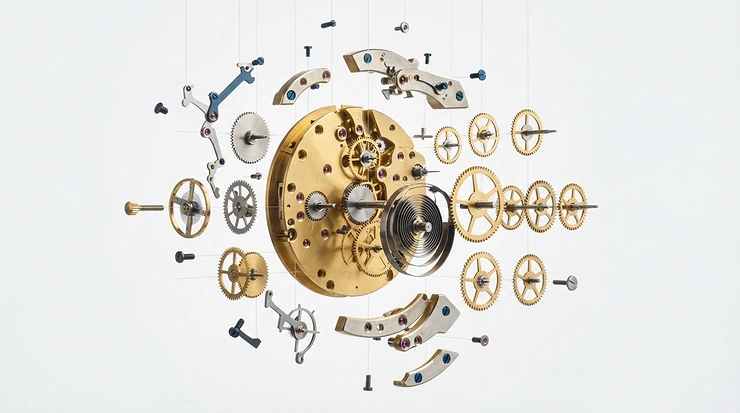
How Omega watches are made starts with the Co-Axial escapement, which the brand bought from British watchmaker George Daniels and put into commercial production in 1999, according to SJX. InsideHook’s factory visit describes movement components arriving from suppliers such as Nivarox and ETA, while the Biel/Bienne site handles assembly, the stage where movements meet dials, hands and cases. The Swiss watch federation adds that the silicon balance spring in these movements is non-magnetic and ages very slowly. The Swatch Group’s archive records that Omega introduced a movement resistant to fields above 15,000 gauss in 2013.
Two labels then do most of the real work in this decision. Under the rules summarized by the Swiss Federal Institute of Intellectual Property, at least 60 percent of the costs of manufacturing the complete watch must arise in Switzerland before it may be called Swiss Made. The Master Chronometer title is a separate and stricter layer.
The Federal Institute of Metrology describes that certification as carried out by an independent body on the finished watch. Omega adds that the movement must already hold COSC certification before eight further tests over ten days begin, with pass criteria of 0 to +5 or +7 seconds a day depending on the caliber. Those tests include exposure to 15,000 gauss, and Bob’s Watches reports that more than 2.5 million Omega watches have earned the title since 2015, which is how Omega watches are made and certified at scale.
- Set Rolex against Omega on the figures that actually differ.
In a Rolex vs Omega comparison, WatchesOff5th lists Rolex’s Superlative Chronometer standard at minus 2 to plus 2 seconds a day, against 0 to plus 5 for an Omega Master Chronometer. The same dealer gives about 1,000 gauss of magnetic resistance for most Rolex models and 15,000 gauss or more for Omega, which makes the magnetic gap the clearest engineering difference between the two.
Money and access point the other way, and the same comparison reports entry pricing near $6,000 for Rolex against $3,000 to $3,500 for Omega. It also reports waitlists of months to years for popular Rolex sport models, while Speedmaster and Seamaster models are often available the same day at boutiques. Resale averages about 14 percent above retail for in-production Rolex and about 32 percent below for Omega. The Watchology offers a more generous estimate, with most Omega models keeping 50 to 70 percent of retail and the Speedmaster Professional performing best, so the sources agree on direction even where the percentages differ.
In the Rolex vs Omega debate neither brand wins outright: Rolex suits buyers who value resale and exclusivity, and Omega suits buyers who want more movement technology and shorter waits.
- Decide whether the watch needs a winder at all.
A watch winder for Omega owners solves a narrow problem. Bob’s Watches calls winders usually unnecessary for one or two standard time-and-date automatics and worthwhile for calendar complications or collections of four or more in rotation, adding that a winder improves neither accuracy nor value. One Omega Forums member makes the simplest case, that a watch worn daily does not need one, and another reports that a private repair shop discourages winders altogether. Omega’s own FAQ explains the mechanism: automatic winding depends on wrist movement, so a watch left unworn for several days holds less than its full power reserve.
The Moonwatch changes the winder question completely, because Omega lists its Caliber 3861 as manually wound with a 50-hour reserve. Bob’s Watches states that a winder does nothing for a manual-wind watch. A 2026 winder table from The Watchology nevertheless gives the Speedmaster Professional a winding setting, a conflict that Omega’s own specification page settles in favor of the crown.
- Set the winder to the movement’s own needs, not a default.
Choosing a watch winder for Omega Seamaster models starts with the caliber. Omega lists the Diver 300M’s Caliber 8800 as self-winding in both directions with a 55-hour reserve, and The Watchology gives 650 to 800 turns per day, bidirectional, for the 8800 and 8806. Barrington Watch Winders calls 650 bidirectional the safest default for Omega Master Co-Axials, while Roroos lists several earlier Seamaster 300m calibers at 650 and the chronograph calibers 3301 and 3303 as clockwise.
A fixed setting shows the stakes in numbers. A hypothetical Diver 300M owner whose winder runs a non-adjustable 900 turns per day gives the rotor about 38 percent more turns than a 650 setting would. Over a year of daily running that comes to roughly 91,000 extra turns, or 328,500 against 237,250. An Omega Forums thread on exactly this pairing, a Wolf Cub with an 8800 watch, ended without agreement on reprogramming, and no member reported damage.
Direction matters just as much as the count itself does. Barrington notes that certain Omega models commonly use clockwise winding, which fits the clockwise entries for the chronograph calibers 3301 and 3303, while the Caliber 8800’s rotor winds both ways according to Omega.
Owners have found workarounds for a winder that cannot be adjusted. A Rolex Forums member suggested a timer plug to shorten the daily running time of a 900-turn winder. Bob’s Watches adds that cheap winders with unshielded motors can magnetize a movement, although Omega rates the Diver 300M’s movement above 15,000 gauss.
Barrington’s winders spread the set turns across 12 hours and then rest for 12, which explains why the daily count, rather than the hours of running, is the figure that matters.
Mistakes that cost the most, and how to fix them
Treating retail as resale is the most expensive error. WatchCharts lists value retention near minus 36 percent for the Diver 300M reference 210.30.42.20.01.001, and Luxury Bazaar says grey-market Seamaster prices typically run 15 to 30 percent below retail. That gap changes how much Omega watches cost to own, because the difference between purchase and later sale price belongs in the budget from the start.
Listing wording can hide a limit that the product photos never show. The Amazon listing for the Moonwatch carries the phrase Parallel Import in its title, a retail term for stock sold outside the brand’s regular channel in that market. Warranty paperwork and returns then depend on the seller, while Omega’s warranty page directs claims to a boutique or authorised service centre. Read the seller’s return window before ordering any watch at this price.
The word Co-Axial alone proves less than it seems. The Swiss watch federation reports that a METAS-certified Omega carries the words Master Chronometer on its dial, so a listing that stops at Co-Axial leaves the certification an open question for the seller.
Winder listings lean on vague phrases that sound technical but carry no rating. Amazon search results for generic winders repeat Anti-Magnetic Design without naming a figure. The Wolf Cub title promises that it accommodates all wrist sizes, which describes the cuff rather than case weight, and Wolf sells its Heritage line for bigger, heavier watches.
Water ratings cause quieter mistakes that only show up in daily wear. The Moonwatch is rated to 5 bar, or 50 meters, on Omega’s spec page, whereas the Diver 300M is rated to 30 bar. Omega’s care FAQ advises rinsing with tap water after salt water and having water resistance checked once a year.
Starting a winder on an unserviced watch adds risk. Bob’s Watches advises servicing a watch first when it gains about 40 seconds a day or has a gritty-sounding rotor. An Omega Forums member likewise recommends against winders unless the date of the last full service is known.
Skipping service is the last trap, and a winder does not postpone it. Bob’s Watches notes that lubricant age matters as much as running time, so a watch stopped for two years needs the same service as one that ran on a winder for two years.
Cost, Rolex, winders, and Omega’s reputation
What do Omega watches cost in 2027?
New steel Seamaster and Speedmaster models mostly fall between about $5,000 and $8,000 on Omega's US site and dealer pages, while entry pieces start near $3,000 and rarer references climb far higher. Pre-owned examples typically sell for less.
Is Rolex better than Omega?
Rolex leads on resale and exclusivity, while Omega leads on magnetic resistance, entry price and availability, according to dealer comparisons from WatchesOff5th and The Watchology. Which one wins depends on whether you value resale or movement technology more.
What are Omega watches known for?
The Speedmaster's 1965 NASA flight qualification, official Olympic timekeeping since 1932, the Seamaster's James Bond connection and the Co-Axial escapement are the usual answers. Master Chronometer certification with 15,000-gauss resistance is the newest claim.
Which winder settings suit an Omega Seamaster?
Sources cluster at 650 to 800 turns per day, bidirectional, for the Diver 300M's Caliber 8800, and Barrington calls 650 the safest default. Roroos lists the Seamaster chronograph calibers 3301 and 3303 as clockwise at 650.
How are Omega watches made?
Co-Axial movements are built from parts supplied by Swatch Group companies and assembled at Omega's Biel/Bienne site. Master Chronometer models then pass eight METAS-defined tests over ten days, and Swiss Made status requires at least 60 percent of manufacturing costs in Switzerland.
Four listings that match the steps above
Each listing below ties back to one of the decisions, and each carries a limitation that the sources make plain.
1. Omega Seamaster Diver 300M 210.30.42.20.01.001 — steel diver rated to 300 meters
Omega’s page for this reference lists a 42 mm steel case, Caliber 8800 with a 55-hour reserve and a domed sapphire crystal. It adds a ceramic bezel with a white enamel scale, a 30 bar rating and magnetic resistance above 15,000 gauss. That combination makes it the most versatile of the Omega men’s watches in this guide, since one case covers the desk, the pool and salt water. The Amazon listing under this model number shows the same 42 mm size and 300 m rating, and the watch ties to steps 1 and 2 on budget and case size.
At 49.90 mm lug-to-lug and 13.56 mm thick, it is the larger of the two watches here, which smaller wrists notice before anything else. WatchCharts and Chrono24 put the secondary market for this reference between roughly $4,300 and $5,400, and WatchCharts reports value retention near minus 36 percent, so a new buyer absorbs a real depreciation. Because it is automatic, the winder steps apply to it, which makes it the natural subject of any search for a watch winder for Omega Seamaster models.
2. Omega Speedmaster Professional Moonwatch 310.30.42.50.01.001 — manual-wind chronograph with NASA lineage
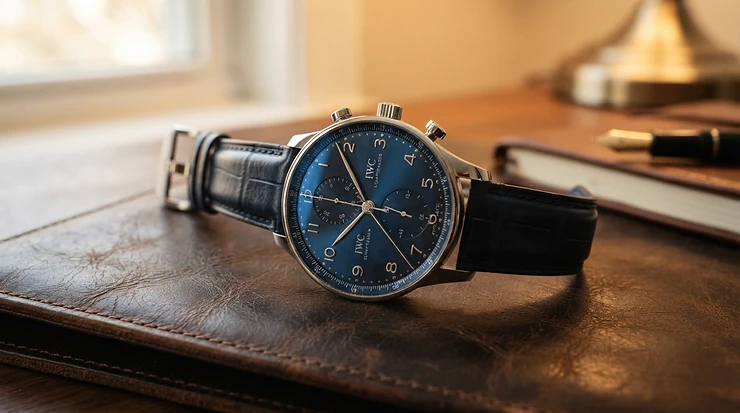
Omega lists Caliber 3861 as manually wound with a 50-hour reserve in a 42 mm case that measures 47.50 mm lug-to-lug and 13.54 mm thick. The crystal is Hesalite and the movement is rated above 15,000 gauss. Fratello’s long-term review put the watch on a timegrapher and recorded +4 seconds per day dial up and +2 crown down, inside the 0 to +5 range Omega states for its certification. This is the pick for step 5, because daily crown winding replaces the winder question entirely.
The 5 bar rating limits it to splashes and brief rain compared with the Diver’s 300 meters. Its Amazon listing carries the Parallel Import wording discussed above, which means the seller’s terms stand in for boutique protection. Expect between roughly $6,500 and $8,000 new, according to Omega’s US site and two dealer pages.
3. Wolf Cub Single Watch Winder with Glass Cover — one fixed setting, glass cover
T3 names the Cub its best overall single winder and describes a faux-leather build with a Saffiano finish, chrome hardware and a glass dust cover. Its listed cons are lack of control and no lock. T3’s Nordstrom listing supports a range between $350 and $450, and the winder holds one watch, which ties it to step 6. The Amazon listing adds a lock-in cuff and a universal adapter, with power from AC or batteries.
The single setting is the limitation for Omega owners. An Omega Forums member citing the Wolf manual describes a fixed program of 900 turns per day. That sits above the 650 to 800 window listed for the Caliber 8800, so the arithmetic in step 6 applies directly. Pairing it with a timer plug, as one Rolex Forums owner proposed, is the workaround on record.
4. Orbita Sparta Bold Black Single Watch Winder W05521 — swing winding with no turns setting
Orbita’s catalog describes its Rotorwind system as swinging the watch back and forth rather than rotating it. The maker states that the action is self-regulating, so there is no turns-per-day setting to match against Omega’s figures. Abt’s page lists a winding cycle of about ten minutes, lithium D-cell power, a 4.2 by 5.7 by 5.8 inch footprint and US manufacture, while Right Time describes the same oscillating system. Specialist dealers such as Right Time, Abt and Topper place the Sparta Bold between roughly $300 and $400.
Its swinging motion replaces the turns count altogether, so it cannot be set to the 650 figure that Seamaster sources cite, and it holds one watch only. That makes it the alternative for step 6 when avoiding a fixed overshoot matters more than matching a number.
A steel Seamaster Diver 300M suits the buyer who wants one automatic that handles water and desk work, and the Moonwatch suits the buyer who accepts daily crown winding in exchange for NASA lineage. Whichever of the Omega watches you choose, treat the winder as the last purchase, and make it only when a rotation of automatics or a calendar complication justifies the cost.
Recommended for You
- Cheap smartwatches: Buying Mistakes and the Fixes
- Hunting watch: Buying Mistakes, Fixes, and Tools
- How to clean a watch: Grime, Mistakes and Easy Fixes
Let your wrist measurement pick the case size, and let your watch drawer decide whether a winder earns a place.