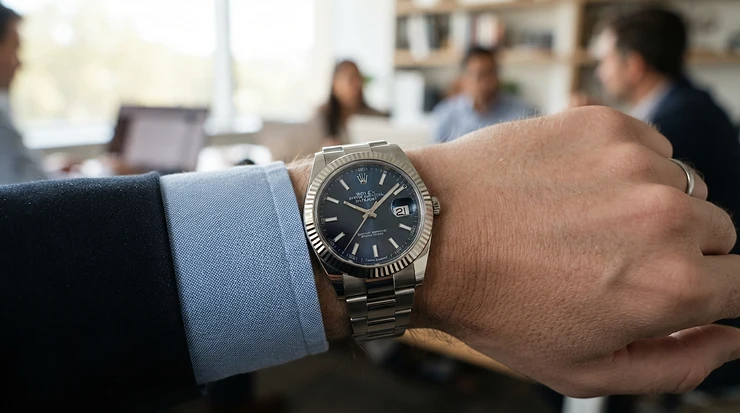
A Casio Duro MDV106-1A is rated at about 20 seconds of drift per month, while the maker of the Orient Kamasu RA-AA0004E19B allows anything from 15 seconds slow to 25 seconds fast per day. That gap sounds like a deal-breaker, yet the Orient keeps winning buyers, which says a lot about how people really choose budget dive watches in 2027: accuracy rarely decides it, and fit, upkeep and scratch risk usually do.
Reviewers’ measurements, the makers’ own spec pages and owner comments supply every figure below, so treat each number as secondhand and check lug-to-lug against your own wrist before ordering. Where those sources disagree, the text says so.
The short version. The Casio Duro MDV106-1A is the rugged quartz pick at around $50 to $90. The Orient Kamasu RA-AA0004E19B adds sapphire and a hand-winding mechanical movement, usually somewhere between $200 and $300. The Citizen Promaster Dive BN0151-09L is the solar one that carries an ISO 6425 certification claim. The method that sorts them out comes first.
A five-step method for choosing budget dive watches
Run any candidate through these checks in order. Most regretted purchases fail at the first step or the fourth.
Set the ceiling first, because each price tier buys something different
Under $100, quartz is the only route. The Duro lands anywhere from about $50 to $90 depending on whether DIVEIN or Straphabit is quoting it. Between roughly $160 and $220 sits the older Orient Mako II, which Two Broke Watch Snobs lists with the same 41.5mm case as the Kamasu but a mineral crystal. From $200 to $300 you reach sapphire, solar power or ISO certification, usually one or two of the three rather than all of them.
Seiko’s SKX007, 009 and 011, once the automatic answer to “what should I buy first,” have been discontinued or repriced out of this bracket, according to A Brother Abroad. That is why this guide leans on Casio, Orient and Citizen.
Decide what the depth rating has to prove
All three picks carry a 200m rating, but a depth number alone is a manufacturer claim. ISO 6425 is the standard that attaches tests to it. Aquastar’s explainer on ISO 6425 lists the core requirements: the watch must survive pressure at 125% of its rated depth, stay readable in total darkness at 25cm, offer a way to preset elapsed time, and pass thermal-shock, mechanical-shock, magnetism, salt-water and strap-strength tests. A maker that passes may print “Diver’s” with the depth on the dial. The same article adds that a missing marking does not prove a weak watch, because some makers skip it to save cost.
Among the three picks, only the Citizen Promaster Dive BN0151-09L is described as ISO-certified in the Citizen and retailer listings consulted. For the other two, 200m is the claim, and the sources never present either as certified.
Choose the movement by how much upkeep you will tolerate
Quartz asks for the least. Two Broke Watch Snobs cites roughly 20 seconds of drift per month and about three years per battery on the Duro, and about six months of running time per full charge with around 15 seconds of monthly drift on the Citizen’s Eco-Drive. A mechanical diver like the Kamasu trades that convenience for a 40-hour power reserve, hacking seconds and hand-winding, with Orient’s own spec page allowing +25 to -15 seconds per day. Expect to wear it often or wind it, and accept drift measured in seconds a day rather than a month.
Best budget dive watches for small wrists start with lug-to-lug, not diameter
Diameter gets the headlines, but lug-to-lug decides whether the lugs hang over the edge of your wrist. The numbers for this trio: the Duro measures 44.2mm across and 48.5mm lug-to-lug, the Citizen is about 48mm lug-to-lug (DIVEIN’s measurement), and the Kamasu is 41.5mm across with 46.7 to 47mm lug-to-lug depending on the reviewer.
Reports vary here. DIVEIN warns that the Duro’s 44mm may wear too large on smaller wrists, while Two Broke Watch Snobs found it “wears large but not clumsy” thanks to downward-curving lugs. A reviewer at Ben’s Watch Club wore the Kamasu, which weighed 154 grams, on a 6.75-inch wrist, and one Amazon owner with a 6-inch wrist called it on the bigger side but still a fit. Several reader comments under Two Broke’s review nonetheless flag the 47mm lug-to-lug as a worry for smaller wrists.
If you can stretch the budget, Wrist Enthusiast’s small-wrist guide lists a 37mm Citizen Promaster Dive at around $500, with a 43mm lug-to-lug and the same 200m ISO rating. That is above this guide’s ceiling, but it shows where truly small divers start.
Read budget dive watches reviews for three recurring complaints: crystal, lume and strap
The same three weak points appear in almost every review at this price.
Crystal: the Duro and the Citizen use mineral glass, and only the Kamasu has sapphire. DIVEIN says the Duro’s crystal marks up easily, and a commenter on a WatchCrunch Duro review reports a small kink already at the crystal’s edge. Lume: reviewers keep saying the Duro’s glow fades quickly, while Two Broke rates the Kamasu’s lume as strong. Strap: the Duro’s resin strap runs long and looks its price, according to HiConsumption, and Two Broke calls the Citizen’s stock strap stiff.
Where budget divers go wrong, and how to recover
Choosing by diameter alone is the most common error. A 44mm case with short, curved lugs can sit better than a 41mm case with long, straight ones, so measure lug-to-lug in millimeters and compare it with the width of your wrist bone.
Paying for sapphire you will not notice is the second. Sapphire resists scratches, but the Kamasu’s aluminum bezel insert is described by Two Broke as scratch-prone, so a sapphire face does not make the whole watch scuff-proof. The recovery is simple: decide whether you scratch crystals or bezels first, then buy to that.
Forgetting the strap budget comes third. Dappered noted an Island Watch three-link bracelet with solid end links at around $60 for the Duro, and HiConsumption says a $20 strap changes the watch’s character. One poster in the r/DuroGang community adds that Casio resin straps tend to crumble with age, which is a single owner’s remark rather than a documented defect.
Treating a 200m rating as proof of dive certification catches people out too. As the ISO explainer above makes clear, the number and the standard are different things, so look for the “Diver’s” marking if certification matters to you.
Best budget dive watches 2027: three picks that map to those steps
These are the three watches the method keeps returning to. Check the current price on Amazon.com before deciding, since sellers move quickly.
Around $50 to $90 buys a stainless-steel 44.2mm case, a screw-down crown and caseback, and a 120-click unidirectional bezel. Two Broke Watch Snobs describes the finishing as more careful than the price suggests, with faceted hands and applied indices. The movement is Casio’s module 2784, with quick-set date and hacking seconds, rated at roughly 20 seconds of drift per month and about three years on its SR626SW battery.
The owner complaints are consistent. Lume is the most frequent one, with Two Broke, BladeReviews and a handful of retailer reviewers all saying it fades sooner than they would like. DIVEIN adds that the mineral crystal marks up easily and that the bezel is fairly hard to grip, though BladeReviews calls the same bezel solid and grippy if your hands are dry, so reviewers split on that point. Two Broke also notes that seconds-hand alignment varies from example to example.
Size is the other consideration: 22mm lugs make strap swaps easy, but the 48.5mm lug-to-lug is the longest of the three. Reviewers put the SR626SW cell at about three years, and that battery swap is the only maintenance you sign up for.
Caught your eye? Open the current listing for a closer look.
Casio Duro MDV106-1ASee current price, sizes and reviews on Amazon.
The crown is the first complaint, so start there. Two Broke Watch Snobs’ Kamasu review calls it too small and says the crown guards make screwing it down difficult, and one reader comment reports a wobbly crown when pulled out to set the time. Amazon owner reviews mention the small crown and the cheaper bracelet as familiar shortcomings, though one reviewer said neither bothered them.
Everything else is the reason people buy it. The case is 41.5mm across and 13mm thick with 22mm lugs, a flat sapphire crystal, a 200m rating, and Orient’s in-house F6922 movement with hacking and hand-winding. Two Broke says it is usually available for between $200 and $300, though its separate roundup lists a range up to $375, so prices clearly vary by dial and seller. The reviewer rates the lume as matching any Seiko diver and describes a pressed-metal clasp that is still secure. A separate review roundup flags the aluminum bezel insert as scratch-prone.
One owner on Orient USA’s site claims the earlier “V1” Kamasu has better wrist presence and lume than the later “V2,” so dial colors and revisions differ, and the reference number in the listing is what you should match to the one you want. The RA-AA0004E19B is the green-dial version. The 40-hour power reserve is the number to remember if you rotate watches.
Orient Kamasu RA-AA0004E19BSee current price, sizes and reviews on Amazon.
Certification is what separates this one. Citizen’s own page lists it as a one-way rotating-bezel diver with WR200 and the E168 Eco-Drive movement, and retailer listings describe it as ISO-certified. Two Broke Watch Snobs reports that a full charge runs about six months with roughly 15 seconds of monthly drift, praises the legibility, and says it wears smaller than the numbers imply.
Sources disagree on size: Citizen lists the case at 44mm, Two Broke gives 43mm, and some retailer listings say 42mm, so use DIVEIN’s 11.5mm thickness and 48mm lug-to-lug as the working figures and trust the product label when it arrives. DIVEIN found the short lug-to-lug and thin case comfortable.
The faults are small but real. Two Broke calls the stock strap stiff and says the bezel can feel slippery when wet, and the crystal is mineral. DIVEIN’s tester described the watch as a solar diver for around $200 when discounted at Amazon, while Two Broke places it between $250 and $300, so expect a $200 to $300 span. With 20mm lugs, standard aftermarket straps fit without trouble.
Spotted the one for you? Take a look at the current Amazon.com listing.
Citizen Promaster Dive BN0151-09LSee current price, sizes and reviews on Amazon.
How the three trade off: size, upkeep and scratch risk
Watch
Case / lug-to-lug
Movement
Crystal
ISO 6425 claim
Typical price range
Casio Duro MDV106-1A
44.2mm / 48.5mm
Quartz, battery
Mineral
None in sources
Around $50 to $90
Orient Kamasu RA-AA0004E19B
41.5mm / 46.7-47mm
Automatic, hand-winding
Sapphire
None in sources
Around $200 to $300
Citizen Promaster Dive BN0151-09L
44mm per Citizen / 48mm
Eco-Drive solar
Mineral
Yes, per listings
Around $200 to $300
The table shows a trade rather than a winner. The Casio Duro MDV106-1A costs the least but has the longest lug-to-lug, while the Orient Kamasu RA-AA0004E19B is the shortest and the only one with sapphire. The Citizen Promaster Dive BN0151-09L is the only certified option and the only one that never needs winding or a battery. Two Broke’s budget dive watch roundup under $500 lists all three with the same measurements used here.
Best budget dive watches for men: matching each pick to wrist and habit
Budget dive watches for men tend to be cut around 44mm, so most of this decision is about your wrist and what you do with the watch.
Say a man with a 7-inch wrist or larger wants a beater for yard work, travel and the pool: he is well served by the Casio Duro MDV106-1A. Scratches are cheap to live with at that price, and replacing a strap costs less than a lunch. A hypothetical commuter who wears one watch five days a week and likes the idea of a mechanical movement is better served by the Orient Kamasu RA-AA0004E19B, particularly if their wrist falls in the 6- to 6.75-inch range that owners say it fits.
The Citizen Promaster Dive BN0151-09L suits the person who wants certification on the dial, a watch that sits in a drawer for weeks and still runs, and no maintenance schedule. It is also the only choice of the three for anyone who might swim hard with it.
Water rating, battery life and bracelet swaps: what buyers ask
Is a 200m rating enough for swimming and snorkeling?
A 200m rating is a manufacturer figure, and all three picks here carry it. For swimming and snorkeling that margin is generous, but make sure the crown is screwed down fully each time. ISO 6425 adds pressure, shock and salt-water tests, which matters more for actual scuba.
What size budget dive watch fits a small wrist?
Compare lug-to-lug distance, not diameter. Reviewers describe 46.7 to 47mm as workable on 6 to 6.75 inch wrists, while 48mm-plus designs read larger. Case thickness matters too: 11.5mm is slimmer than 13mm, and a short, curved-lug case sits flatter than a straight one.
Is quartz or automatic better for a budget dive watch?
Quartz wins on accuracy and upkeep: reviewers cite drift around 15 to 20 seconds a month, and a battery or solar cell does the rest. Automatic wins on craft and feel, but expect daily drift measured in seconds and a wind or wear routine.
Does a budget dive watch need ISO 6425 certification?
Only if you want the full test regime behind the depth claim. The standard covers overpressure, darkness legibility, shock, magnetism and strap strength, and a maker may print Diver's on the dial. Plenty of capable watches skip the marking, so treat it as a plus, not a requirement.
How often does a budget dive watch need a battery or service?
A Casio-style quartz cell is rated around three years, while solar models such as Eco-Drive run roughly six months on a full charge and recharge from light. Automatics run about 40 hours when fully wound and need regular wear or winding.
Choosing your budget dive watches in one decision rule
Start with lug-to-lug, then let your tolerance for upkeep pick the movement. If you want the lowest cost and can live with a long case, take the Casio Duro MDV106-1A. If you want sapphire and a mechanical movement in a case that suits wrists of about 6 to 7 inches, take the Orient Kamasu RA-AA0004E19B. If you want a certified diver that runs itself, take the Citizen Promaster Dive BN0151-09L. Whichever route you pick, budget a little for a better strap, because the stock options draw the most complaints.
Found a favorite? Take a closer look at its current listing on Amazon.com and compare lug-to-lug against your wrist before you order.
WatchWiseHub is an independent buying-guide site for watches, smartwatches, straps and accessories. Our editorial team compares gear using manufacturer specifications, independent tests from specialist watch media, owner reports and retailer listings. We do not claim to have tested the watches ourselves; see How We Choose Gear for our method.