The Apple Watch Series 12 is a strong default among smartwatches for women if you carry an iPhone, yet the better buy is often a smaller, cheaper or longer-lasting watch matched to your wrist and your week. A “women’s” model rarely differs from the unisex version in anything except case size, strap choice and cycle-tracking features, so the useful question is which watch fits your phone, your wrist and your charging habits. For 2027, five real watches cover those situations: one for iPhone, one for Android, one petite and long-lasting, one under $200, and one built for training.
Reviews from Tom’s Guide, Wareable, T3, Macworld, Android Central and DC Rainmaker, plus Apple’s own support pages, carry the weight of this guide, and because no watch was strapped on for it, every remark about fit or accuracy belongs to a named tester. Prices appear as ranges, and the current price on Amazon.com may differ.
Phone, wrist, battery and water: four filters that sort these watches
Start with the phone, because it removes options fastest. The Apple Watch Series 12 needs an iPhone running iOS 27 or later, according to Tom’s Guide. The Samsung Galaxy Watch9 is an Android watch, and Wareable notes that its ECG and blood pressure features work only with Samsung phones. The Garmin Venu 4 and the Amazfit Active 3 Premium pair with both platforms, although Android Central says Garmin’s iPhone support is not as deep as Apple’s own.
Wrist comes second, and case numbers mislead. The 42mm Apple Watch measures 42 x 37 x 9.7 mm, and Tom’s Guide lists the 40mm Samsung at 31.5 grams. Yet a tester in Wareable’s women’s roundup found the 40mm Galaxy Watch8, whose dimensions carry over to the Watch9, felt noticeably larger than a 42mm Apple Watch. A smaller number on the box does not guarantee a smaller feel.
Battery sorts the field into daily chargers and week-long wearers, and water resistance decides whether the watch can come to the pool. Both get their own sections below.
Why “smartwatches men women” searches show the same watches
Shoppers who type “smartwatches men women” are usually asking whether a separate women’s version exists. Tom’s Guide’s women’s roundup treats the label as a matter of smaller sizing plus cycle and pregnancy tracking, not separate designs, and it calls the Garmin Lily the most compact pick. Amazfit told Tom’s Guide that its Active 3 Premium is aimed mostly at women because of its small size. That framing points to a smaller case and cycle features as the real differences.
Watch
Phone
Case sizes
Battery seen in reviews
Water rating
Price range
Apple Watch Series 12
iPhone (iOS 27 or later)
42mm, 46mm
Rated 24 hours; Macworld averaged about 45 hours, T3 about a day and a half
50 meters
Around $390 to $400 for the 42mm GPS model
Samsung Galaxy Watch9
Android, best with Samsung phones
40mm, 44mm
Rated 30 hours (40mm); Tom’s Guide averaged about 32
50 meters
Around $380 to $430 for the 40mm
Garmin Lily 2 Active
Garmin Connect app
One small case (34mm or 38mm, sources differ)
Rated 9 days; T3 saw 9
5 ATM
Around $300 to $306
Amazfit Active 3 Premium
iPhone and Android
1.32-inch screen
Rated 12 days; Tom’s Guide saw about 8 under heavy use
5 ATM
Around $170
Garmin Venu 4
iPhone and Android
41mm, 45mm
Rated 10 days (41mm); reviewers saw 8 to 9 on the 45mm
5 ATM
Around $545 to $550
Battery splits the table in two: the Apple and Samsung watches live on a nightly charger, while the Garmin and Amazfit watches stretch toward a week. Price tells a separate story, since the Garmin Venu 4 costs more than three times the Amazfit Active 3 Premium and carries the same 5 ATM water rating (my arithmetic).
The best smartwatches for women, matched to five kinds of buyer
Each pick answers one situation. They are not a ranking, and the order follows the phone-first logic above.
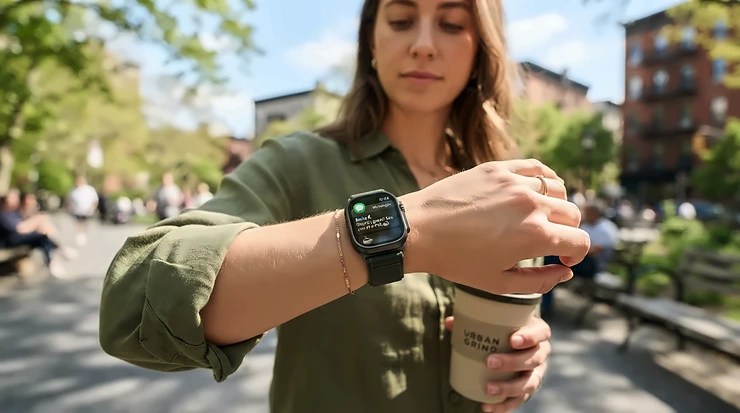
An iPhone in your pocket makes this the shortest shopping trip, because the Apple Watch Series 12 is the only watch here with full iPhone integration. It comes in 42mm and 46mm, and the 42mm is the size to try first on a small wrist. Tom’s Guide’s reviewer wore it and called it lightweight and comfortable. Expect between $390 and $400 for the 42mm GPS model, with the 46mm costing about $50 more.
Women’s health tools come next. Both the Tom’s Guide and Wareable women’s roundups credit the Apple Watch line with cycle tracking and pregnancy tracking, plus a Natural Cycles tie-in; they tested the Series 11, which shares the 42mm and 46mm sizes, so confirm each feature on the Series 12 listing. Treat cycle estimates as logging aids, not diagnoses.
Reviewers disagree about how polished this generation feels. Macworld’s tester saw the watch restart on its own three times in one day, measured battery averaging about 45.5 hours across two tests against 47.5 for the Series 11, and felt a sharp edge where the screen meets the aluminum bezel. A later watchOS update is reported to have fixed the restarts, though the reviewer did not confirm it. T3 found endurance lagging Garmin and Huawei at roughly a day and a half, and noticed WhatsApp alerts still buzzing with Do Not Disturb on. Tom’s Guide, meanwhile, calls it Apple’s best watch yet. Macworld’s own verdict was a lukewarm “Not bad. But I expected better.”
T3’s 55-minute outdoor run cost about six percentage points of charge.
Apple Watch Series 12See current price, sizes and reviews on Amazon.
Samsung raised prices by $30 per size this year, so the 40mm Samsung Galaxy Watch9 lands between $380 and $430 depending on whether you add LTE. Tom’s Guide says the design, display, dimensions, battery rating and water resistance are unchanged from the Watch8, which makes last year’s model worth a price check. Wareable’s reviewer, who tested the 44mm, called the design comfortable for anything but bigger wrists.
For cycle tracking, Tom’s Guide’s roundup, which tested the previous model, says Samsung Health uses Natural Cycles’ algorithm without an extra subscription. Wareable’s roundup adds next-period predictions and symptom logging on the watch itself.
Pros:
Cycle tracking built on Natural Cycles’ algorithm with no added subscription, per Tom’s Guide
A softer strap than last year’s and 31.5 grams in the 40mm, per Tom’s Guide
GPS that stayed within about 20 meters of a Garmin Fenix 8 Pro on steady runs, per Wareable’s Watch9 review
Cons:
Battery averaged about 32 hours at Tom’s Guide and 24 to 30 at Wareable, with a full recharge taking around 90 minutes
Wareable lost about eight minutes of heart-rate data on one steady run and most of an interval session, across more than 10 tests on its unit
ECG and blood pressure need a Samsung phone
Wareable still preferred Google’s Pixel Watch line as the better mid-range pick, mainly because of battery life.
Samsung Galaxy Watch9See current price, sizes and reviews on Amazon.
The screen is the part to understand before buying the Garmin Lily 2 Active. T3’s reviewer describes a monochrome touchscreen hidden behind a patterned lens that shows nothing until you turn your wrist or press a button, with two physical buttons and a small touch strip doing the navigating. That is the price of a petite case, which T3 puts at 34mm while some retail listings say 38mm. The sources disagree, so read the dimensions on the Amazon.com listing.
For between $300 and $306 at the retailers T3 checked, you get built-in GPS, a nine-day battery claim that T3’s reviewer says held up, a Pool Swim profile and a retail listing that calls it 5 ATM swim rated. DC Rainmaker found GPS on a trail run close to a Garmin Fenix 8 and an Apple Watch Ultra 2, although the optical heart-rate sensor made one or two small mistakes on steep climbs and the watch offers no way to tweak settings mid-run. T3 also describes cycle and symptom logging, with training and nutrition suggestions tied to the phase.
Missing pieces are music storage and a color screen. The optical heart-rate sensor is Garmin’s older V4 generation, so DC Rainmaker notes there is no ECG or skin-temperature reading.
Garmin Lily 2 ActiveSee current price, sizes and reviews on Amazon.
Around $170 is what this watch costs at Amazon, Walmart, Target and Best Buy, according to Tom’s Guide, which is less than half the Apple Watch’s starting price. It weighs 54.6 grams with a 1.32-inch screen, carries a 5 ATM rating, and Tom’s Guide describes it as the first Amazfit designed with women in mind. Cycle tracking uses the skin-temperature sensor, and you can enter dates by hand.
Pros:
Pool lap tracking that Wareable found comparable to leading trackers
About eight days in Tom’s Guide’s heavy-use test, against 12 claimed, with a recharge under two hours
Offline maps and cycle tracking at a price well below the big brands
Cons:
Few feminine colors or straps: Tom’s Guide’s tester said the navy model looks “manly” and asked for rose pink, champagne or lilac
Single-band GPS that occasionally lacked precision, and heart rate that struggled with sharp spikes, per Wareable
Wareable measures the case at 45mm, so very small wrists may still prefer the Lily
Tom’s Guide also notes there is no automatic workout detection, so you start each session yourself, and Wareable says it works with both iOS and Android.
See current sizes and colors on Amazon.com.
Amazfit Active 3 PremiumSee current price, sizes and reviews on Amazon.
5. Garmin Venu 4 — premium GPS and over a week of battery
Training for a 10K or swimming laps a few times a week is where the Garmin Venu 4 justifies a price around $545 to $550. Tom’s Guide’s roundup credits it with cycle and pregnancy tracking, a bright AMOLED screen, a flashlight and a 10-day battery rating that Android Central ties to the 41mm. It also points out the watch is nearly identical to the Forerunner 570 with fewer buttons and adds no new smartwatch features over the Venu 3. The 41mm weighs 46 grams with its strap, according to Android Central.
T3’s tester found fast satellite lock and reliable route tracking under tree cover with the dual-frequency GPS, and reached about nine days of battery with the always-on display off, but only four to five days with it on. Android Central averaged around eight days on the 45mm and found the stainless steel case somewhat uncomfortable over time, especially asleep; no reviewer tested the lighter 41mm. Both fault the proprietary charger, which Android Central says can take up to two hours for a full charge. T3 adds that two buttons feel limiting mid-workout and that there is no app store or LTE.
Android Central puts the premium over the previous Venu 3 at $100.
Garmin Venu 4See current price, sizes and reviews on Amazon.
Waterproof smartwatches for women who swim: what 50 meters and 5 ATM allow
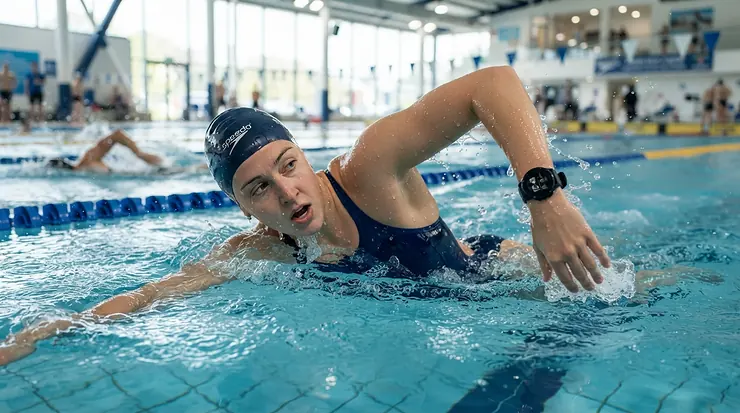
Water resistant is not waterproof, and Apple’s support page says so plainly. It rates the Series 2 and later at 50 meters under ISO 22810:2010, which covers shallow-water activities such as swimming in a pool or the ocean. Diving and water skiing are off-limits for any model other than the Ultra. The same page warns that soap or soapy water, including in a shower or bath, can affect water resistance, that steam rooms should be avoided, that protection can fade over time, and that stainless steel and leather bands should stay dry. After a swim, rinse the watch under lightly running warm fresh water and dry it.
The other four watches use ratings you can compare. Tom’s Guide lists 50 meters for the Samsung Galaxy Watch9, and spec pages treat 5 ATM as the same 50-meter idea for the Garmin Venu 4, the Amazfit Active 3 Premium and the Garmin Lily 2 Active. T3 says the Venu 4’s rating covers swimming and showers. Android Central adds a small swimmer’s perk: the watch can read its face aloud.
Tracking quality matters as much as the rating. Wareable tested the Amazfit in a pool and found lap tracking comparable to leading trackers. DC Rainmaker lists Pool Swim and new swim metrics for the Lily 2 Active but does not confirm an open-water mode, a question one commenter raised, so check before relying on it outdoors.
Smartwatches for women with GPS: what a long run does to each battery
All five carry built-in GPS, so none needs your phone for a route; the differences are precision and drain. Apple rates the Series 12 for 10 hours of outdoor workout, per Macworld, and T3’s 55-minute run used about six points. Wareable found the Galaxy Watch9 within roughly 20 meters of a Garmin Fenix 8 Pro on steady-state runs. DC Rainmaker lists nine hours of GPS battery for the Lily 2 Active and found its trail-run track near identical to far pricier Garmins.
The Amazfit is the one to watch for drift: Wareable measured about 5 to 6 percent battery per hour of running in its best accuracy mode and called runs generally well tracked, with occasional lapses in distance and pace. The Venu 4’s dual-frequency GPS is the one a reviewer specifically praised under tree cover, which matters if your route runs through woods or between tall buildings.
Smartwatches for women under 2000: reading that number in dollars
The search “smartwatches for women under 2000” usually comes from one of two shoppers. If the figure is Indian rupees, exchange-rate sites put 2,000 rupees at about $21, which buys a basic band rather than any watch in this guide. If it is a slip for $200, only one pick qualifies: the Amazfit Active 3 Premium, at around $170.
Tom’s Guide’s women’s roundup also lists a screenless Fitbit Air at around $100, with cycle tracking but no onboard GPS or altimeter and a phone required for route tracking. That suits sleep and step tracking, not run mapping.
What smartwatches for women reviews agree on, and where they split
Battery is the common complaint. T3 and Macworld criticize the Apple Watch Series 12, Tom’s Guide and Wareable report the Samsung Galaxy Watch9 lasting roughly 24 to 32 hours, and Android Central notes the Garmin Venu 4 falls short of its predecessor’s endurance. That is a consensus across several independent testers, not a single owner’s complaint.
Verdicts split on polish and value. Tom’s Guide calls the Apple Watch Series 12 Apple’s best yet while Macworld reports resets and inconsistent charging. Tom’s Guide sees little reason for Watch8 owners to upgrade to the Samsung Galaxy Watch9, and Wareable would rather steer buyers to Google’s Pixel Watch. The detailed DC Rainmaker Lily 2 Active review shows how a small watch can match pricier Garmins on GPS yet still lack basics such as music.
Style is the quietest gap. Tom’s Guide marks the Amazfit down for limited feminine options, while Wareable’s tester called the 37mm Withings ScanWatch Light the most fashionable of its picks, though deeper insights there sit behind the paid Withings+ app.
Four ways a women’s smartwatch ends up back in the box
Buying for the wrong phone comes first. The Apple watch needs iOS 27 or later, Samsung’s ECG and blood pressure need a Samsung phone, and Garmin’s iPhone support is shallower than Apple’s.
Reading case size as feel is the second. Wareable’s tester found a 40mm Samsung bigger than a 42mm Apple, and the Garmin Lily 2 Active is listed at both 34mm and 38mm, so compare the exact model number and measured dimensions on the listing before you order.
Trusting the rated battery is third. Macworld advises taking Apple’s charging claims with a pinch of salt, and Tom’s Guide got about eight days from an Amazfit rated for twelve. Subtract for GPS and an always-on screen.
Treating water resistance as permission for hot showers and saunas is the fourth. Apple’s page lists soap, steam rooms and age as reasons protection can fade.
Sizing, swimming, GPS and cost: straight answers
Which smartwatch is best for women with small wrists?
Try the smallest cases first: Apple's 42mm, Samsung's 40mm and Garmin's Lily line. Wareable's tester found Samsung's 40mm felt noticeably larger than Apple's 42mm, so compare actual dimensions and keep the return window open.
Are waterproof smartwatches for women really safe for swimming?
Pool swimming is covered by 50-meter or 5 ATM ratings, but these watches are water resistant, not waterproof. Apple's support page advises avoiding soap, steam rooms and diving, rinsing after a swim, and expecting the protection to fade over time.
Do women's smartwatches track periods and ovulation?
Several do. Tom's Guide credits Apple, Samsung, Garmin and Amazfit watches with cycle tracking, and Wareable notes Withings charges for deeper insights. Treat predictions as logging aids, and confirm the feature on each model's page, since reviewers often tested earlier generations.
Which smartwatches for women have built-in GPS?
All five watches in this guide record routes without a phone. Reviews differ on precision: T3 found Garmin's Venu 4 reliable under tree cover, while Wareable saw occasional drift on Amazfit's single-band GPS. Battery drain during a run also varies widely.
How much should I spend on a women's smartwatch?
Prices here run from around $170 to about $550. Amazfit sits near $170, Samsung between $380 and $430, Apple around $390 to $400 for the 42mm, and Garmin from around $300 to $550. Pay more only for features you will use daily.
Choose the phone first, then the wrist, then the charger
An iPhone points to the Apple Watch Series 12, an Android phone, ideally a Samsung, to the Samsung Galaxy Watch9, and a very small wrist or a dislike of nightly charging to the Garmin Lily 2 Active. The Amazfit Active 3 Premium covers GPS, maps and pool laps under $200, and the Garmin Venu 4 is the splurge for runners who want dual-frequency GPS and a week of battery.
Whichever of these smartwatches for women you settle on, check three things the reviewers could actually measure: whether it works with your phone, how it sits on your wrist, and how often you will charge it. Style options, cycle tracking and sensor claims are worth less than those three.
WatchWiseHub is an independent buying-guide site for watches, smartwatches, straps and accessories. Our editorial team compares gear using manufacturer specifications, independent tests from specialist watch media, owner reports and retailer listings. We do not claim to have tested the watches ourselves; see How We Choose Gear for our method.