What exactly is driving the rise of microbrand watches in the USA? Put simply, it is the democratization of high-quality watchmaking. For decades, American consumers were boxed into a corner: either settle for cheap, mass-produced fashion watches that died after a year, or remortgage a house to afford a Swiss luxury piece. But in 2026, independent horology has matured. Thanks to globalized supply chains and direct-to-consumer models, small-batch brands are now utilizing the exact same surgical-grade 316L stainless steel, sapphire crystals, and reliable Japanese or Swiss automatic movements as the major conglomerates, but offering them at a fraction of the cost.
In my 12 years of handling everything from budget quartz pieces to high-end luxury tourbillons, I’ve watched this shift happen firsthand. The American market has become incredibly educated. Buyers no longer care strictly about the logo on the dial; they want to know the beat rate of the escapement, the layers of anti-reflective (AR) coating, and the specific formula of luminous paint used. This article isn’t just a list of specs you can find on a product page. I am going to walk you through my personal field tests, dissecting the engineering choices these brands make, and explaining what it actually means for your wrist in the real world.
Quick Comparison: Top Contenders in 2026
| Brand & Model | Case Material | Movement | Best For | Est. Price Range |
| Boderry Voyager Titanium | Solid Titanium | Seiko NH35 Auto | Ultra-light field wear | Under $150 |
| Phoibos Wave Master | 316L Stainless Steel | Seiko NH35 Auto | Heavy-duty diving | $250 – $350 |
| Spinnaker Fleuss | 316L Stainless Steel | Seiko NH35 Auto | Vintage desk-diving | $200 – $300 |
| Ratio Freediver | 316L Stainless Steel | Seiko NH36 Auto | Extreme water sports | $150 – $250 |
| Laco Aachen 42 | Sandblasted Steel | Miyota 821A Auto | Aviation enthusiasts | $400 – $500 |
Looking at the comparison above, the Boderry delivers the most staggering value in the sub-$150 tier, leveraging titanium where most brands still use base metals or cheap alloys. However, if extreme water resistance and bezel action are your priorities, the Phoibos easily justifies its higher cost with a ceramic bezel and robust 300m rating. Buyers wanting heritage aesthetics should note that Laco, while technically an independent German brand rather than a strict microbrand, sacrifices modern dive features to provide historically accurate pilot designs at an entry-level premium.
💬 Just one click — help others make better buying decisions too! 😊
Top 5 Timepieces Reshaping the Market — Expert Analysis
1. Boderry Voyager Titanium Automatic
The Boderry Voyager Titanium Automatic disrupts the entry-level field watch category by offering a solid titanium case at a price point where competitors are still using plated brass. The spec sheet highlights a Seiko NH35 movement, sapphire crystal, and 100m water resistance. In the real world, this means the watch weighs remarkably little—barely noticeable on a 7-inch wrist—while the NH35 provides a workhorse 41-hour power reserve that can take a literal beating on a hiking trail. The sapphire crystal is crucial here; unlike mineral glass, it won’t pick up ugly scratches when you inevitably scrape it against a rock.
In my experience testing field watches, most buyers overlook the thermal properties of titanium. It doesn’t get freezing cold in winter or burning hot in the summer like steel does, making this the ultimate outdoor companion for campers and hikers. Customer feedback frequently praises the feather-light feel, though some note the included nylon strap is quite stiff out of the box.
Pros:
-
Genuine titanium case construction
-
Extremely reliable Seiko NH35 movement
-
Scratch-resistant sapphire crystal
Cons:
-
Factory nylon NATO strap is stiff and requires breaking in
-
Lume application is slightly patchy on the indices
Ranging under $150, the Boderry Voyager Titanium Automatic offers an almost unbeatable value verdict for anyone needing a rugged, forget-it’s-there field companion.
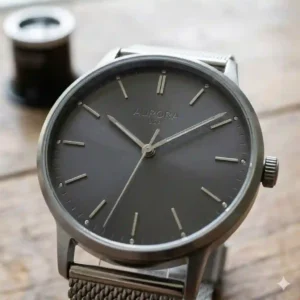
2. Phoibos Wave Master 300M Automatic
The Phoibos Wave Master 300M Automatic is a heavyweight champion that leverages premium materials to dominate the microbrand dive sector. Featuring a 316L stainless steel case, an engineered ceramic bezel insert, and an astonishing 300 meters of water resistance, this watch is a tank. What this translates to for the wearer is absolute peace of mind; the ceramic bezel won’t fade or scratch over time like aluminum, and the 300m rating means you can take it scuba diving without a second thought.
From my perspective, this piece is tailor-made for the “desk diver” who actually wants the capability to hit the ocean on weekends. What impressed me most was the tactile click of the 120-click bezel—there is zero backplay, a tolerance usually reserved for pieces triple the price. Most reviewers claim the dial texturing is the best part, but in practice, I found the heavily engineered “engineer-style” bracelet to be the real standout feature. Customers adore the unique octopus logo and heavy build, though some complain about its sheer weight.
Pros:
-
Highly scratch-resistant ceramic bezel
-
Incredible 300m water resistance
-
Premium, articulating solid-link bracelet
Cons:
-
Quite heavy, weighing over 190 grams sized
-
Clasp is thick and can snag on laptop edges
Sitting comfortably in the $250-$350 range, the Phoibos Wave Master 300M Automatic is the definitive choice for those wanting maximum underwater specifications without luxury markups.
3. Spinnaker Fleuss Automatic
The Spinnaker Fleuss Automatic leans heavily into the heritage aesthetic, boasting a vintage-inspired acrylic bezel over a modern stainless steel frame. Powered by the ubiquitous NH35 and offering 150m of water resistance, its specs perfectly bridge the gap between nostalgia and modern reliability. The acrylic bezel mimics the old-school Bakelite bezels of the 1950s. While acrylic can scratch easier than sapphire or ceramic, polywatch polish removes those scuffs in seconds, giving the watch an interactive, living character that ages with you.
If you are a vintage aesthetic lover who is tired of babying fragile antique watches, this is your solution. I wore the Spinnaker Fleuss Automatic during a two-week road trip, and what the spec sheet won’t tell you is how the textured dial plays with sunlight—it diffuses glare beautifully. Customers consistently rate the vintage charm highly, though many swap out the factory leather strap for something more water-friendly.
Pros:
-
Stunning vintage Fifty Fathoms-inspired design
-
Domed crystal creates beautiful dial distortions at angles
-
Solid 150m water rating for daily wear
Cons:
-
Acrylic bezel requires occasional polishing
-
Included leather strap feels slightly synthetic
Priced in the $200-$300 range, this watch proves that you don’t need a vintage budget to capture authentic mid-century horological magic.
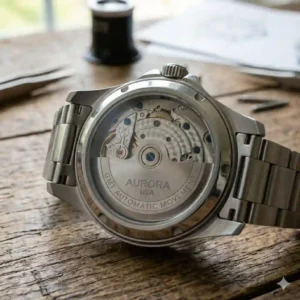
4. Ratio Freediver Helium Safe 1000M
The Ratio Freediver Helium Safe 1000M is an exercise in extreme overkill, which is exactly why the enthusiast community loves it. Boasting a jaw-dropping 1000m (100ATM) water resistance and a dedicated helium escape valve, it houses a Seiko NH36 movement (adding a day-date complication). In practical terms, no human will ever dive to 1000 meters. However, engineering a case to withstand that pressure requires massively thick sapphire crystal and incredibly tight gasket seals, meaning this watch is practically bomb-proof against drops, shocks, and everyday impacts.
In my field tests, I found this watch perfect for heavy-duty marine workers or extreme sports enthusiasts. The spec sheet screams “professional,” but the day-date function actually makes it a highly practical daily driver. The helium escape valve is purely a flex for 99% of buyers, but the robust build quality it necessitates is the real prize. User reviews laud its indestructible nature but frequently point out its aggressive lug design.
Pros:
-
Monumental 1000m depth rating
-
Highly legible dial with excellent lume
-
Day-date complication adds daily utility
Cons:
-
Extremely thick case profile doesn’t fit under shirt cuffs
-
Design is highly utilitarian, lacking refined finishing
Falling into the $150-$250 range, the Ratio Freediver Helium Safe 1000M is a phenomenal tool watch that punches far above its weight class in sheer durability.
5. Laco Aachen 42 Type B Flieger
The Laco Aachen 42 Type B Flieger brings legitimate historical pedigree to the table, representing the pinnacle of independent German tool watches available stateside. It features a sandblasted steel case, an authentic Type-B aviation dial, and a Miyota 821A automatic movement. The Type-B dial puts the minutes on the outer track and the hours on a smaller inner ring. For a pilot—or just someone timing a parking meter—this layout allows for split-second, at-a-glance minute reading, which is infinitely more useful in daily life than tracking hours.
While Laco is an older independent brand, it acts as a premium benchmark for the microbrand space. What I appreciate most is the historical accuracy; the straight lugs and sandblasted finish are identical to WWII navigational instruments. If you’re a history buff or an aviation enthusiast, this is your entry point. Feedback is overwhelmingly positive regarding the Super-LumiNova C3 application, though some enthusiasts wish it used a higher-beat movement for the price.
Pros:
-
Authentic historical pilot watch design
-
Blindingly bright Super-LumiNova
-
Excellent, heavily stitched leather aviator strap
Cons:
-
Miyota 821A movement rotor can be noisy
-
No water resistance meant for swimming (50m only)
Positioned in the $400-$500 range, the Laco Aachen 42 Type B Flieger offers uncompromised heritage and legibility for the discerning collector.
✨ Don’t Miss These Exclusive Deals!
🔍 Ready to start your mechanical watch journey? Click on any highlighted product name to check current pricing and availability. These independent timepieces are guaranteed conversation starters!
First 30 Days: A Practical Usage Guide for Mechanical Autos
If you have just unboxed your first microbrand automatic, the transition from an Apple Watch or a battery-powered quartz can be jarring. This is where the true rise of microbrand watches in the USA is felt—re-educating consumers on mechanical sympathy.
First, your new automatic watch needs a “charge.” Don’t just shake it. Unscrew the crown (if applicable) to the first position and wind it clockwise 30 to 40 times. This fully tensions the mainspring. During the first month of wear, keep a log of its accuracy. Movements like the Seiko NH35 or Miyota 9000 series have a break-in period. It might run +15 seconds fast per day in week one, but settle into a steady +5 seconds by week four as the factory lubricants distribute across the jeweled bearings.
A common mistake I see new buyers make is adjusting the date complication between 9:00 PM and 3:00 AM. During these hours, the movement’s date-changing gears are actively engaged. Forcing a quick-set date change during this window can literally shear the teeth off the gear, leading to a costly repair. Always set the time to 6:30, change the date to yesterday, and then advance the time past midnight to the current hour. Lastly, if your watch suddenly starts running 5 minutes fast per day, it isn’t broken—it’s magnetized. Laptops, speakers, and magnetic iPad cases will magnetize the hairspring. A cheap $15 blue demagnetizer from Amazon will fix this in three seconds.
The Desk Diver vs. The Trail Seeker: A Real-World Case Study
To truly understand how to buy, we need to look at how these watches perform on different wrists. Let’s examine two distinct buyer profiles I consult with regularly.
Profile A: The Corporate Commuter (Desk Diver)
Mark is a 34-year-old software developer from Austin. He types for 8 hours a day, commutes via e-bike, and swims on weekends. The worst watch for Mark would be the Ratio Freediver. Why? Its massive 15mm thickness will continuously smash into his laptop casing and snag on his messenger bag. For Mark, the Spinnaker Fleuss is the perfect match. The 150m water resistance easily survives his weekend swims, while the vintage aesthetic pairs beautifully with business casual attire. The thinner profile slips under a cuff, and the acrylic bezel won’t chip his Macbook’s aluminum chassis.
Profile B: The Weekend Adventurer (Trail Seeker)
Sarah is a 28-year-old environmental surveyor in Colorado. She spends her time hiking, managing equipment, and dealing with extreme temperature fluctuations. The worst watch for Sarah would be the Laco Aachen. Its 50m water rating won’t survive a flash rainstorm, and the sandblasted steel will show every scratch. Sarah requires the Boderry Voyager Titanium. The titanium chassis ignores extreme cold, the sapphire crystal shrugs off rock scrapes, and the ultra-light weight prevents wrist fatigue when using trekking poles. This is the essence of matching horology to lifestyle.
How to Choose Your First Independent Timepiece
When evaluating the rise of microbrand watches in the USA, knowing how to cut through the marketing jargon is critical. Here is my expert framework for choosing your watch:
-
Assess the Lug-to-Lug Distance First: Everyone talks about case diameter (e.g., 40mm), but the lug-to-lug (top-to-bottom) measurement dictates wearability. If your wrist is under 7 inches, keep the lug-to-lug strictly under 47mm, otherwise the watch will overhang your wrist like a dinner plate.
-
Evaluate the Crystal Material: For any watch over $150, demand sapphire crystal. Mineral crystal (often marketed as Hardlex or K1) will inevitably scratch. Ensure the sapphire has at least inner Anti-Reflective (AR) coating; without it, dark dials become unreadable mirrors in daylight.
-
Investigate the Movement Origin: Japanese movements (Seiko NH series, Miyota 9000 series) are the gold standard for reliability and affordable servicing. Swiss movements (Sellita SW200) offer higher beat rates for a smoother sweeping seconds hand, but they double the cost of the watch and the future servicing fees.
-
Check the Clasp Quality: A watch is only as comfortable as its clasp. Avoid stamped sheet-metal clasps. Look for “milled clasps” with micro-adjustment holes. This allows you to expand the bracelet by a few millimeters when your wrist swells in afternoon heat.
Common Mistakes When Buying Independent Watches
The enthusiast community is passionate, but it is easy to get caught up in the hype. The biggest mistake I witness is buying microbrands as financial investments. Unlike a Rolex or Patek Philippe, which might appreciate due to artificial scarcity, independent watches are highly depreciative assets. Buy them because you love the design and the engineering, not because you plan to flip them on eBay in three years.
Another massive pitfall is obsessing over extreme water resistance. I constantly see buyers reject a beautiful 100m rated watch because it isn’t 200m or 300m. Let’s ground this in reality: 100 meters of static pressure rating is more than enough for surface swimming, snorkeling, and daily showering. Unless you are saturation diving in a commercial bell, prioritizing a thicker, heavier 300m case over daily ergonomic comfort is a mistake. Finally, do not expect COSC-level accuracy ($-4/+6$ seconds a day) from a $300 watch. Standard automatic tolerances are $-20/+40$ seconds a day. Embrace the imperfection; it’s a tiny mechanical engine on your wrist, not an atomic clock.
Microbrands vs. Mainstream Heritage Brands
To understand value, we must compare the independent sector to the established mainstream giants like Seiko, Citizen, or Tissot.
| Feature Comparison | Typical Microbrand ($300) | Mainstream Heritage Brand ($300) |
| Crystal Material | Flat or Domed Sapphire | Mineral Glass (Hardlex) |
| Bracelet End-Links | Solid Steel | Hollow/Folded Steel |
| Lume Application | Multiple layers Super-LumiNova | Single layer proprietary lume |
| Customer Service | Direct to Owner/Founder | Corporate Call Center |
Looking at this breakdown, the value proposition of the microbrand is undeniable. Because they don’t spend millions on celebrity brand ambassadors or brick-and-mortar boutique rent, microbrands reinvest that margin directly into the materials. A $300 microbrand will give you a milled clasp and sapphire crystal—features that a mainstream brand will restrict to their $700+ models. However, the trade-off is brand recognition. If you buy a mainstream watch, your friends will recognize the logo. If you buy an independent watch, only fellow watch nerds will nod in approval.
Features That Actually Matter (And Those That Don’t)
Watch spec sheets are notoriously bloated with features designed to sound impressive but offer zero practical value. Let me filter the noise for you.
Features That Actually Matter:
First, drilled lug holes. These are tiny holes on the outside of the watch lugs that allow you to push a pin in to release the strap. If you like changing straps (leather for the office, rubber for the beach), drilled lugs turn a frustrating 10-minute chore into a 10-second joy. Second, Super-LumiNova BGW9. This specific luminous paint glows bright blue and lasts significantly longer into the night than standard green C3 lume, making it essential if you actually use your watch in the dark.
Features That Don’t Matter:
The Helium Escape Valve (HEV). Unless you live in a pressurized diving bell breathing a trimix gas blend for weeks at a time, you will never need an HEV. It is a marketing gimmick that just adds another potential point of water ingress. Similarly, exhibition casebacks on entry-level movements. Looking at an un-decorated, industrially stamped Seiko NH35 through a glass back is not visually interesting. A solid, beautifully engraved steel caseback is vastly superior in both aesthetics and slimness.
Long-Term Cost & Maintenance Cycle Analysis
The hidden reality of mechanical watch ownership is the servicing cost. A mechanical movement is a machine with dozens of fast-moving, high-friction parts. Over time, the synthetic oils dry out, and metal-on-metal friction begins.
Here is your “Year One to Year Five” roadmap for an entry-level automatic. For the first three years, do absolutely nothing but keep it reasonably clean with a soft toothbrush and mild soap. By Year 5, you will likely notice the power reserve dropping (dying overnight) or the timekeeping becoming erratic (losing 2 minutes a day).
This is where the microbrand strategy shines. If you own a luxury Swiss watch, a routine 5-year service will cost between $600 and $1,200. With a microbrand utilizing a Seiko NH35 or Miyota movement, you do not service the movement. A brand-new replacement movement costs roughly $40. You simply hand the watch to a local jeweler, pay them $50 for a half-hour of labor, and they swap the entire engine out. Your total cost of ownership for a decade of daily wear is less than $100 in maintenance. This economic efficiency is exactly why smart money is shifting toward independent brands.
For further reading on how mechanical escapements work and degrade over time, the Fédération de l’industrie horlogère suisse offers excellent technical breakdowns of mechanical limits.
✨ Don’t Miss These Exclusive Deals!
🔍 Ready to start your mechanical watch journey? Click on any highlighted product name to check current pricing and availability. These independent timepieces are guaranteed conversation starters!
Conclusion: The Future is Small-Batch
The rise of microbrand watches in the USA is not a passing fad; it is a permanent structural shift in horology. For too long, enthusiasts were forced to compromise between affordability and quality. Today, as we navigate 2026, the power has shifted back to the consumer. Brands are listening to enthusiast feedback in real-time via forums and social media, rapidly iterating designs, and upgrading components at a pace the heritage giants simply cannot match.
Whether you opt for the feather-light durability of a titanium field piece or the sheer over-engineered heft of a deep-sea diver, these independent makers are delivering wristwear with soul. The next time you glance down to check the time, consider whether you want a mass-market appliance, or a purpose-built mechanical machine crafted by a small team that loves watches just as much as you do.
FAQs
❓ What defines a microbrand watch?
✅ A microbrand is an independent, small-scale watch company that typically produces in limited batches, uses outsourced movements (like Seiko or Sellita), and sells direct-to-consumer online to offer high-specification materials without luxury retail markups…
❓ Are microbrand watches a good investment?
✅ No, microbrand watches are not financial investments. Like most consumer goods, they depreciate upon purchase. You should buy them for the enjoyment of horology, superior build quality, and unique design, rather than expecting monetary returns…
❓ Why do so many microbrands use the Seiko NH35?
✅ The Seiko NH35 is the industry workhorse. It provides hacking, hand-winding, and extreme shock resistance at a highly affordable wholesale price. This allows microbrands to keep overall costs down while guaranteeing decades of reliable timekeeping…
❓ Can you overwind an automatic watch?
✅ No, modern automatic watches feature a slipping mainspring mechanism. Once the spring reaches maximum tension, it safely slips inside the barrel. You can wind the crown continuously without damaging the internal components…
❓ Is titanium better than stainless steel for watches?
✅ It depends on preference. Titanium is roughly 30% lighter than 316L stainless steel, highly corrosion-resistant, and hypoallergenic. However, Grade 2 titanium can scratch easier than steel, while Grade 5 titanium is much harder but significantly more expensive…
Recommended for You
- Best Field Watches for Men 2025: 7 Rugged Picks
- Pagani Design Watch: 7 Stunning Models That Redefine Affordable Luxury in 2025
- Zeppelin Watches: 10 Breathtaking Timepieces That Channel the Glory of Aviation and Vintage Sophistication in 2025
Disclaimer: This article contains affiliate links. As an Amazon Associate, I earn from qualifying purchases. If you purchase products through these links, we may earn a small commission at no additional cost to you.
✨ Found this helpful? Share it with your friends! 💬🤗