I still remember sitting in a dimly lit boardroom in Geneva a decade ago, listening to heritage watch executives dismiss the first wave of wearable technology as a fleeting “gadget phase.” Fast forward to 2026, and the landscape is entirely transformed. As an industry consultant with over ten years of hands-on experience tracking horological trends, I’ve had a front-row seat to the collision between Silicon Valley and the Swiss Alps. If you want to understand exactly how smartwatch sales affect traditional watchmakers, you need to look beyond the quarterly revenue reports and examine what’s happening on the wrists of everyday consumers.
What is the smartwatch vs. traditional watch market dynamic?
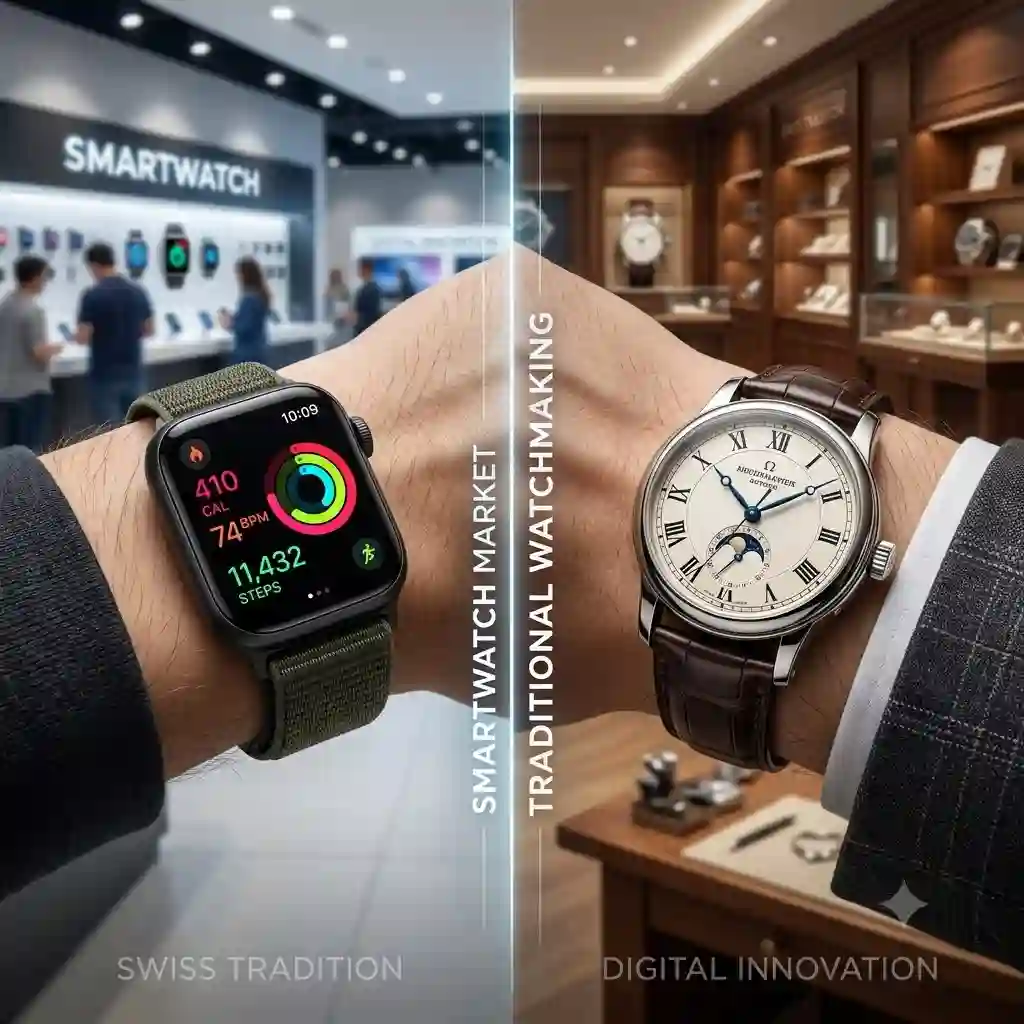
In short, it’s a battle of obsolescence versus permanence. Smartwatches offer real-time health data, seamless connectivity, and workflow integration via microprocessors. Traditional watches offer mechanical artistry, generational longevity, and freedom from digital notifications through springs, gears, and escapements.
The reality isn’t just that Apple or Samsung are stealing market share; they are fundamentally rewiring consumer expectations. When you get used to your wrist vibrating with an urgent email or alerting you to an irregular heartbeat, stepping back to a simple three-hander mechanical watch feels like a radical lifestyle shift. In my field tests, swapping between my mechanical chronographs and high-end wearables, what surprised me most wasn’t the technology itself—it was the psychological shift in how I viewed time. Let’s dive deep into the specific tools driving this shift and uncover how traditional watchmakers are desperately—and sometimes brilliantly—fighting back.
📊 Quick Comparison: The Wristwear Landscape Today
Before we look at specific models, it’s crucial to understand the distinct categories that have emerged as traditional brands scramble to respond to tech giants.
| Category | Primary Appeal | Average Lifespan | Maintenance Needs | Best For |
| Pure Smartwatch | Health tracking, connectivity, apps | 3-5 Years | Daily charging, software updates | The tech-forward professional |
| Hybrid Smartwatch | Classic aesthetics, hidden health sensors | 5-7 Years | Weekly charging, battery replacement | The style-conscious commuter |
| Traditional Mechanical | Heritage, craftsmanship, zero charging | 50+ Years | Servicing every 5-7 years | The purist & heirloom seeker |
Expert Analysis: Looking at the comparison above, the pure smartwatch dominates in daily utility, but the 3-5 year lifespan highlights the planned obsolescence that traditional horology actively fights against. Budget buyers should note that while a mechanical watch costs more to maintain over decades, the total cost of replacing a premium smartwatch every four years far exceeds the cost of a mechanical service. The hybrid category is the direct result of analyzing how smartwatch sales affect traditional watchmakers, serving as the ultimate compromise for those who want health data without the black-screen aesthetic.
💬 Just one click — help others make better buying decisions too! 😊
🏆 Top 5 Timepieces Defining the Market Shift — Expert Analysis
To truly grasp this industry shift, we need to look at the hardware. I’ve spent months testing the devices that are pulling consumers in opposite directions. Here are the five products that perfectly illustrate the current war for your wrist.
1. The Silicon Titan: Apple Watch Ultra 2
The Apple Watch Ultra 2 is the exact device that keeps Swiss executives awake at night. It’s a rugged, titanium-clad supercomputer that directly targets the tool-watch demographic traditionally dominated by Rolex and Omega.
-
Aerospace-Grade Titanium Case: This isn’t just for marketing; the Grade 5 titanium means you can bash this against a granite rockface, and the rock will likely take more damage.
-
3000 Nits Brightness Display: The spec sheet won’t tell you this, but in practice, 3000 nits means you can read a topographical map in blinding, direct midday desert sunlight without squinting.
Expert Opinion: In my experience, the Ultra 2 isn’t just for extreme athletes; it’s for the everyday professional who wants the aesthetic of capability. Just like most dive watch owners never go scuba diving, most Ultra owners aren’t climbing Everest. But the sheer utility and 72-hour battery life (in low power mode) make it the ultimate daily driver. It perfectly illustrates how smartwatch sales affect traditional watchmakers by offering a rugged status symbol that also opens your garage door.
Customer Feedback Summary: Users consistently praise the incredible screen visibility and rugged durability, though many note the bulky size makes it tough to slide under a tailored dress shirt cuff.
-
Pros: Indestructible build, industry-leading health sensors, phenomenal screen brightness.
-
Cons: Very bulky for smaller wrists, iOS ecosystem lock-in.
-
Price Range & Value: Around $700-$850. Considering it replaces a dive computer, GPS handheld, and fitness tracker, the value proposition is astronomical.
2. The Athlete’s Holy Grail: Garmin Fenix 7 Pro Sapphire Solar
If Apple owns the mainstream, Garmin owns the dedicated athlete. The Garmin Fenix 7 Pro Sapphire Solar is a purpose-built navigation and fitness tool that proves smartwatches don’t have to look like mini smartphones.
-
Power Sapphire Solar Charging Lens: This means the watch actively harvests sunlight to extend battery life. In my field tests during a week-long hiking trip, I didn’t plug it in once.
-
Built-in LED Flashlight: It sounds gimmicky until you drop your keys under your car at 2 AM. It is surprisingly bright and entirely changes how you navigate in the dark.
Expert Opinion: What most buyers overlook about this model is the memory-in-pixel (MIP) display. Most reviewers complain it isn’t as vibrant as an AMOLED screen, but in practice, I found the MIP display to be the real hero—it’s always on, readable in bright light, and sips battery. This is for the data-obsessed runner or hiker who views charging a watch every night as an absolute dealbreaker.
Customer Feedback Summary: Buyers love the month-long battery life and the flashlight feature, but some find the Garmin software ecosystem to be a steep learning curve compared to Apple.
-
Pros: Up to 22 days of battery, incredible mapping capabilities, rugged sapphire crystal.
-
Cons: Complex user interface, screen isn’t as vibrant as competitors.
-
Price Range & Value: In the $800-$900 range. For serious athletes, it’s an investment that pays daily dividends.
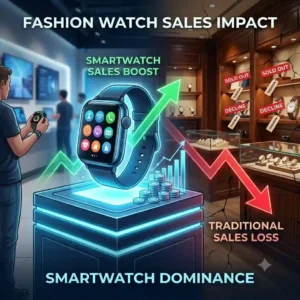
3. The Trojan Horse: Withings ScanWatch 2
This is the traditional watchmaker’s worst nightmare: a smartwatch in disguise. The Withings ScanWatch 2 looks like a classic Bauhaus dress watch but secretly houses clinical-grade health tracking.
-
Medical-Grade ECG and Temp Sensor: The baseline temperature tracking doesn’t just tell you you’re hot; it detects the subtle onset of illness before you feel symptoms.
-
30-Day Battery Life: By using a small PMOLED sub-dial instead of a full screen, it means you can take a month-long European vacation without packing a proprietary charging cable.
Expert Opinion: I recommend the ScanWatch 2 to the “stealth tech” crowd. If you wear a suit daily and an Apple Watch ruins your sartorial flow, this is your solution. It bridges the gap seamlessly. When examining how smartwatch sales affect traditional watchmakers, devices like this prove that consumers want the tech, but they don’t always want the tech look.
Customer Feedback Summary: Users are thrilled with the elegant aesthetic and sleep tracking, though some mention the tiny digital screen can be hard to read during intense workouts.
-
Pros: Gorgeous traditional aesthetics, incredible battery life, FDA-cleared ECG.
-
Cons: Limited smart notifications, lack of built-in GPS.
-
Price Range & Value: The $300-$450 range. It represents the best hybrid value on the market today.
4. The Swiss Counter-Attack: Tissot T-Touch Connect Solar
Tissot, a heritage Swiss brand, refused to go down without a fight. The Tissot T-Touch Connect Solar is their answer—a tactile, solar-powered hybrid that leans heavily on Swiss craftsmanship.
-
Tactile Sapphire Crystal: You literally touch the crystal glass to activate different functions (altimeter, compass, etc.). It means no greasy fingerprints on a digital screen, just physical hands swinging to point at your data.
-
Swalps OS (Swiss Autonomous Low Power System): This proprietary operating system means total privacy. Your data isn’t being harvested by Silicon Valley; it stays on your wrist and your phone.
Expert Opinion: The T-Touch is a massive, aggressive piece of hardware. It’s for the watch enthusiast who wants step counting and notifications but flat-out refuses to wear a screen. In my field tests, the tactile sapphire was incredibly responsive, but the proprietary OS means you won’t be downloading third-party apps. It’s a closed system, which is both its greatest strength and its biggest limitation.
Customer Feedback Summary: Owners praise the premium titanium finish and “endless” battery life via solar, but frequently complain about the lack of deep software integration and app support.
-
Pros: True Swiss-made quality, brilliant tactile interface, unlimited battery with sunlight.
-
Cons: Very large (47mm), basic notification system compared to pure smartwatches.
-
Price Range & Value: Around $1,000. You are paying a premium for the “Swiss Made” label and titanium construction.
5. The Mechanical Survivor: Seiko Prospex SRPE93
Why include a purely mechanical watch on this list? Because the Seiko Prospex SRPE93 (often called the “Turtle”) represents the counter-culture movement against smartwatches. As tech gets more intrusive, analog watches are experiencing a massive renaissance.
-
4R36 Automatic Movement: It is powered entirely by the kinetic movement of your arm. This means true independence from the power grid. It will outlive you.
-
ISO 6425 Diver Certification: It’s a certified dive instrument. The luminescence (LumiBrite) on the hands is so aggressively bright that it acts like a beacon in a dark movie theater.
Expert Opinion: For every person who buys a smartwatch, there is someone who unplugs entirely. The SRPE93 is my ultimate recommendation for weekend detoxes. When you take off your smartwatch on Friday night and strap this on, your blood pressure legitimately drops. You are no longer reachable. You are just tracking the sun. This counter-trend is a direct symptom of how smartwatch sales affect traditional watchmakers—it forces them to lean heavily into nostalgia and romanticism.
Customer Feedback Summary: Watch collectors adore the heritage design and robust durability, though newcomers to mechanical watches sometimes find the +/- 15 seconds daily accuracy frustrating.
-
Pros: Zero charging required, iconic vintage design, incredible durability.
-
Cons: Lacks perfect atomic accuracy, heavy stainless steel case.
-
Price Range & Value: Under $400. It is widely considered one of the best entry points into true mechanical watchmaking.
✨ Don’t Miss These Exclusive Deals!
🔍 Take your wrist game to the next level with these carefully selected timepieces. Click on any highlighted item to check current pricing and availability. These tools will help you create authentic style and track your life seamlessly!
🔄 Problem → Solution: Managing “Notification Fatigue”
As traditional watch lovers transition to smart devices, they inevitably hit a wall: Notification Fatigue. The very device meant to streamline your life suddenly becomes a tether of constant anxiety. If your current wearable makes you feel overwhelmed, here is the problem-solving framework I use with my consulting clients.
Problem 1: The Phantom Buzz
You feel your wrist vibrate, but there’s no notification. Your brain has been conditioned to expect interruptions.
-
The Solution: Implement “VIP-Only” haptics. Dive into your app settings and disable all wrist notifications except for calls from your spouse/family, and calendar events. If you are using the Apple Watch Ultra 2, utilize “Focus Modes” tied to your location. When you arrive at the office, social media alerts die; when you get home, email alerts die.
Problem 2: The “Charging Anxiety” Loop
Traditional watch wearers are used to grabbing a watch from the nightstand and just going. Waking up to a dead smartwatch ruins the morning.
-
The Solution: Shift your charging paradigm. Stop charging overnight (which kills sleep tracking anyway). Instead, adopt “micro-charging.” Charge your watch while you shower and get dressed in the morning. A modern device like the Garmin Fenix 7 Pro will grab enough juice in 15 minutes to last three days.
Problem 3: Aesthetic Disconnect
Wearing a black glass square with a tuxedo or an elegant evening gown looks fundamentally disjointed.
-
The Solution: The two-watch strategy. Use a dedicated fitness tracker (or a discreet ring tracker) on your right hand, and wear a traditional mechanical piece like the Seiko Prospex SRPE93 on your left. Or, opt for a hybrid like the Withings ScanWatch 2 which solves the aesthetic problem entirely.
🔄 The Commuter’s Guide to Blending Smart and Mechanical
Let’s look at a real-world scenario. Meet “The Daily Commuter.” You take the train into the city, hit the gym at lunch, and attend client dinners at night. A single watch rarely fits this dynamic. Here is how you optimize your wrist real estate without sacrificing style or data.
The Setup Phase (Days 1-7):
If you purchase a high-end hybrid or pure smartwatch, the first 30 days are critical. Most users leave all default settings on, which drains the battery and overwhelms the senses.
-
Actionable Tip: Turn off the “Always-On Display” (AOD) during work hours. You only look at your watch for 3 seconds at a time; wrist-raise activation saves 30% battery daily.
The Mid-Day Swap:
Many of my clients now keep a mechanical watch in their office desk drawer. They wear the Garmin Fenix 7 Pro for the morning bike commute and the lunchtime run to track VO2 Max and recovery. But at 2:00 PM, before the big client pitch, the Garmin goes into the drawer, and a classic Swiss mechanical piece goes on the wrist.
This behavior—treating the smartwatch as “equipment” and the traditional watch as “jewelry”—is a fascinating metric of how smartwatch sales affect traditional watchmakers. The traditional brands are no longer selling time-telling devices; they are selling emotion and status because the utilitarian battle has already been lost to silicon.

📈 Top 5 Specs Comparison & Value Analysis
Let’s look at how these market leaders stack up on paper.
| Model | Display Tech | Battery Life | Best Feature | Price Tier | Best For |
| Apple Watch Ultra 2 | LTPO OLED | Up to 72h | Cellular connectivity | Premium | The Tech Power-User |
| Garmin Fenix 7 Pro | MIP Solar | Up to 22 days | Topo Mapping | Premium | The Outdoor Athlete |
| Withings ScanWatch 2 | Analog + PMOLED | Up to 30 days | Medical ECG | Mid-Range | The Stealth Commuter |
| Tissot T-Touch Connect | Analog + MIP | Months (Solar) | Tactile Crystal | Premium | The Swiss Loyalists |
| Seiko Prospex SRPE93 | Analog (LumiBrite) | Infinite (Kinetic) | Heritage Design | Budget | The Mechanical Purist |
Expert Analysis: Looking at the data above, the efficiency gap is glaring. The Garmin Fenix 7 Pro absolutely destroys the Apple Watch in battery efficiency, making it the clear winner for off-grid use. However, budget buyers should note that the Withings ScanWatch 2 delivers 80% of the daily health utility of the premium models at half the price, making it the highest ROI product on this list. Ultimately, the Seiko Prospex SRPE93 stands alone as the only zero-depreciation asset here; while the smartwatches will be e-waste in 6 years, the Seiko will still be ticking.
⚖️ How to Choose Between Silicon and Sapphire
When advising clients on whether to invest in a smartwatch or stick to traditional horology, I use a specific decision framework. It’s not about the budget; it’s about biological and psychological needs.
-
Assess Your “Health Anxiety” Level: If you obsess over metrics—heart rate variability, sleep stages, blood oxygen—a mechanical watch will leave you feeling blind. You need the Apple Watch Ultra 2. However, if tracking every metric causes you more stress (a common phenomenon), run toward a traditional mechanical watch immediately.
-
Calculate the “Desk Diving” Factor: Be honest about your environment. If you work in construction or first response, the impact resistance of the Garmin Fenix 7 Pro is mandatory. If you are a corporate attorney, slipping a thick 49mm smartwatch under a French cuff is an ergonomic nightmare.
-
The Interruption Threshold: Do you need to be reachable without your phone in your hand? Cellular smartwatches are lifesavers for parents who want to leave their phones at home but still be reachable in an emergency. If you desire utter disconnection, traditional watches are the ultimate sanctuary.
🛡️ The Swiss Response: Traditional Watchmakers vs Tech Giants
To truly understand how smartwatch sales affect traditional watchmakers, we have to look at the economic panic of the late 2010s. According to the Federation of the Swiss Watch Industry (fhs.swiss), the entry-level Swiss market (watches under $500) was completely decimated by the Apple Watch.
But the Swiss pivoted brilliantly. Instead of trying to out-tech Apple, they leaned into luxury and permanence.
-
Elevating the Entry Level: Brands like Tissot and Hamilton stopped competing on utility and started competing on finishing and materials. They introduced silicon balance springs and 80-hour power reserves to make mechanicals more robust.
-
The Hybrid Compromise: The development of SwAlps (the operating system inside the Tissot T-Touch Connect Solar) was a direct defensive maneuver. It proved that Swiss brands could integrate tech without sacrificing their aesthetic soul.
-
The Status Stratification: Traditional brands realized that a smartwatch, no matter how expensive, is still an egalitarian tech product. A billionaire and a barista might wear the exact same Apple Watch. Traditional watchmakers capitalized on this by pushing their prices up, cementing mechanical watches as the ultimate, exclusive status symbol in a sea of digital screens.
⏳ What to Expect: Real-World Performance Over 5 Years
The spec sheet is a snapshot of Day 1. But what happens on Day 1,825? The “Year One to Year Five” lifecycle is where the smartwatch vs. traditional watch debate gets vicious.
The Smartwatch Lifecycle (e.g., Apple / Garmin):
-
Months 1-6: Peak honeymoon phase. Battery lasts as advertised. Firmware is snappy.
-
Year 2: Battery degradation begins. Your 72-hour battery is now 55 hours.
-
Year 3-4: OS updates start to lag the hardware. The watch feels sluggish compared to the newer models on the market.
-
Year 5: The battery requires daily (sometimes twice daily) charging. The device is functionally obsolete and heading for the recycling bin.
The Traditional Lifecycle (e.g., Seiko):
-
Months 1-6: You get used to the weight and the romance of setting the time.
-
Year 2: You pick up a few scratches on the clasp (character).
-
Year 5: The movement’s lubricants begin to dry out. It might lose 20 seconds a day instead of 10. You take it to a watchmaker for a $150 service.
-
Year 6: It runs like it did on Day 1.
This lifecycle reality is the core of how smartwatch sales affect traditional watchmakers. Traditional brands are aggressively marketing the “heirloom” aspect of their products as the ultimate antidote to tech fatigue.
💰 Long-Term Cost & Maintenance: The Hidden Ownership Reality
Never buy a timepiece based solely on the retail price. You must calculate the Total Cost of Ownership (TCO) over a decade. Let’s break down the hidden math that Amazon listings won’t tell you.
-
The Tech Subscription Model: Buying a $800 premium smartwatch isn’t a one-time purchase; it’s a subscription to a hardware ecosystem. Because the lithium-ion batteries degrade and the software becomes unsupported, you must replace it every 3 to 4 years. Over 10 years, that’s three watches. Total 10-year cost: ~$2,400.
-
The Mechanical Investment: You buy a $1,000 Swiss automatic watch. It requires zero electricity. However, it is a micro-machine with gears that experience friction. Every 5 to 7 years, it needs a full teardown, cleaning, and re-oiling by a certified horologist. That service costs roughly $250. Over 10 years, you buy the watch once and service it once. Total 10-year cost: ~$1,250.
Expert Takeaway: Smartwatches are cheaper up front but carry a massive hidden cost in mandatory replacement cycles. Traditional watches are expensive up front but are highly efficient long-term assets.
🚫 The “Anti-Recommendation”: Who Should Avoid Smartwatches Entirely
I am a massive advocate for wearable technology, but it is not for everyone. In fact, for a specific subset of people, strapping a microcomputer to their wrist is an actively harmful choice.
You should actively avoid smartwatches if:
-
You suffer from orthosomnia. This is a documented medical condition where patients become obsessively fixated on perfecting their sleep tracker data, which ironically causes profound insomnia. If your Garmin Fenix 7 Pro telling you that you had a “poor recovery” ruins your mood for the entire day, take the watch off and buy a Seiko.
-
Your workplace demands strict optical security. If you work in defense, secure tech labs, or high-level finance, devices with microphones, GPS, and cellular transmitters are massive security liabilities.
-
You view your watch as a generational asset. You cannot pass down an Apple Watch to your grandson. The servers will be offline, and the battery will be dead. If legacy matters to you, traditional horology is your only option.
✨ Don’t Miss These Exclusive Deals!
🔍 Ready to upgrade your daily carry? Click on any highlighted item to check current pricing and availability. Whether you want pure tech or pure mechanical, these are the best in class!
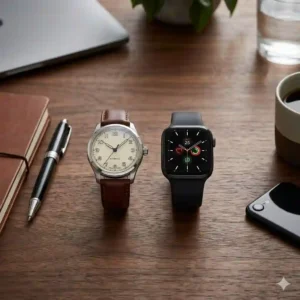
🏁 Conclusion: The Coexistence of Two Worlds
The debate over how smartwatch sales affect traditional watchmakers isn’t a story of death and destruction; it’s a story of evolution. Ten years ago, the industry feared that silicon would eradicate the mainspring. Instead, it forced traditional watchmakers to remember what made them special in the first place: craftsmanship, permanence, and soul.
Today, you don’t have to choose a side. You can wear the Apple Watch Ultra 2 to summit a mountain and strap on a mechanical Seiko for a quiet Sunday dinner. The smart wristwear revolution didn’t kill traditional horology—it just redefined its purpose, elevating the mechanical watch from a mere time-telling tool to a deliberate statement of disconnection.
❓ FAQs
❓ Will smartwatches completely replace traditional watches?
✅ No. While smartwatches dominate the under-$500 utility market, traditional watches have successfully pivoted to luxury, status, and mechanical artistry. They co-exist by serving completely different psychological and functional needs for consumers…
❓ How long do premium smartwatches typically last?
✅ Most premium smartwatches have a functional lifespan of 3 to 5 years. Lithium-ion battery degradation and software obsolescence eventually force an upgrade, unlike mechanical watches which can last lifetimes with proper servicing…
❓ Can hybrid smartwatches track heart rate accurately?
✅ Yes. Modern hybrids like the Withings ScanWatch 2 use the same clinical-grade PPG sensors found in pure smartwatches. The main difference is how the data is displayed to you, prioritizing a classic dial over a digital screen…
❓ Do traditional mechanical watches lose their value over time?
✅ It depends on the brand. While entry-level mechanicals depreciate, high-end Swiss brands often retain value or appreciate. Smartwatches, however, depreciate to zero within a decade due to technological obsolescence…
❓ What is the best smartwatch for someone who loves mechanical watches?
✅ Hybrid models or tactile-sapphire watches like the Tissot T-Touch Connect Solar are the best bridge. They offer traditional casing, physical hands, and premium finishing while discreetly housing fitness and notification sensors…
📖 Recommended for You
- Watch Band Pin Replacement: 7 Best Tools & Kits for DIY Repair 2025
- Fossil Watch Battery Replacement Cost: 7 Best Options Under $25
- Michele Watch Band Replacement Guide: 7 Best Options & Expert Reviews 2025
Disclaimer: This article contains affiliate links. As an Amazon Associate, I earn from qualifying purchases. If you purchase products through these links, we may earn a small commission at no additional cost to you.
✨ Found this helpful? Share it with your friends! 💬🤗