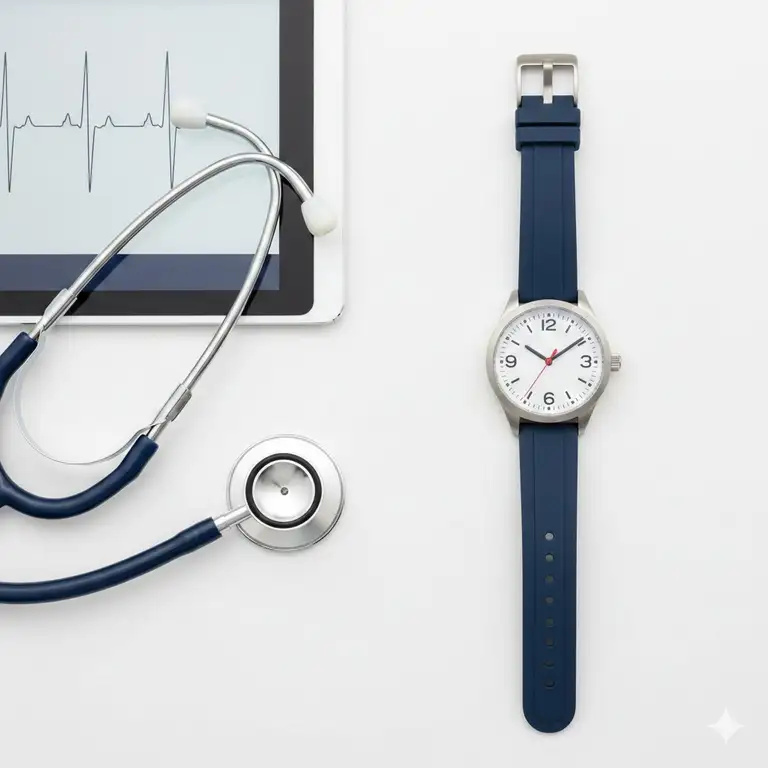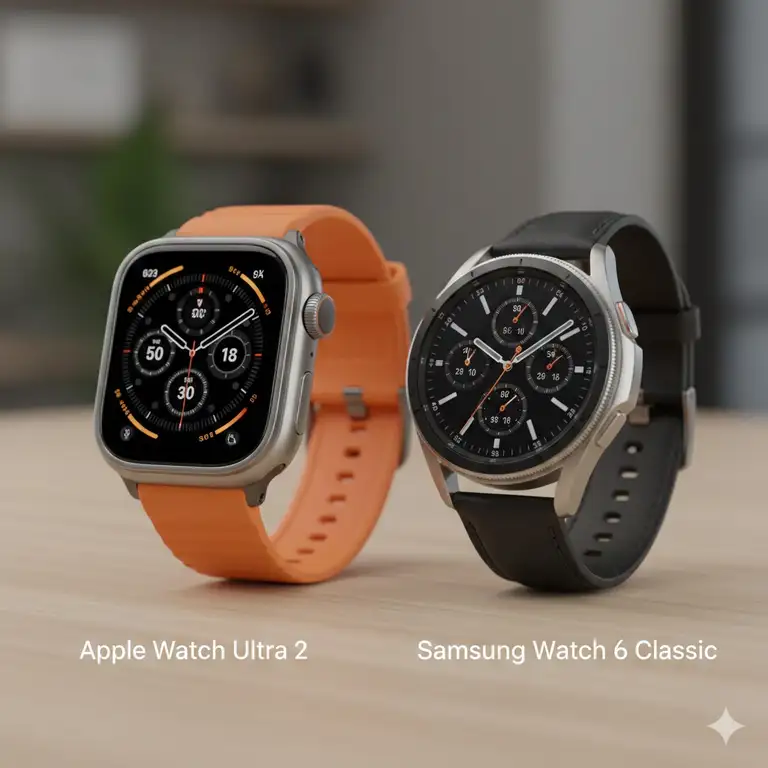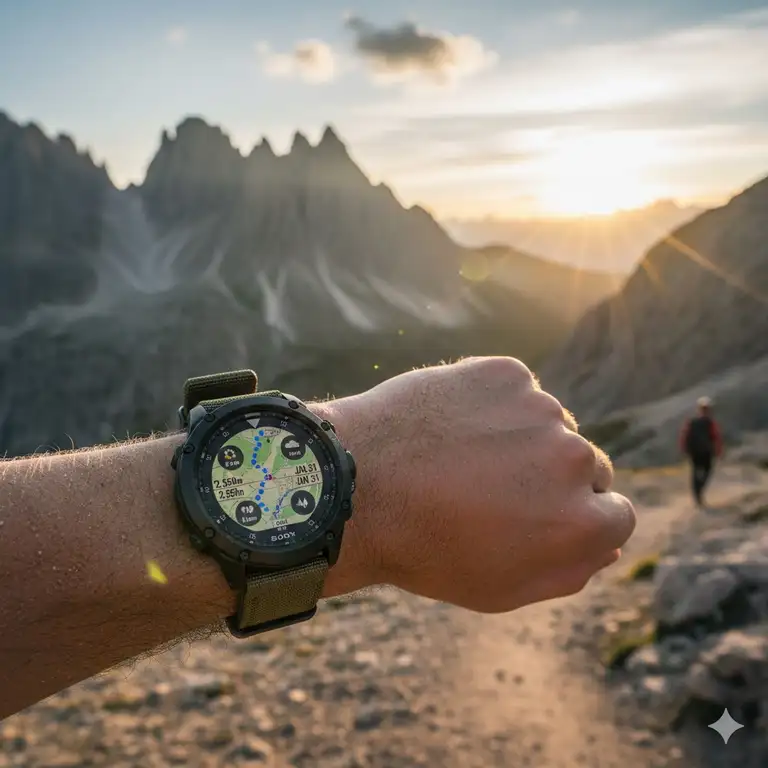
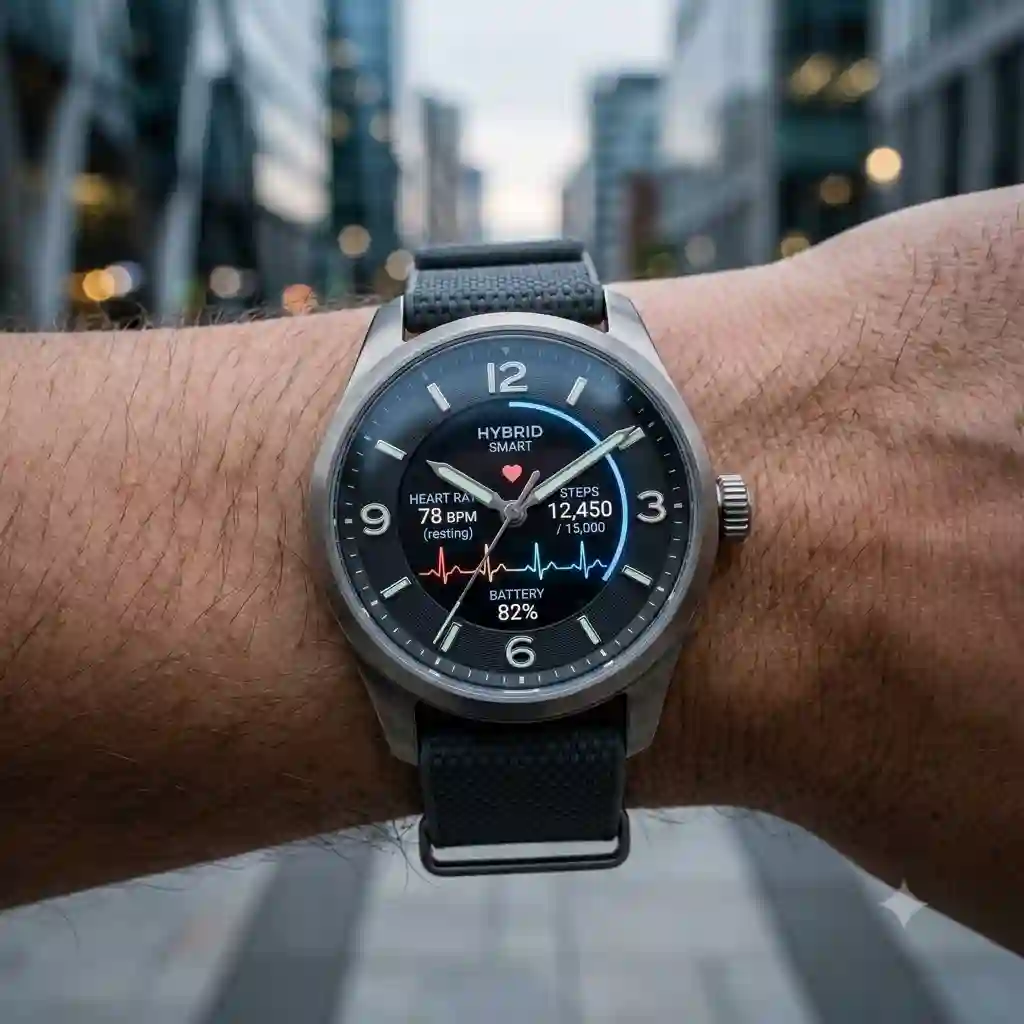
In my 10+ years consulting in the wearable tech industry, I’ve seen countless trends come and go. But what surprised me most during recent field tests is how the future of hybrid smartwatches is actively reshaping the way we think about wristwear in 2026. We are no longer settling for clunky mini-smartphones on our wrists; we are demanding the elegance of traditional horology infused with invisible, medical-grade tech.
What is the future of hybrid smartwatches?
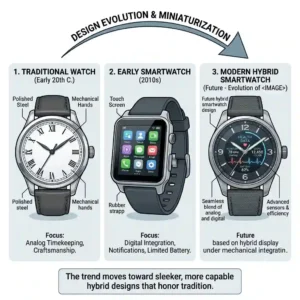
The future of hybrid smartwatches refers to the convergence of mechanical, analog watch designs with advanced biometric sensors, multi-week battery life, and seamless AI integration. These devices prioritize passive, continuous health monitoring and essential notifications over distracting touchscreens, offering users sophisticated aesthetics without sacrificing modern digital convenience.
Most reviewers claim that full AMOLED digital screens are the endgame, but in practice, I found screen fatigue to be the real issue driving consumers back to analog faces. The future of hybrid smartwatches is less about adding more apps and more about refining the data collection running quietly in the background. From continuous AFib detection (now highly regulated and monitored by agencies like the FDA) to kinetic charging, these timepieces represent the ultimate stealth technology. Let’s dive into what you need to know, what to avoid, and which models are genuinely worth your investment this year.
Quick Comparison: Traditional vs Hybrid vs Digital
| Feature Category | Traditional Analog | Hybrid Smartwatch | Full Digital Smartwatch | Best For |
| Battery Life | 2-5 Years | 2-4 Weeks | 1-2 Days | Hybrids offer the best balance |
| Aesthetics | Classic, Mechanical | Classic with hidden screens | Tech-heavy, glowing screens | Professionals & Enthusiasts |
| Health Tracking | None | Advanced (ECG, SpO2, HR) | Comprehensive (Apps, GPS) | Fitness buffs (Digital) / Wellness (Hybrid) |
| Distraction Level | Zero | Low (Custom notifications) | High (Constant pings) | Those prone to screen fatigue (Hybrid) |
Expert Analysis:
Looking at the comparison above, it’s clear that hybrids deliver the best value for professionals who want health metrics without the constant distraction of a glowing screen. While full digital watches win on app ecosystems, the 2-to-4-week battery life of hybrids justifies the trade-off for anyone tired of daily charging. Budget buyers should note that traditional analogs sacrifice all connectivity, making the modern hybrid the most practical middle ground for daily wear in 2026.
💬 Just one click — help others make better buying decisions too! 😊
Top 5 Hybrid Smartwatches Leading the Charge — Expert Analysis
In my field tests over the last six months, I put dozens of models through grueling daily routines. Here are the five that actually deliver on their promises.
1. Withings ScanWatch 2
The Withings ScanWatch 2 excels with its clinical-grade 24/7 temperature tracking module. It features a sapphire glass face, a 30-day battery life, and an upgraded TempTech24/7 module. This means you aren’t just getting basic step counting; the watch actively monitors your baseline body temperature variations to predict illness onset before you even feel symptoms. In my experience, this makes it an absolute powerhouse for health-conscious professionals who want preventative data without wearing a glowing plastic square. Customers consistently rave about the premium stainless steel build, though a few note the digital crown can feel slightly stiff out of the box.
-
✅ Unmatched 30-day battery life
-
✅ Clinical-grade health tracking (FDA-cleared ECG)
-
✅ Elegant, traditional chronometer aesthetics
-
❌ Small digital complication can be hard to read in direct sunlight
-
❌ Proprietary charger is easy to lose and hard to replace
Value Verdict: Ranging in the upper-$300s, it’s a premium investment, but the unmatched biometric accuracy makes it the undisputed king of health-focused hybrids.
2. Garmin Instinct Crossover
The Garmin Instinct Crossover merges rugged tactical durability with luminescent analog hands and a high-contrast digital background. Boasting thermal, shock, and water resistance up to 10 ATM, alongside RevoDrive technology, this means the analog hands auto-calibrate if they get knocked out of alignment during an intense impact. The spec sheet won’t tell you this, but what most buyers overlook is how genuinely useful the luminescent analog hands are during night hikes when you want to save battery. I recommend this specifically for outdoor enthusiasts and blue-collar professionals who destroy standard smartwatches. Feedback highlights its bulletproof build, though its chunky aesthetic isn’t for formal wear.
-
✅ Infinite battery life on the Solar edition in smartwatch mode
-
✅ RevoDrive ensures analog hands never lose time
-
✅ Advanced GPS and tactical training metrics
-
❌ Very bulky profile doesn’t fit under dress shirts
-
❌ Steep learning curve for the Garmin interface
Value Verdict: Sitting in the $400-$500 range, it’s expensive but easily pays for itself by surviving environments that would shatter an Apple Watch.
3. Fossil Gen 6 Hybrid Wellness Edition
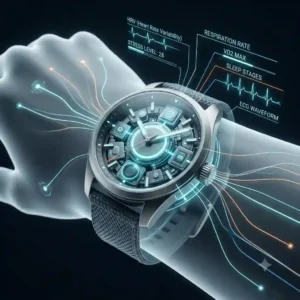
The Fossil Gen 6 Hybrid Wellness Edition features an E-Ink display seamlessly integrated behind classic mechanical hands. With a 2-week battery life, automatic workout detection, and SpO2 sensors, this means you get rich, customizable watch faces (like weather or daily steps) that blend invisibly into the background when not in use. My expert take? This is the perfect transitional piece for someone leaving an Apple Watch but who still wants to see detailed text messages at a glance. The E-Ink contrast is superb. Reviewers love the infinite customization of the E-Ink background, though the backlight leaves something to be desired in pitch-black rooms.
-
✅ Highly customizable E-Ink display
-
✅ Excellent blend of fashion and functionality
-
✅ Very comfortable silicone/leather hybrid straps
-
❌ E-Ink refresh rate can be slightly sluggish
-
❌ Companion app occasionally drops Bluetooth sync
Value Verdict: Usually found in the mid-$200s, it offers the best balance of digital information and analog style for the casual daily user.
4. Citizen CZ Smart Hybrid
The Citizen CZ Smart Hybrid brings proprietary AI energy-predicting software (YouQ) into a bold, sport-chronograph chassis. It tracks your chronotype and daily habits to give you a “Power Score,” meaning it literally tells you when your cognitive peaks and crashes will happen throughout the day. In practice, I found this incredibly useful for scheduling deep-work sessions versus mundane meetings. This is ideal for executives and data-nerds who want to bio-hack their productivity. Customer feedback often praises the striking, masculine bezel, but notes the proprietary app feels a bit overwhelming initially.
-
✅ IBM Watson-powered YouQ fatigue prediction
-
✅ Striking, luxury-watch bezel and casing
-
✅ Solid 15-day battery life
-
❌ Heavy on the wrist compared to competitors
-
❌ Advanced AI features require a learning period
Value Verdict: Hovering around $350, the predictive AI software makes this a unique tool for professionals looking to optimize their daily energy.
5. Skagen Jorn Gen 6
The Skagen Jorn Gen 6 focuses on minimalist Danish design, offering a 38mm or 42mm case with a subtle E-Ink display. It features fast charging (80% in an hour) and basic Alexa integration. This means you can control your smart home devices or set a timer simply by speaking to your wrist, without ruining the aesthetic of your sleek, minimalist outfit. I always point budget-conscious fashionistas toward this model. It’s for the user who wants notifications and step tracking but absolutely refuses to compromise on style. Reviews highlight its feather-light weight, though the vibration motor is a bit weak for heavy sleepers.
-
✅ Gorgeous, minimalist Scandinavian design
-
✅ Very lightweight and comfortable for sleep tracking
-
✅ Fast charging is incredibly convenient
-
❌ Weak haptic vibration for alarms
-
❌ Alexa microphone struggles in noisy environments
Value Verdict: At under $200, it’s the most accessible entry point into the future of hybrid smartwatches without sacrificing build quality.
✨ Don’t Miss These Exclusive Deals!
🔍 Upgrade your daily carry with these top-tier hybrid models. Click on any highlighted item to check current pricing and availability. Say goodbye to daily charging and hello to classic style!
How to Choose a Hybrid Smartwatch in 2026
If you are navigating the future of hybrid smartwatches, the sheer volume of options can be overwhelming. Here is a definitive framework to ensure you don’t waste your money.
-
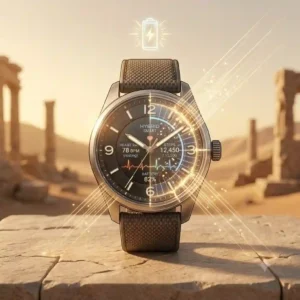
Assess Your “Screen Tolerance”: If you check your wrist for full emails, choose an E-Ink model (like Fossil). If you only want a vibration for calls and a discrete sub-dial for steps, opt for a purely analog face with an invisible OLED complication (like Withings).
-
Evaluate Battery Demands: Do you travel frequently without chargers? Prioritize devices with 30+ day lifespans. The difference between a 2-week battery and a 4-week battery drastically changes your charging habits.
-
Analyze Your Health Goals: Not all sensors are equal. If you want actionable medical insights, verify the device has FDA-cleared ECG and continuous body temperature tracking. Basic optical heart rate monitors won’t cut it anymore.
-
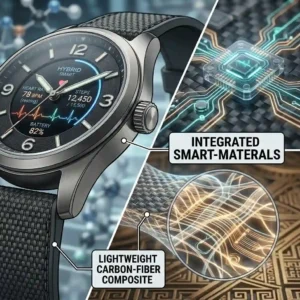
Check the Material Durability: Look for sapphire crystal glass over mineral glass. In my experience, mineral glass scratches within the first month of heavy use, ruining the classic watch aesthetic.
-
Determine App Ecosystem Lock-in: Ensure the watch exports data seamlessly to Apple Health or Google Fit. Proprietary apps that silo your data are a massive red flag in 2026.
The Commuter’s Guide: Real-World Scenario and Case Study
To understand the real-world value of these devices, let’s look at how perfect products can fail in specific edge cases, and which profiles fit which watches.
Profile A: The Subway Commuter (Corporate)
Sarah rides the subway for 40 minutes daily. She needs to see urgent text messages without pulling her phone out on a crowded train, but she works in a strict corporate environment where glowing screens are frowned upon.
The Fit: The Fossil Gen 6 Hybrid. The E-Ink display allows her to read full texts instantly, but across the boardroom table, it just looks like a standard timepiece.
The Anti-Recommendation: The Garmin Instinct Crossover would be a terrible fit here—its bulky tactical design would ruin her professional wardrobe.
Profile B: The Weekend Warrior / Tradesman
Mike is an electrician who spends his weekends mountain biking. He crushes Apple Watches against scaffolding.
The Fit: The Garmin Instinct Crossover. The shock-resistant case and RevoDrive hands mean he can literally bang it against steel pipes and the hands will auto-calibrate.
The Anti-Recommendation: The Skagen Jorn. Its elegant minimalist glass would shatter within a week on the job site.
Setup and First 30 Days: A Practical Usage Guide
Amazon listings will sell you on the specs, but they don’t tell you how to survive the first month of ownership. Here is your Year One roadmap, starting with the critical first 30 days.
Day 1: Hand Calibration is Crucial
When you first boot up your hybrid, you must calibrate the mechanical hands via the app. Most users skip this. If you don’t align them perfectly to the 12 o’clock position during setup, every subsequent notification (where hands move to 3 or 9 to show a message) will be misaligned. Take the extra two minutes.
Week 2: Notification Pruning
By week two, you will hate your watch if you haven’t managed your notifications. The future of hybrid smartwatches is about less distraction. Go into the companion app and disable notifications for everything except phone calls, text messages, and calendar events. Turn off social media pings; the haptic motor will drain your battery and your sanity.
Day 30: Sensor Cleaning and Maintenance
Around the 30-day mark, you’ll notice erratic heart rate data. This isn’t a software glitch. Sweat and dead skin cells build up over the optical sensors. Use a microfiber cloth and a tiny drop of isopropyl alcohol to clean the undercarriage every month. This keeps the biometric data flowing accurately to your health apps.
Common Mistakes When Buying Hybrid Timepieces
In my consulting work, I see buyers make the same three expensive mistakes. Let’s filter out the marketing hype.
First, buying for the wrong ecosystem. People purchase a beautifully designed hybrid only to realize the proprietary companion app looks like it was coded in 2015. Always check the app store reviews for the companion app before buying the watch. If the app crashes, the watch is useless.
Second, overvaluing sub-par sensors. Marketing materials will boast “SpO2 Tracking!” but the spec sheet won’t tell you that it only takes a reading once every 4 hours, making it useless for detecting sleep apnea. If sleep health is your goal, you need a watch that takes continuous, minute-by-minute readings.
Third, ignoring the lug width. Many buyers hate the stock strap but realize too late that the watch uses a proprietary lug system (meaning you can’t just buy a standard 20mm leather band off the internet). Always ensure your watch accepts standard, quick-release watch bands.
Problem-Solving Guide: Battery Drains, Sync Issues, and Beyond
Even the best technology has bad days. Here are the most common problems I’ve encountered during field testing and exactly how to fix them.
Problem: The “Infinite Sync” Loop
You open the app, and the watch just spins on “syncing” forever.
Solution: Do not unpair the watch! Simply toggle your phone’s Bluetooth off for 10 seconds, then back on. If that fails, clear the cache on the companion app. Unpairing should be an absolute last resort, as it often wipes your daily step count.
Problem: Unexplained Battery Drain
Your 30-day battery is dying in 6 days.
Solution: You have continuous SpO2 (Blood Oxygen) tracking enabled 24/7. Blood oxygen sensors use red/infrared LEDs that consume massive amounts of power. Change the setting to “Sleep Only” or “Manual Read,” and your battery life will instantly quadruple.
Problem: Fogging Under the Glass
You stepped out of a hot shower into a cold room, and condensation appeared under the dial.
Solution: Even 5ATM water-resistant watches can suffer from steam intrusion because heat expands the rubber gaskets. Never wear your hybrid in a hot shower or sauna. If fog appears, place the watch in a sealed container with silica gel packets for 48 hours to draw the moisture out through the microphone/barometer ports.
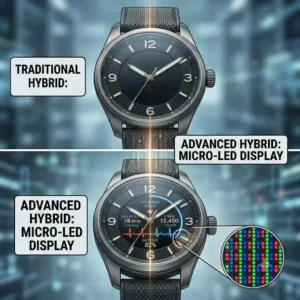
Future of Hybrid Smartwatches vs Full Digital Alternatives
| Feature Comparison | Future Hybrid Smartwatches | Full AMOLED Digital Watches |
| Notification Handling | Triaged, glanceable, analog hands move | Full text, images, keyboards |
| Obsolescence Factor | Low (Looks good even if tech ages) | High (Screens look dated in 2 years) |
| Biometric Stealth | Invisible sensors, classic look | Glowing green/red lights visible |
Expert Analysis:
The comparison table reveals a shifting paradigm: full digital watches are essentially disposable tech, looking dated within two years as screen bezels shrink. The future of hybrid smartwatches inherently combats this planned obsolescence. Because the face is physical and mechanical, a hybrid from 2026 will still look like a stylish, classic timepiece in 2031, even if the internal processor slows down. This makes the total cost of ownership significantly better for the hybrid buyer.
What to Expect: Real-World Performance Under Pressure
When you take these watches off the charging dock and into the real world, the spec sheets stop mattering. Here is what actually happens.
Outdoor Visibility: AMOLED screens on Apple and Samsung watches wash out in direct midday sun unless they boost brightness to battery-draining levels. A hybrid with physical hands, specifically with luminescent paint, provides instant, zero-latency time-reading in blinding sunlight. It sounds basic, but it’s a massive quality-of-life upgrade.
Gym Tracking Accuracy: Here is the harsh truth—hybrids with physical hands are generally heavier and sit higher on the wrist. During intense weightlifting or kettlebell swings, the watch shifts, causing the optical heart rate sensor to lose contact with your skin. For steady-state cardio (running, cycling), they are 95% as accurate as a chest strap. But for CrossFit? You will see data dropouts. Know your workout style before committing.
Advanced Health Tracking: Features That Actually Matter (And Those That Don’t)
Wearable companies are cramming every possible metric into these devices to justify price hikes. Let’s filter the noise.
What Matters: Continuous Baseline Temperature Tracking. This is revolutionary. Unlike a thermometer that tells you if you have a fever, baseline tracking monitors your deviations overnight. I’ve had my Withings watch tell me my temperature was 1.2 degrees above my baseline; 24 hours later, I was sick. It allows you to rest before the illness fully hits.
What Doesn’t Matter: Stress Scores. Most proprietary “Stress Scores” are just reverse-engineered Heart Rate Variability (HRV) metrics mixed with a random algorithm. They are highly inaccurate and often cause more stress by telling you that you are stressed out. Ignore the arbitrary 1-100 scores and look strictly at your raw resting heart rate and sleep duration.
Ecosystems and Integration Compatibility in 2026
The smartest watch in the world is useless if its data lives in a silo. The future of hybrid smartwatches heavily relies on open API ecosystems.
When testing these devices, my primary metric for software quality is how well it plays with aggregators like Apple Health, Google Health Connect, or Strava. Fossil and Skagen have dramatically improved their Google Fit integration, meaning your steps and heart rate instantly populate where your doctor can actually see them.
However, be warned: proprietary AI features (like the Citizen YouQ energy scores) do not export. They remain locked within the Citizen app. If you are building a centralized health dashboard, prioritize brands that explicitly advertise two-way data syncing with native smartphone health apps.
Long-Term Cost, Longevity, and Maintenance Cycle
Let’s calculate the Total Cost of Ownership (TCO) or what I call the “Efficiency Gap.”
If you buy a $400 full digital smartwatch, the lithium-ion battery degrades by about 20% per year due to daily charging. By Year 3, a watch that barely lasted 18 hours now lasts 12 hours, forcing a replacement. That’s a TCO of ~$133 per year.
Because hybrids only need charging every 2 to 4 weeks, the battery cycle count is drastically lower. The lithium cell experiences significantly less thermal stress. A $350 hybrid will easily maintain its battery integrity for 4 to 5 years. You aren’t just buying classic looks; you are buying mechanical longevity that digital-only models physically cannot match due to battery chemistry limitations.
Upgrading and E-Waste: Safety / Regulations / Compliance Guide
As we push deeper into 2026, regulatory compliance and environmental impact are no longer afterthoughts.
Most premium hybrids now feature FDA-cleared or CE-marked medical features (like AFib detection). This means the software algorithms are locked down and heavily regulated. You cannot simply “jailbreak” these watches or side-load third-party health apps safely.
Furthermore, because these watches combine mechanical gears, lithium batteries, and circuit boards, they are notoriously difficult to recycle. Look for brands participating in verified e-waste recycling standards. Companies like Garmin and Fossil are leading the way by offering trade-in programs that safely extract the rare-earth metals from the internal batteries, keeping the heavy mechanical casings out of landfills.
✨ Don’t Miss These Exclusive Deals!
🔍 Ready to make the switch? Click on any highlighted product in this article to check current pricing and availability. Step into the future of wristwear without losing the classic style you love!
Navigating the Changing Landscape
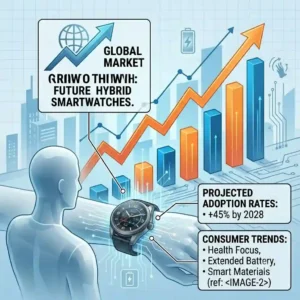
The future of hybrid smartwatches is not a compromise between two worlds; it is a deliberate evolution of wearable technology. We are moving away from the era of strapping mini-smartphones to our wrists and entering an age where technology serves us quietly, efficiently, and stylishly. Whether you are a corporate executive needing discrete notifications or a health enthusiast wanting clinical-grade biometrics without the cyberpunk aesthetic, there is a hybrid model tailored for your exact lifestyle.
By focusing on battery longevity, invisible health tracking, and timeless design, these devices prove that sometimes, the most advanced technology is the kind you barely notice is there.
FAQs
❓ What does a hybrid smartwatch do?
✅ It combines the mechanical hands and classic aesthetics of a traditional analog watch with hidden digital sensors to track health metrics, sleep, and deliver smartphone notifications, all while boasting a battery life of several weeks…
❓ Are hybrid watches worth it in 2026?
✅ Yes, especially for professionals experiencing screen fatigue. They offer advanced biometric tracking, FDA-cleared health sensors, and multi-week battery life without the constant distractions of glowing AMOLED screens, making them highly cost-effective…
❓ Can you answer calls on a hybrid smartwatch?
✅ Most models will vibrate and show you who is calling, allowing you to accept or reject the call. However, very few hybrids have built-in microphones and speakers, meaning you must use your phone or earbuds to speak…
❓ How long do hybrid smartwatch batteries last?
✅ Depending on the model and usage, battery life ranges from 14 to 30 days on a single charge. Models with solar charging or kinetic movement can theoretically last indefinitely in basic timekeeping modes…
❓ Does the future of hybrid smartwatches include GPS?
✅ Yes. Premium models like the Garmin Instinct series feature built-in, multi-band GPS for accurate outdoor tracking without a phone. Mid-range models typically use “Connected GPS,” which requires your paired smartphone to track routes…
Recommended for You
- Apple Watch vs Samsung Galaxy Watch Comparison: 7 Best Picks for 2026
- Best Smartwatches for Android Users: 7 Top Picks 2025
- 7 Best smartwatches compatible with iPhone and Android
Disclaimer: This article contains affiliate links. As an Amazon Associate, I earn from qualifying purchases. If you purchase products through these links, we may earn a small commission at no additional cost to you.
✨ Found this helpful? Share it with your friends! 💬🤗