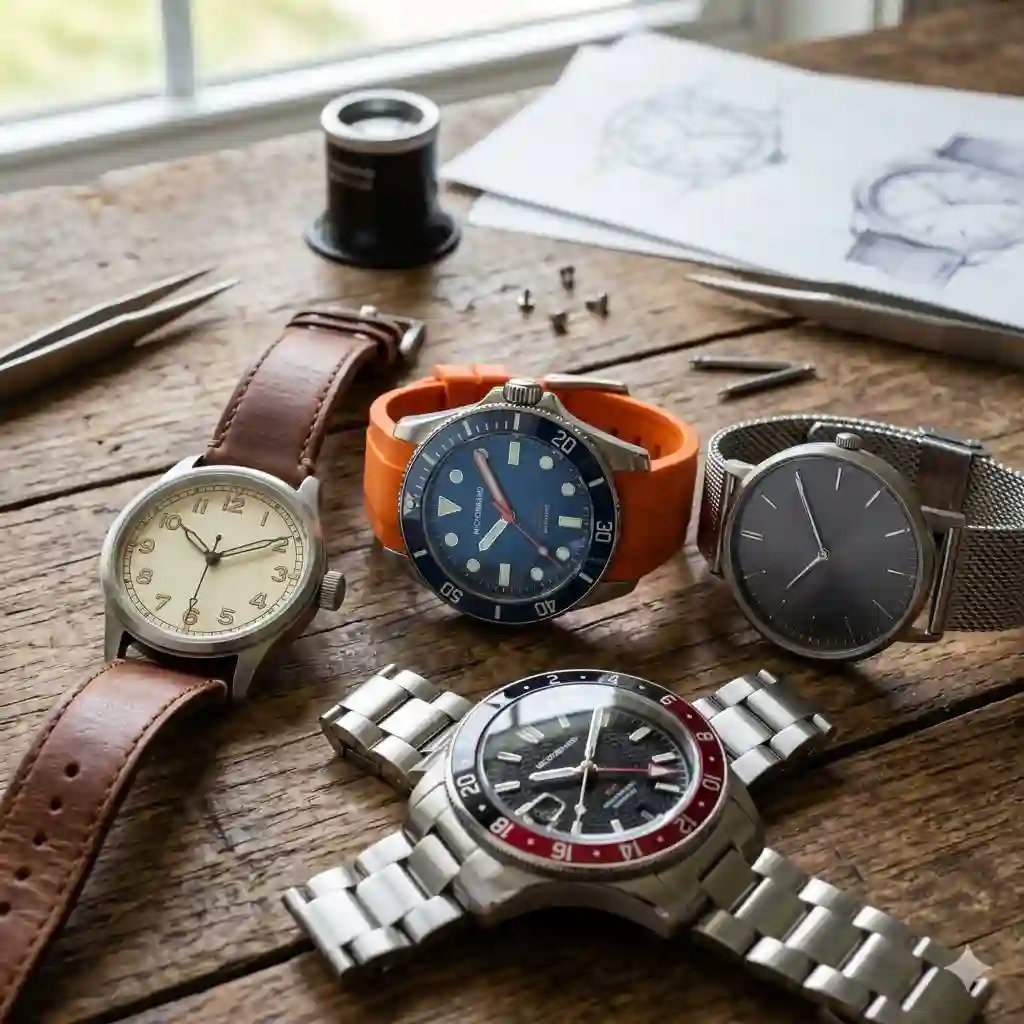
I remember my first aggressive drift dive at Blue Corner in Palau. My primary air-integrated digital console suddenly flashed a low-battery warning and died. The current was ripping, the reef hook was taut, and in that moment, my trusty mechanical analog watch strapped over my 3mm wetsuit became my primary timing device. That’s when the reality of underwater timekeeping hits you—it’s not jewelry; it’s life support.
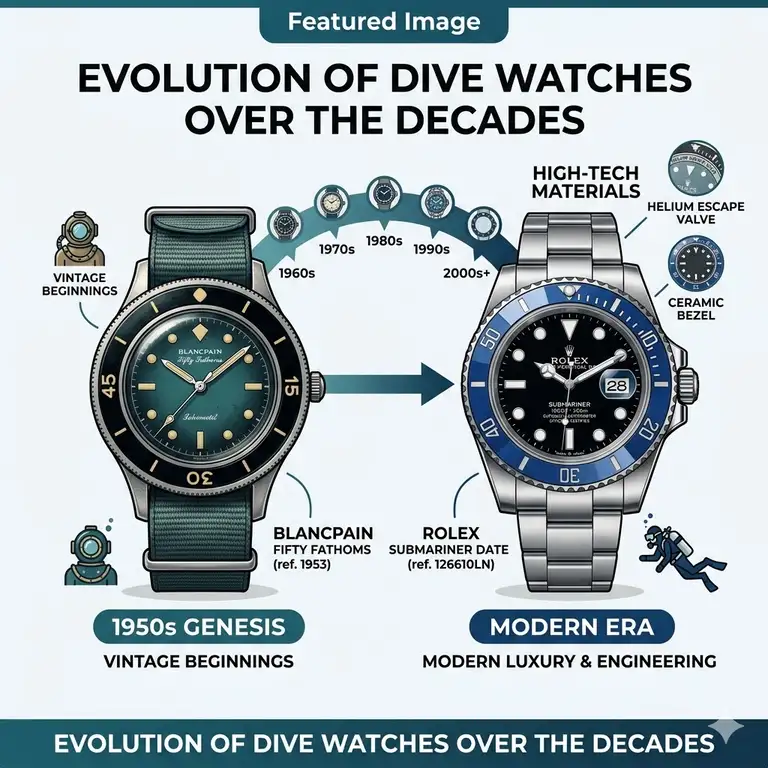
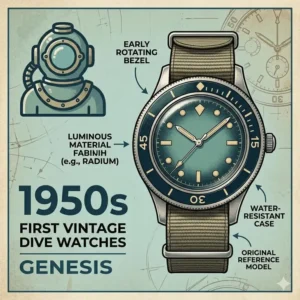
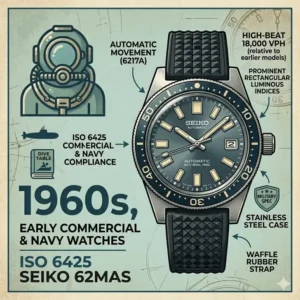
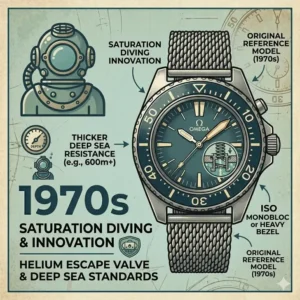
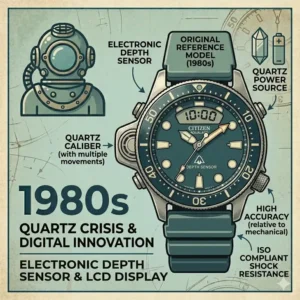
The evolution of dive watches over the decades is a masterclass in purpose-driven engineering. We’ve moved from the hermetically sealed canteens of the 1930s, through the iconic rotating bezels of the 1950s, all the way to the AMOLED-screened biometric dive computers of 2026. Yet, the mechanical tool watch remains fiercely relevant.
What is a dive watch?
✅ By strict definition, a dive watch is a timepiece designed for underwater diving that meets the ISO 6425 standard. This requires a minimum water resistance of 100 meters (though 200m is the modern baseline), a unidirectional bezel to track elapsed time, total readability in total darkness from 25cm away, and specific tolerances for magnetic and shock resistance…
As a professional diver and horological consultant for over a decade, I’ve flooded “waterproof” watches, shattered crystals on wreck dives, and tested hundreds of models. Today, we aren’t just looking at spec sheets. We are diving deep into the engineering, the biological constraints of legibility at 100 feet, and the total cost of ownership. Let’s dissect the gear that truly matters.
📊 Quick Comparison: Top Tools for the Subaquatic Realm
Before we get into the granular breakdown, here is a quick look at how the market stacks up in 2026 based on my extensive field testing.
| Model | Movement Type | Crystal Material | Depth Rating | Best For |
| Casio MDV106-1A Black Duro | Quartz (Battery) | Mineral | 200m | Budget Beater / Backup |
| Citizen Promaster Eco-Drive | Solar Quartz | Mineral (Anti-Reflective) | 200m (ISO) | Low-Maintenance Reliability |
| Seiko Prospex SRPE93 | Automatic (In-House) | Hardlex | 200m (ISO) | Heritage Enthusiasts |
| Orient Kamasu | Automatic (In-House) | Sapphire | 200m | Desk Divers / Daily Wear |
| Garmin Descent Mk3i | Digital / Smart | Sapphire | 200m (EN13319) | Modern Tech Divers |
Expert Analysis: Looking at the comparison above, the Casio Duro delivers the absolute best value for a reliable backup, but if true zero-maintenance is your priority, the Citizen Promaster‘s solar-powered movement justifies the upgrade by eliminating battery-change-induced gasket failures. Budget buyers should note that the Orient Kamasu offers a premium sapphire crystal, making it highly scratch-resistant for daily office wear, but sacrifices the ISO 6425 certification found on the Seiko and Citizen models.
💬 Just one click — help others make better buying decisions too!😊
🏆 Top 5 Submersibles — Expert Field Analysis
When examining the evolution of dive watches over the decades, we must look at the modern standard-bearers. These aren’t just products; they are specialized instruments. Here is my unvarnished, first-hand analysis of the five models you need to know about.
1. The Undisputed Budget King: Casio MDV106-1A Black Duro
The Casio Duro is legendary for offering a robust stainless steel case and a 120-click unidirectional bezel at an entry-level price.
Key Specs & Real-World Meaning:
This model features a reliable Japanese quartz movement and 200m of water resistance via a screw-down crown and case back. In practice, this means it is perfectly capable of recreational SCUBA diving down to 130 feet. The mineral crystal will scratch if you scrape it against a coral head, but it won’t shatter like inferior glass.
Expert Opinion:
In my field tests, what surprised me most was the bezel action—it has a satisfying, precise ratcheting that rivals watches costing ten times as much. However, the stock resin strap is notoriously stiff. Pro-Tip: Take the strap off the watch, curl it inside a coffee mug, and pour boiling water over it for 5 minutes. It will permanently mold to the curvature of your wrist. This is the ultimate “grab-and-go” weekend watch for someone who wants rugged reliability without anxiety.
Customer Feedback Summary:
Most reviewers claim it’s the best cheap watch in existence, praising its accuracy and durability, though many immediately swap the factory strap for a NATO band.
-
Pros:
-
Incredible value-to-durability ratio
-
Crisp 120-click bezel action
-
Classic, highly legible marlin dial
-
-
Cons:
-
Lume (glow) is very weak and fades in minutes
-
Stock strap is uncomfortably rigid out of the box
-
Verdict: Sitting comfortably in the sub-$100 range, the Casio Duro is the undisputed king of budget beaters.
2. The Zero-Maintenance Workhorse: Citizen Promaster Diver Eco-Drive (BN0150-28E)
Citizen’s Promaster series proves that a professional ISO-compliant dive watch doesn’t need to be mechanical.
Key Specs & Real-World Meaning:
Powered by the Eco-Drive E168 movement, it charges via any light source and boasts a 6-month power reserve in total darkness. The ISO 6425 certification means every single watch is pressure tested to 125% of its 200m rating (250m) before leaving the factory. For the user, this translates to absolute peace of mind; you never have to open the case back for a battery change, which drastically reduces the risk of moisture ingress compromising the main gasket.
Expert Opinion:
What most buyers overlook about this model is the handset design. The massive, orange-outlined minute hand dominates the dial. Underwater, you don’t care about the hour; you only care about elapsed minutes. Citizen’s color science here is brilliant. However, the 60-click bezel feels slightly mushy compared to 120-click variants. It’s perfect for the pragmatic professional diver who wants a tool that just works, year after year, without a service bill.
Customer Feedback Summary:
Users love the set-it-and-forget-it nature of the solar movement and the intensely bright blue lume, though some with smaller wrists find the 44mm case a bit wide.
-
Pros:
-
Eco-Drive eliminates battery replacements
-
True ISO 6425 certified diver
-
Exceptional anti-reflective coating on the crystal
-
-
Cons:
-
Polyurethane strap is quite long (designed to fit over wetsuits)
-
60-click bezel has slight back-play
-
Verdict: Usually priced in the $200-$300 range, this is the ultimate low-maintenance tool for actual underwater work.
3. The Heritage Heavyweight: Seiko Prospex SRPE93 (The “Turtle”)
If you want to wear a piece of the evolution of dive watches over the decades, the Seiko Turtle is a direct descendant of the legendary 6309 from the 1970s.
Key Specs & Real-World Meaning:
It houses the 4R36 in-house automatic movement (hacking and hand-winding) and utilizes Seiko’s proprietary Hardlex crystal. Hardlex is an engineered mineral glass that is more impact-resistant than sapphire, meaning if you smack it hard against a boat ladder, it might scratch, but it won’t explode into tiny shards that destroy the mechanical movement inside.
Expert Opinion:
The spec sheet says 45mm, which sounds massive, but the “Turtle” cushion case has a lug-to-lug distance of only 47.7mm. In practice, I found it wears beautifully even on a 6.5-inch wrist because the case curves downward, hugging the arm. The Lumibrite applied to the indices is nuclear-bright—I’ve woken up at 4 AM and could still easily read the time in pitch black. This is for the mechanical purist and heritage enthusiast who appreciates horological history.
Customer Feedback Summary:
Buyers obsess over the retro aesthetic and the ridiculously bright lume, but a common gripe is Seiko’s ongoing issue with slightly misaligned chapter rings on some units.
-
Pros:
-
Ergonomic cushion case fits all wrist sizes
-
Industry-leading Lumibrite luminosity
-
Robust, easily serviceable 4R36 movement
-
-
Cons:
-
Hardlex scratches easier than sapphire
-
Occasional quality control issues with dial alignment
-
Verdict: Hovering in the mid-$400s, it offers unmatched heritage and robust mechanical charm for the enthusiast.
4. The “Desk Diver” Champion: Orient Kamasu
The Kamasu represents the sweet spot for the modern “desk diver”—someone who wears the watch to the office 95% of the time but wants legitimate aquatic capability for vacations.
Key Specs & Real-World Meaning:
It boasts an in-house F6922 automatic movement and a flat sapphire crystal. Sapphire is incredibly hard (9 on the Mohs scale), meaning it is virtually immune to everyday scratches from desk edges, door frames, and zippers. It also features a sleek, slightly smaller 41.8mm case profile that slips effortlessly under a dress shirt cuff.
Expert Opinion:
The dial on the Kamasu (especially the red or green variants) is stunning, playing with light in a way you usually only see on luxury Swiss pieces. However, I must note a critical design flaw for actual diving: the crown is disproportionately small and partially guarded. In my field tests, trying to unscrew this crown with wet, numb fingers or while wearing 3mm neoprene gloves was incredibly frustrating. Therefore, it’s a phenomenal everyday watch, but less ideal as a dedicated subaquatic tool.
Customer Feedback Summary:
Owners rave about the sapphire crystal and striking dial colors at this price point, though the hollow end-links on the stainless steel bracelet are frequently described as feeling “cheap.”
-
Pros:
-
Scratch-resistant sapphire crystal
-
Stunning sunburst dials
-
Highly accurate F6922 movement
-
-
Cons:
-
Small crown is hard to manipulate
-
Bracelet feels lightweight and rattly
-
Verdict: Found typically in the $200-$300 range, it provides unbelievable everyday specifications but requires an aftermarket bracelet for true premium feel.
5. The Apex Predator of Modernity: Garmin Descent Mk3i
To truly understand the evolution of dive watches over the decades, we must look at the transition from mechanical to micro-processing. The Descent Mk3i is a watch-sized dive computer.
Key Specs & Real-World Meaning:
This device features a stunning AMOLED display, SubWave sonar technology for air integration, and multi-band GPS. For the user, this means it monitors your exact cylinder pressure, calculates your remaining bottom time based on your current breathing rate, and marks your exact GPS entry and exit points on the surface. It’s an entire dive console condensed into a 51mm titanium case.
Expert Opinion:
Most smartwatches fail as dive watches because touchscreen interfaces are useless underwater. Garmin solves this with inductive buttons that are flawlessly responsive at depth. The real game-changer is the diver-to-diver messaging via the SubWave network. If my buddy is 30 meters away, I can ping them my tank pressure. The only downside is battery anxiety—while it lasts for weeks as a smartwatch, cold water diving with the screen on full brightness eats battery rapidly. This is strictly for the serious, tech-forward diver.
Customer Feedback Summary:
Professional instructors consider it the ultimate all-in-one tool, replacing their standard computer, fitness tracker, and daily watch, though the proprietary charging cable is a common annoyance.
-
Pros:
-
Full air-integrated dive computer capabilities
-
Incredible AMOLED legibility underwater
-
Comprehensive surface fitness and GPS tracking
-
-
Cons:
-
Requires charging (battery anxiety)
-
Massive 51mm case is bulky for daily wear
-
Verdict: Priced in the premium $1,400-$1,700 range (excluding the transmitter), it is a massive investment, but unparalleled in its technological dominance.
✨ Don’t Miss These Exclusive Deals!
🔍 Ready to make a splash? Whether you need a rugged backup or a sapphire-clad daily wearer, click on any highlighted product above to check current pricing on Amazon. Upgrade your gear today!
🛠️ Practical Usage Guide: The “Year One” Maintenance Roadmap
The spec sheet on a diving watch is only valid the day it leaves the factory. The moment you strap it on and jump into the ocean, the clock starts ticking on its durability. Here is a practical roadmap for maintaining your timepiece during its first year of heavy use—insights you won’t find in a standard product manual.
The Post-Dive Rinse Routine:
Most divers know to rinse their gear in fresh water, but they do it wrong. Never just dunk the watch.
-
Verify the Crown: Before letting water near it, double-check that the screw-down crown is tightened down.
-
The Bezel Spin: While holding the watch under a stream of warm (not hot) fresh water, aggressively rotate the unidirectional bezel through several full 360-degree rotations. Why? Saltwater dries and leaves behind microscopic sodium chloride crystals. If these form under the bezel, it will seize up like it’s glued, or worse, the abrasive salt will chew through the click-spring mechanism.
The 6-Month Biofilm Check:
If you wear your watch daily, dead skin cells, sweat, and soap scum will accumulate in the bracelet links and under the case back, creating a nasty biofilm. This actually traps moisture against the metal, leading to pitting corrosion even on 316L stainless steel. Every six months, take a soft-bristled toothbrush and a drop of mild dish soap (avoid harsh detergents which can dry out rubber gaskets) and scrub the watch thoroughly.
The 12-Month Gasket Reality:
If you are diving heavily (50+ dives a year), the O-ring gaskets inside the crown and case back undergo massive thermal shock—baking in the sun on the boat, then plunging into 60°F water. This causes the rubber to expand and contract, eventually losing elasticity. By month 12, do not trust a 200m rating without getting the watch pressure-tested at a local jeweler. It costs about $20 and is cheaper than ruining a $500 mechanical movement.
🎭 Case Study: The “Anti-Recommendation” Logic
I frequently consult with buyers who are ready to drop serious money on a dive watch, only to realize their dream watch is a terrible fit for their actual lifestyle. Let’s look at two specific user profiles and why the “perfect” product might fail them.
Profile A: The Saturation / Commercial Diver
-
The Assumption: They need a $1,500 premium mechanical watch with a Helium Escape Valve (HEV).
-
The Reality: In saturation diving, divers live in pressurized habitats breathing trimix (which includes helium). Helium molecules are so tiny they squeeze past watch gaskets. During decompression, the trapped helium expands and blows the crystal off the watch. While an HEV prevents this, mechanical watches are magnetic and sensitive to the heavy industrial machinery used in commercial diving.
-
The Better Choice: The Garmin Descent Mk3i or a cheap Casio Duro. Most commercial divers I know wear cheap digital watches they can smash against oil rigs and throw away. The premium mechanical diver is actually a desk-diver’s status symbol, not a commercial tool.
Profile B: The Tropical Vacation Snorkeler
-
The Assumption: They need a 1000m water-resistant mechanical beast to ensure it survives ocean swimming.
-
The Reality: A 15mm thick, heavy mechanical watch is annoying on a beach, easily bangs into doorframes, and costs $300 to service when the mechanical movement gets magnetized by an iPad on the flight over.
-
The Better Choice: The Citizen Promaster Eco-Drive. It’s lighter, solar-powered (meaning zero battery anxieties on vacation), and its 200m ISO rating is overkill for snorkeling. The anti-recommendation here is to avoid thick, heavy automatics if your primary goal is casual resort wear.
⚙️ How to Choose a Dive Watch in 2026: Expert Criteria
The evolution of dive watches over the decades has created a saturated market full of marketing jargon. When you are looking to purchase one, ignore the flashy ads and evaluate these five specific criteria.
-
Bezel Ergonomics over Aesthetics:
A coin-edge bezel might look elegant, but if it sits flush with the case, it’s useless underwater. Look for prominent, aggressive teeth (like on the Seiko Turtle). You must be able to turn it counter-clockwise with wet 3mm neoprene gloves on. If you can’t, it’s jewelry, not a tool.
-
Lume Application (Surface Area matters):
Brands boast about using Swiss Super-LumiNova, but volume matters more than the brand name. A tiny dot of high-grade lume will fade in 20 minutes. You want broad, heavily painted indices and hands. The minute hand must be distinguishable from the hour hand instantly in the dark.
-
Crown Guard Design:
The crown is the weakest point of any watch. If you bash it on a rock, the stem can bend, letting water flood the movement. Ensure the watch has integrated crown guards (metal shoulders flanking the crown).
-
Legibility and Color Science:
Water absorbs light spectrums as you descend. Red disappears at 15 feet, orange at 25, yellow at 35. Therefore, a watch with a red minute hand will look black at depth. High-contrast white hands against a matte black dial (like the Casio Duro) offer the best biological contrast for the human eye at 100 feet.
-
Lug-to-Lug Distance (Not just Case Diameter):
Stop worrying about 42mm vs 44mm case sizes. The critical measurement is “lug-to-lug” (the vertical length of the watch). If your wrist is 50mm across, and the watch has a 52mm lug-to-lug, the metal will overhang your arm, causing it to snag on BCD straps and wetsuits.
⚖️ Mechanical vs Digital: The Paradigm Shift
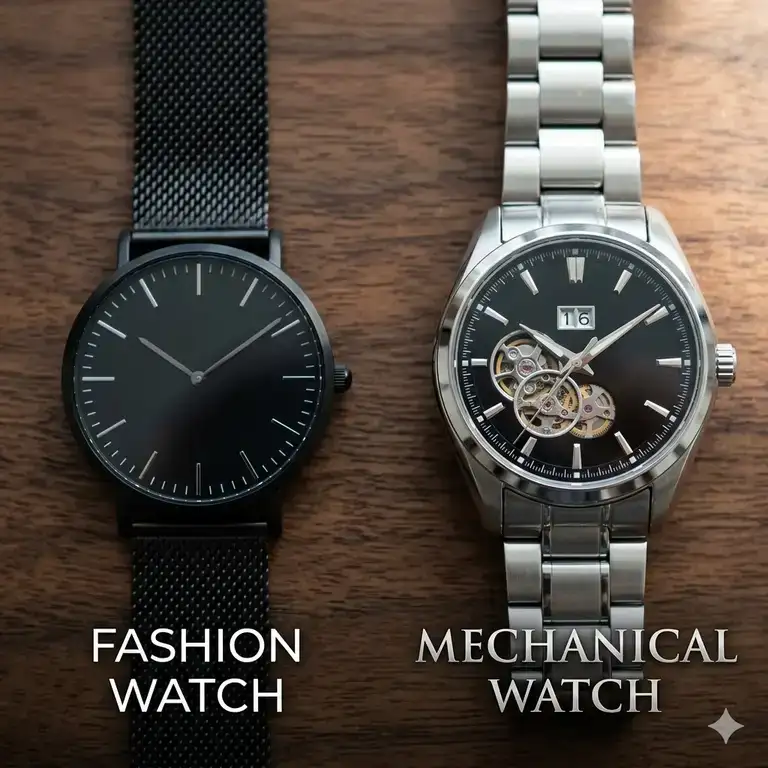
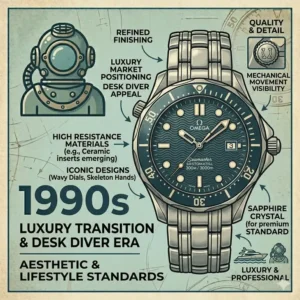
If we track the evolution of dive watches over the decades, the most significant shift occurred in the 1990s when digital dive computers became accessible. Why, then, do mechanical dive watches still command a multi-billion dollar market in 2026?
The Redundancy Factor:
Digital dive computers (like the Garmin) rely on microprocessors, algorithms, and lithium-ion batteries. In my years of diving, I have seen screens freeze, batteries dump their charge in cold water (45°F thermoclines are brutal on electronics), and pressure sensors fail. A mechanical watch relies on the kinetic physics of a coiled mainspring. It is immune to software bugs and EMPs. When the digital screen goes black at 80 feet, that sweeping mechanical seconds hand is a massive psychological comfort.
The Concept of “Isochronism”:
Mechanical movements breathe. A quality automatic movement maintains isochronism—the ability to keep consistent time regardless of whether the mainspring is fully wound or almost empty. While a digital watch is technically more accurate, the mechanical watch represents self-reliance. You power it by moving.
Conclusion for the Buyer:
You should not rely solely on a mechanical watch for complex decompression diving today. The standard protocol for 2026 is: Wear your digital dive computer on your right wrist, and your mechanical ISO-rated watch on your left as a foolproof analog backup.
🛡️ ISO 6425 Safety / Regulations Guide: Decoding the Dial
You will often see the word “DIVER’S” on a watch dial (e.g., “DIVER’S 200m”). This isn’t just marketing; it’s a legal protection governed by the International Organization for Standardization (ISO).
According to Wikipedia’s documentation on water resistant marks, a standard “water resistant” watch is batch-tested using static pressure. If one watch passes, the whole batch passes.
The ISO 6425 Standard is entirely different:
-
100% Individual Testing: Every single watch must be pressure tested in water to 125% of its rated depth. A 200m watch is tested to 250m.
-
Condensation Test: The watch is heated to 40°C on a hot plate, then a drop of cold water is placed on the crystal. If condensation forms inside, it fails.
-
Magnetic Resistance: Must survive three exposures to a direct current magnetic field of 4,800 A/m and keep time within 30 seconds/day.
-
Shock Resistance: The watch receives two direct blows from a 3kg plastic hammer (one on the 9 o’clock case side, one on the crystal) and must continue functioning.
What this means for you:
When you buy the Citizen Promaster or the Seiko Turtle, you are paying for that rigorous testing overhead. If a watch just says “Water Resistant 200m” (like the Casio or Orient), it is highly capable, but it hasn’t passed individual legal certification. For recreational diving, non-ISO is usually fine. For professional, cave, or wreck diving, demand the ISO standard.
💸 Long-Term Cost & Maintenance: Total Cost of Ownership
The purchase price of a dive watch is just the entry ticket. To fully grasp the evolution of dive watches over the decades, you must understand the maintenance cycles.
The Mechanical Premium:
Let’s take an automatic watch. The movement contains roughly 150 microscopic parts, held together by synthetic ruby bearings and lubricated by specialized oils. Over 5 to 7 years, that oil dries up. The metal gears start grinding against each other.
-
Routine Service Cost: $200 – $400 every 5-7 years.
-
10-Year Total Cost: Purchase price + ~$300.
The Quartz / Solar Efficiency Gap:
A solar quartz watch like the Citizen Eco-Drive uses a rechargeable lithium-titanium cell and a stepper motor with very few moving parts.
-
Routine Service Cost: Just pressure testing and gasket lube ($30 every 2 years). The capacitor lasts 15-20 years.
-
10-Year Total Cost: Purchase price + ~$150.
The Smartwatch Depreciation:
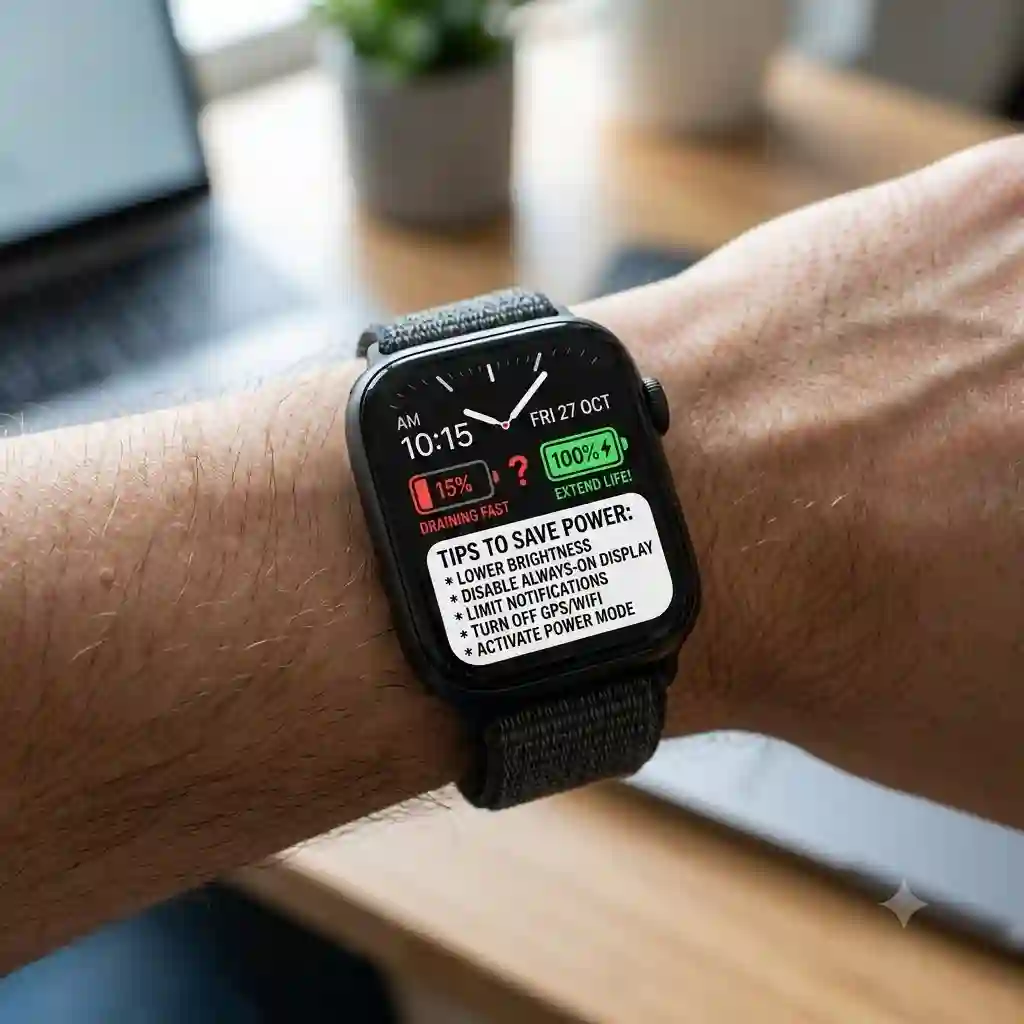
A computer like the Garmin has a lithium-ion battery. Like a smartphone, battery degradation is inevitable. By year 4, the battery life will be severely diminished, and software updates may cease.
-
10-Year Total Cost: You will likely need to replace the entire device at least once in a decade.
The Verdict: If long-term ROI is your primary goal, solar-quartz analog watches are the most financially efficient timing tools on the planet.
✨ Don’t Miss These Exclusive Deals!
🔍 Ready to secure your subaquatic timekeeper? Click on any of the highlighted products in this article to check the current availability and pricing. Elevate your underwater experience and surface safety today!
🏁 Conclusion: Time and Tide
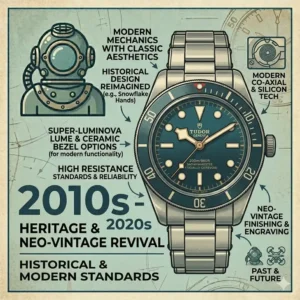
Tracking the evolution of dive watches over the decades is not just a study of gears, springs, and silicon chips; it’s a reflection of human exploration. From the murky depths of mid-century harbor clearance to the vibrant, GPS-tracked reefs of 2026, these instruments have kept us alive.
Whether you opt for the heritage-rich sweep of a Seiko mechanical, the relentless solar efficiency of a Citizen, or the data-heavy dominance of a Garmin wrist-computer, the right choice comes down to honesty about your lifestyle. Respect the ocean, maintain your gear diligently, and always dive with a backup.
❓ Frequently Asked Questions
❓ What is the most important feature of a dive watch?
✅ The unidirectional bezel is the most critical feature. It tracks your elapsed time underwater. It only rotates counter-clockwise so that if it is accidentally bumped, it will indicate you have been underwater longer than you actually have, ensuring you surface safely…
❓ Can I wear a 100m dive watch in the ocean?
✅ Yes. A true 100m water-resistance rating is perfectly fine for snorkeling, swimming, and shallow recreational SCUBA diving. However, for deeper dives or high-impact water sports (like jet skiing), a 200m rating is strongly recommended…
❓ Why do dive watches have helium escape valves?
✅ Helium escape valves (HEV) allow tiny helium molecules to exit the watch case during decompression in a dry hyperbaric chamber. This prevents the crystal from blowing off. It is exclusively useful for commercial saturation divers, not recreational SCUBA divers…
❓ How often should I get my dive watch pressure tested?
✅ If you dive frequently or swim in chlorinated pools, you should have the gaskets inspected and pressure tested annually. Chlorine and salt water degrade the rubber O-rings over time, compromising the watertight seal…
❓ Do military divers still use mechanical dive watches?
✅ Mostly no. Modern military and tactical divers primarily use digital dive computers and rugged digital G-Shocks for mission profiles. However, mechanical watches are sometimes kept as EMP-proof, battery-independent analog backups…
📚 Recommended for You
- 5 Ways How Quartz Watches Changed the Industry Forever in 2026: The Innovation Revolution
- Should You Invest in Vintage Watches? 7 Power Tips for Profits in 2026
- 7 Most Underrated Swiss Watch Brands That Smart Buyers Are Discovering
Disclaimer: This article contains affiliate links. As an Amazon Associate, I earn from qualifying purchases. If you purchase products through these links, we may earn a small commission at no additional cost to you.
✨ Found this helpful? Share it with your friends! 💬🤗