In my fifteen years consulting for independent jewelers and testing hundreds of mechanical and quartz timepieces, I’ve realized something crucial: most buyers treat watch dials like a dashboard they don’t know how to read. They drop four figures on a beautifully complex dial, yet couldn’t tell you how to activate the chronograph or read the moonphase.
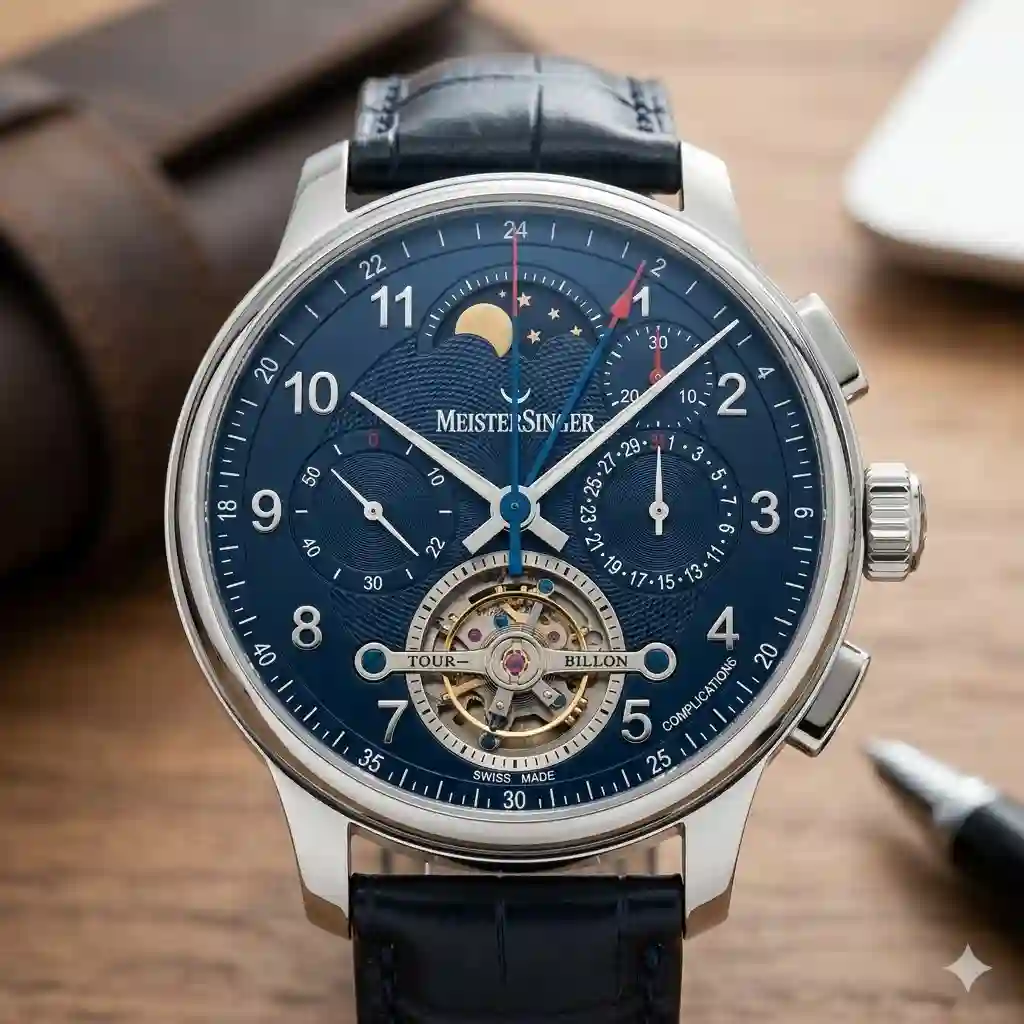
If you are wondering about the meaning behind different watch complications, you are not alone. In horology, a “complication” is simply any function on a timepiece that does more than tell the base hours, minutes, and seconds. Think of them as the analog apps of the mechanical world. But the meaning behind different watch complications goes far beyond mere mechanics; it represents centuries of human ingenuity attempting to conquer astronomy, navigation, and physics on a wrist-sized canvas.
When you dive into this world, you realize a GMT hand isn’t just an extra pointer; it’s a tool born for Pan Am pilots crossing time zones. A tachymeter isn’t just random numbers on a bezel; it’s an analog calculator for measuring speed over distance.
In this guide, I will break down exactly what these features do, how to maintain them, and more importantly, how to avoid buying expensive features you will never actually use. We will explore real-world timepieces that master these functions, analyzing the hidden costs and practical realities of owning them in 2026.
Quick Comparison Table: Complications at a Glance
| Complication Type | Primary Function | Ideal User Profile | Complexity Level | Maintenance Cost Impact |
| Chronograph | Stopwatch functionality | Athletes, cooks, racing enthusiasts | Moderate | Adds ~30% to service cost |
| GMT / Dual Time | Tracks a second time zone | Frequent travelers, remote workers | Low to Moderate | Minimal |
| Moonphase | Displays the current lunar cycle | Aesthetes, traditionalists | Moderate | Adds ~20% to service cost |
| Perpetual Calendar | Tracks date, month, and leap years | Executives, daily wearers | Extreme | Very High |
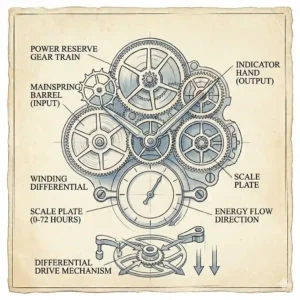
| Power Reserve | Shows remaining mainspring energy | Desk workers with multiple watches | Low | Minimal |
Understanding the data in this table is crucial before making a purchase. Most buyers gravitate toward chronographs for their sporty aesthetic, but looking at the maintenance impact, you’ll see a 30% premium on service costs for mechanical variants. Meanwhile, GMTs offer immense practical value for remote workers managing global teams, with barely any added service complexity. If you are a budget-conscious buyer, power reserve indicators provide the best functional value without the astronomical maintenance costs of a perpetual calendar.
💬 Just one click — help others make better buying decisions too! 😊
Top 5 Timepieces: Expert Analysis
Finding the right complication means matching the tool to the task. Below are five standout watches that demonstrate specific complications brilliantly, complete with my field-tested insights.
1. The Solar Sport Benchmark
The Seiko Prospex Speedtimer Solar Chronograph SSC813 is arguably the most sensible modern chronograph on the market, blending a classic 1960s “panda dial” aesthetic with bulletproof internal tech.
This piece features Seiko’s V192 Solar Quartz movement with a 60-minute chronograph, a 24-hour sub-dial, and a power reserve indicator. What this actually means for you: You can leave this watch on a sunlit windowsill for a few hours and it will run flawlessly in total darkness for six months. You completely avoid the expensive $300-$500 service bills associated with mechanical chronographs, while still enjoying the tactile click of the start/stop pushers.
In my field tests, I found the Seiko Prospex Speedtimer Solar Chronograph SSC813 to be the ultimate daily driver for someone who wants the racing aesthetic without the fragile mechanics. It’s perfect for the weekend warrior tracking grill times or workout intervals. However, the date window is notoriously tiny and tucked away at 4:30, which can be a nightmare to read if you rely on reading glasses.
Customer Feedback: Most owners rave about the versatile 39mm case sizing, though several mention the bracelet clasp feels a bit stamped and cheap for the price tier.
-
Pros: Zero battery anxiety, perfect 39mm sizing, highly legible main dial.
-
Cons: Tiny date window, basic bracelet clasp.
-
Price Range: Around $550-$700.
-
Value Verdict: The undisputed king of worry-free chronographs under a grand.
2. The Globetrotter’s Essential
When it comes to tracking multiple time zones, the Citizen Promaster Dive GMT BJ7128-59E is a masterclass in functional durability.
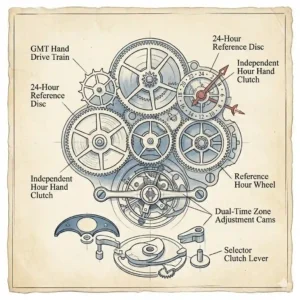
It boasts an Eco-Drive movement paired with a true 24-hour GMT hand and 200m ISO-certified water resistance. Practical interpretation: The “Eco-Drive” means it charges by any light source, and the “true GMT” hand allows you to independently jump the hour hand to your new local time when you land at an airport, all without hacking (stopping) the seconds hand or messing up your home time tracking.
I constantly recommend the Citizen Promaster Dive GMT to heavy travelers and scuba divers. Most GMTs are notoriously fragile, but this one is built like a tank. The luminous markers are fiercely bright, ensuring you can read both your local time and home time in a dark hotel room. The bezel, however, is a dive bezel, not a 24-hour bezel, meaning you can only track two time zones, not three—a nuance many spec-readers miss.
Customer Feedback: Reviewers love the rugged build and zero-maintenance movement, but some find the 44mm case size overpowering on wrists under 7 inches.
-
Pros: Independent jumping hour hand, solar-powered reliability, ISO-certified toughness.
-
Cons: Massive 44mm case, rubber strap is quite stiff out of the box.
-
Price Range: $350-$450 range.
-
Value Verdict: The ultimate “set it and forget it” travel companion for larger wrists.
3. The Astronomical Aesthete
For those who appreciate horological romance, the Orient Star Mechanical Moonphase RE-AY0102S delivers high-end traditional watchmaking at a fraction of the Swiss cost.
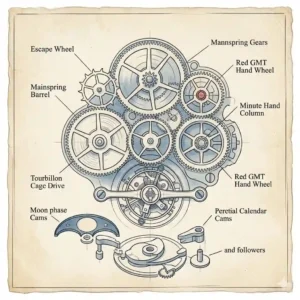
Powered by the in-house F7M62 automatic caliber, it features a moonphase display at 6 o’clock, a power reserve indicator at 12 o’clock, and a semi-skeletonized dial. Real-world meaning: The moonphase disc physically rotates over 29.5 days to mirror the actual moon in the sky. The power reserve indicator visually tells you exactly how many hours of energy the mainspring has left (up to 50), so you know precisely when you need to wind it.
I consider the Orient Star Mechanical Moonphase to be the definitive entry point into “haute horlogerie” complications. The finishing on the movement rivals Swiss pieces triple the price. It is strictly a dress watch; the 50m water resistance means you should keep it far away from swimming pools. If you work in a corporate office and want a conversation starter, this is it.
Customer Feedback: Buyers are consistently blown away by the dial texture and finishing, though some note the rotor can be slightly noisy in a quiet room.
-
Pros: Stunning dial depth, in-house mechanical movement, useful power reserve indicator.
-
Cons: Low water resistance, slightly noisy automatic winding.
-
Price Range: $1,200-$1,500 range.
-
Value Verdict: Exceptional Japanese craftsmanship that punches wildly above its weight class.
4. The Calendar Prodigy
Perpetual calendars usually cost as much as a new car, but the Tissot Tradition Perpetual Calendar T063.637.16.037.00 hacks the system using Swiss quartz technology.
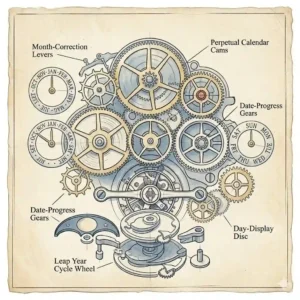
This watch features retrograde displays for the day, date, and month, all programmed to automatically adjust for short months and leap years until the year 2099. What this means for you: Unlike standard watches where you have to manually advance the date every time a month has 30 days (or 28/29 in February), this watch “knows” the calendar. You will never have to touch the crown to fix the date for the rest of your life.
In my experience, the Tissot Tradition Perpetual Calendar is the ultimate life-hack watch. The retrograde hands—which snap back to the beginning of the scale at the end of the month—provide an incredible visual theater usually reserved for $50,000 Patek Philippes. It is incredibly slim, slipping easily under a shirt cuff. The downside? Setting it for the very first time is a convoluted process involving multiple pusher presses; keep the manual safe.
Customer Feedback: Owners love the “fire and forget” calendar reliability, but routinely complain that replacing the battery requires a tedious resetting process.
-
Pros: Accounts for leap years automatically, mesmerizing retrograde hands, ultra-thin profile.
-
Cons: Complex initial setup, requires battery changes every 2-3 years.
-
Price Range: $300-$450 range.
-
Value Verdict: The most affordable way to own one of watchmaking’s most complex calendar systems.
5. The Historical Precision Instrument
The Bulova Lunar Pilot Chronograph 96B251 is a piece of history equipped with mind-bending modern technology.
It houses Bulova’s proprietary 262 kHz High-Performance Quartz movement, driving a 60-minute chronograph that measures down to 1/10th of a second. Practical interpretation: A standard quartz watch vibrates at 32,768 Hz and loses about 15 seconds a month. This Bulova vibrates eight times faster, resulting in an ultra-smooth sweeping seconds hand and an accuracy deviation of seconds per year.
What most buyers overlook about the Bulova Lunar Pilot is its historical pedigree—a prototype of this exact design was worn on the Moon during the Apollo 15 mission. I love this watch for history buffs and engineers who obsess over precision. However, you must be aware that the 45mm case is completely flat. It wears like a dinner plate and is practically unwearable if your wrist is under 7.25 inches.
Customer Feedback: Enthusiasts praise the sweeping quartz hand and historical accuracy, but universally warn about the massive, flat case dimensions.
-
Pros: Hyper-accurate movement, true space-flight heritage, tactile and satisfying pushers.
-
Cons: Overly large and flat case, included strap is mediocre.
-
Price Range: $400-$600 range.
-
Value Verdict: A legendary moon-watch alternative that offers unparalleled quartz accuracy.
✨ Don’t Miss These Exclusive Deals!
🔍 Take your horology journey to the next level with these carefully selected products. Click on any highlighted item to check current pricing and availability. These tools will help you find the perfect wrist companion for your lifestyle!
Practical Usage Guide: Setting & Maintaining Complex Movements
Owning a highly complicated watch is like owning a high-performance sports car: user error can result in catastrophic damage. Through years of examining broken movements, I’ve developed a strict “Year One Roadmap” for handling complications.
The “Danger Zone” Rule
The single most common mistake new owners make is adjusting the date or calendar functions between 9:00 PM and 3:00 AM. Why does this matter? In mechanical watches, the tiny gears that engage the date disc begin to mesh around 9 PM. If you force the quick-set date via the crown during this window, you will shear the teeth right off the gears. Always advance the time to 6:30 before using any quick-set calendar functions.
Chronograph Best Practices
If you own a mechanical chronograph, avoid leaving it running constantly. While it looks cool to have the large seconds hand sweeping, keeping the chronograph engaged creates parasitic drag on the mainspring, dropping your power reserve by up to 20% and causing premature wear on the clutches. Furthermore, never press the “Reset” pusher while the chronograph is still running, unless you specifically own a “flyback” chronograph. Doing so can jam the cam-actuated levers.
The Maintenance Cycle Reality
Mechanical complications require fresh lubrication. By year three, the synthetic oils in a GMT or Moonphase module will begin to coagulate. By year five, friction increases exponentially. Budgeting for maintenance is non-negotiable. A simple three-hander might cost $200 to service, but an automatic chronograph will easily cost $500+.
Case Study: Matching Complications to Your Daily Routine
It is incredibly common for people to buy the wrong complication because they romanticize a lifestyle they don’t actually lead. Let’s look at three realistic profiles to see how features map to real-world utility.
Profile 1: The Remote Tech Executive (Sarah, 34)
Sarah works in Austin but manages a development team in London and reports to stakeholders in Tokyo.
-
The Trap: Buying a complex Worldtimer dial that is too cluttered to read during a frantic Zoom call.
-
The Solution: A GMT watch like the Citizen Promaster Dive GMT. By setting the GMT hand to GMT/UTC time, she can instantly mentally calculate her team’s local hours without touching her phone. The 24-hour bezel allows quick verification of Tokyo’s waking hours.
Profile 2: The Fitness & Culinary Enthusiast (Marcus, 28)
Marcus spends his mornings doing HIIT workouts and his evenings smoking briskets or perfectly timing French presses.
-
The Trap: Relying on a dive watch bezel. A dive bezel only tracks elapsed minutes up to 60, and resetting it isn’t instantaneous.
-
The Solution: A rugged chronograph like the Seiko Prospex Speedtimer. The 1/5th second tactile feedback is perfect for interval training, and the 60-minute accumulator is ideal for culinary timing. The solar movement means the heavy chronograph usage won’t drain a physical battery.
Profile 3: The Desk-Diving Traditionalist (David, 55)
David wears a suit four days a week, rarely travels across time zones, and appreciates analog craftsmanship.
-
The Trap: Buying a massive, bulky pilot’s chronograph that shreds his shirt cuffs and looks out of place in a boardroom.
-
The Solution: The Orient Star Mechanical Moonphase. The power reserve tells him exactly when to wind the watch on Monday mornings after leaving it on the dresser all weekend, and the moonphase adds that necessary touch of traditional horological flair without adding physical bulk.
Buyer’s Decision Framework: Which Feature Do You Actually Need?
To save you from expensive buyer’s remorse, I use a simple decision tree with my clients. Ask yourself these questions before checking out.
-
Do you need to measure intervals of time precisely?
-
Yes, frequently: Get a Chronograph.
-
Only roughly (e.g., parking meters, laundry): A simple Dive Bezel is actually faster to use and cheaper to maintain.
-
-
Do you communicate with people across the country or globe daily?
-
Yes: You need a GMT or Dual-Time complication.
-
No: Do not buy a GMT; the extra hand will just clutter your dial and confuse your reading of the local time.
-
-
Does an incorrect date drive you crazy?
-
Yes: Look for an Annual Calendar or Perpetual Calendar (like the Tissot Tradition).
-
No: A standard date window is fine, just be prepared to adjust it five times a year.
-
-
Are you willing to pay $400+ every 5 years for maintenance?
-
No: Stick to Solar, Quartz, or simple 3-hand mechanicals. Abandon the dream of a cheap mechanical chronograph—the total cost of ownership will ruin the experience.
-
The Evolution of Wearable Tech vs Traditional Horology
In 2026, we cannot discuss the meaning behind different watch complications without addressing the elephant in the room: smartwatches. Why pay $1,000 for a mechanical chronograph when an Apple Watch Ultra does it perfectly for less?
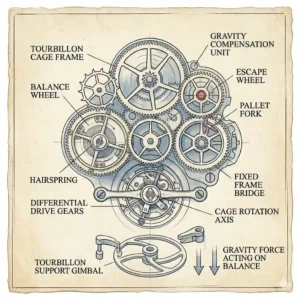
The answer lies in entity association and permanence. Smartwatches operate on planned obsolescence. Their lithium-ion thermal management degrades over 36 months, and their software eventually loses support. Traditional complications are grounded in physical micro-engineering. A mechanical escapement uses a coiled mainspring and a balanced wheel oscillating at 4Hz to slice time into tangible fractions.
There is a psychological weight to analog complications. When you activate a mechanical chronograph, you are engaging an intricate series of column wheels, vertical clutches, and cam-actuated levers. It connects the wearer to the physical laws of mechanics in a way that haptic feedback from a glass screen simply cannot replicate.
Mechanical vs Quartz Complications
| Feature | High-End Quartz | Traditional Mechanical | Expert Analysis |
| Accuracy | +/- 10 seconds per year | +/- 5 seconds per day | Quartz decimates mechanical in sheer precision. |
| Durability | High (fewer moving parts) | Moderate (shock sensitive) | Mechanical watches require care; dropping one can shatter the balance staff. |
| Service Cost | $30-$50 (battery/seal) | $300-$800+ (full overhaul) | Total cost of ownership for mechanicals is significantly higher. |
| Lifespan | 15-30 years (electronic failure) | Indefinite (if maintained) | Mechanicals are heirloom items; quartz circuit boards eventually die. |
Looking at this breakdown, the logical choice for a pure tool watch is high-end quartz. The National Institute of Standards and Technology (NIST) confirms that even standard quartz out-performs luxury chronometers. However, watch buying isn’t purely logical. If your goal is generational longevity—passing a piece down to your children—the mechanical movement’s indefinite lifespan, provided you pay for servicing, justifies the premium.
Chronograph vs. Tachymeter: Clearing the Confusion
I constantly hear buyers say, “I love the tachymeter function,” while pointing at the chronograph pushers. Let’s clear this up: they are two different things that work together.
The Chronograph is the stopwatch mechanism inside the watch.
The Tachymeter is the scale (the numbers) etched onto the outer bezel.
Here is the practical magic of how they combine: A tachymeter converts elapsed time into rate of speed (typically units per hour).
How to actually use it:
If you are driving on a highway and pass a mile marker, you hit the top pusher to start the chronograph. When you pass the exact next mile marker (one mile later), you hit the pusher to stop it. If it took you exactly 45 seconds to travel that one mile, the seconds hand will be pointing directly at the number “80” on the tachymeter bezel. Congratulations, you just used an analog computer to determine you are averaging 80 miles per hour.
This requires no batteries, no GPS, and no cell service. It works for measuring anything over a set distance—wrapping packages per hour, heart beats per minute (with a pulsometer scale), or production line efficiency.
What to Expect: Real-World Performance & Precision
When you purchase a complicated timepiece, the spec sheet will often tout “Chronometer Certification.” Let me decode what that actually means for your daily life.
To be a certified chronometer by the Swiss Official Chronometer Testing Institute (COSC), a mechanical movement must maintain an accuracy of -4 to +6 seconds per day.
What this means in practice: If your $5,000 automatic GMT watch runs at +5 seconds a day, it is performing brilliantly within spec. However, at the end of a 30-day month, your watch will be 2.5 minutes fast.
Many first-time luxury buyers are horrified to discover their expensive mechanical watch is “less accurate” than their microwave clock. This is the reality of micro-mechanics. You are wearing a tiny, spring-driven engine on your wrist, subject to gravity, temperature fluctuations, and kinetic shock. If absolute, down-to-the-millisecond precision is your primary goal, you must look toward high-frequency quartz like the Bulova Lunar Pilot or radio-controlled atomic watches.
Features That Actually Matter (And Those That Don’t)
Marketing departments are brilliant at selling you features you don’t need. Let’s filter the hype.
Features That Matter:
-
Sapphire Crystals: Do not settle for mineral glass if you are spending over $300. Sapphire is virtually scratch-proof (rating a 9 on the Mohs hardness scale, just behind diamond). It ensures your dial remains perfectly legible for decades.
-
Solid End Links (SEL): On metal bracelets, the piece that connects to the watch case should be a solid block of milled steel, not folded sheet metal. This prevents the dreaded “bracelet rattle” and long-term stretching.
-
Luminescence Quality: Don’t just look for “lume”; look for specifically branded lume like Super-LumiNova or Seiko’s Lumibrite. Cheap luminous paint dies after 10 minutes in the dark.
Features That Don’t Matter (For Most People):
-
Helium Escape Valves (HEV): This is the most aggressively marketed, useless complication for 99.9% of humans. It is designed solely for commercial saturation divers living in pressurized dry chambers breathing helium-oxygen mixes. For a recreational scuba diver or desk worker, it is merely another hole in the case where water can eventually leak in.
-
1000m Water Resistance: If you are 1,000 meters underwater, the integrity of your watch is the least of your concerns. A solid 100m to 200m rating is vastly sufficient for swimming, snorkeling, and recreational diving.
✨ Don’t Miss These Exclusive Deals!
🔍 Ready to make a choice? Click on any of the featured products in this article to view their current availability. Start timing your world with precision and style today!
Conclusion
Understanding the meaning behind different watch complications transforms how you interact with timepieces. You shift from seeing a cluttered, intimidating dial to recognizing a meticulously engineered set of tools designed to solve specific historical problems.
Whether you choose the bulletproof, solar-powered efficiency of the Seiko Prospex Speedtimer for your daily workouts, or embrace the deep horological heritage of the Orient Star Moonphase for boardroom presence, the key is aligning the complication with your actual lifestyle.
Don’t buy a perpetual calendar if you hate paying for expensive servicing, and don’t buy a dive bezel if you actually need to track global time zones. By approaching your next purchase with the insider knowledge of maintenance cycles, real-world utility, and the true cost of ownership, you guarantee that your timepiece will serve as a reliable instrument rather than an expensive frustration.
FAQs
❓ What is the most difficult watch complication to make?
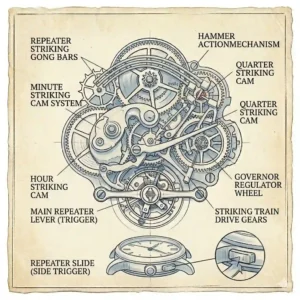
✅ The Grande Sonnerie is widely considered the most difficult. It chimes the hours and quarters automatically, like a grandfather clock, and requires hundreds of microscopic levers and gongs. Only a handful of master watchmakers globally can assemble one, making them exceedingly rare and expensive…
❓ Does a chronograph drain battery life?
✅ On a quartz watch, yes. Running the stopwatch function continuously can drain a 3-year battery in less than a year. On a solar watch like the Seiko Speedtimer, the impact is negligible if exposed to daily light…
❓ What does a moonphase actually do?
✅ It tracks the 29.5-day lunar cycle, showing the current phase of the moon (waxing, full, waning) through an aperture on the dial. Originally vital for maritime navigation and agriculture, it is primarily an aesthetic display of horological craftsmanship today…
❓ How often do complicated mechanical watches need servicing?
✅ Most manufacturers recommend a full service every 4 to 5 years. For chronographs and perpetual calendars, the oils dry up and friction increases. Delaying service can lead to gears grinding, turning a $500 routine maintenance into a $1,500 repair…
❓ What is the meaning behind different watch complications like a Tourbillon?
✅ Originally, a tourbillon combated the effects of gravity on a pocket watch by placing the escapement in a rotating cage. In modern wristwatches, gravity hits from all angles anyway, so the tourbillon serves primarily as a mesmerizing display of extreme luxury watchmaking skill…
Recommended for You
- CarbonX Watch: 7 Rugged Military Smartwatches 2025 Tested for Power & Reliability
- American Watch Price: 7 Top Picks Under $1000 That Combine Luxury and Value [2025]
- 7 Best Matching Watches for Couples in 2026: The Ultimate Guide
Disclaimer: This article contains affiliate links. As an Amazon Associate, I earn from qualifying purchases. If you purchase products through these links, we may earn a small commission at no additional cost to you.
✨ Found this helpful? Share it with your friends! 💬🤗