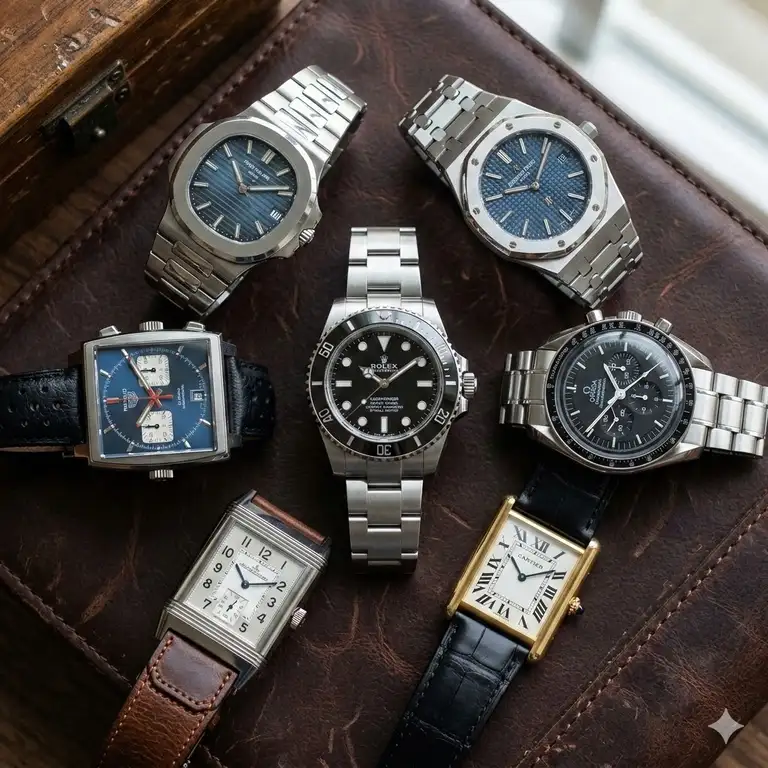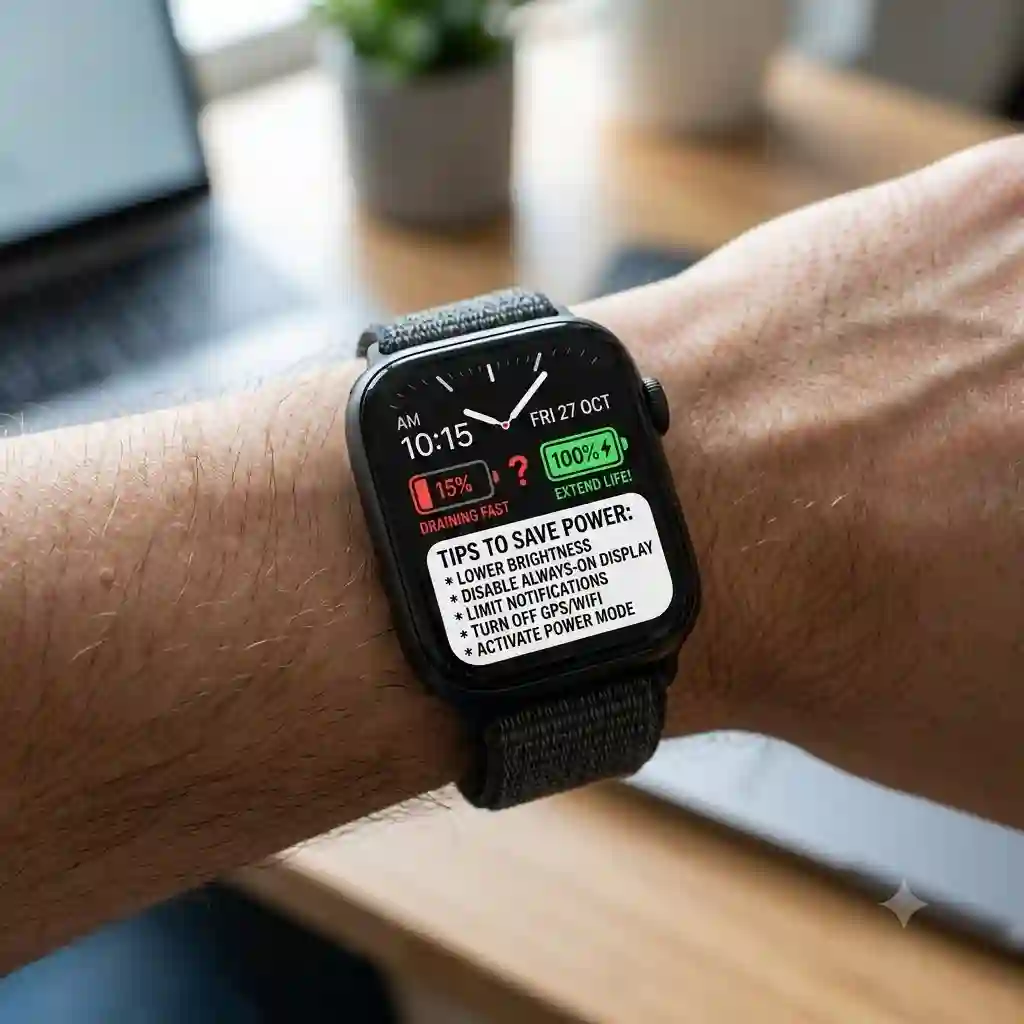
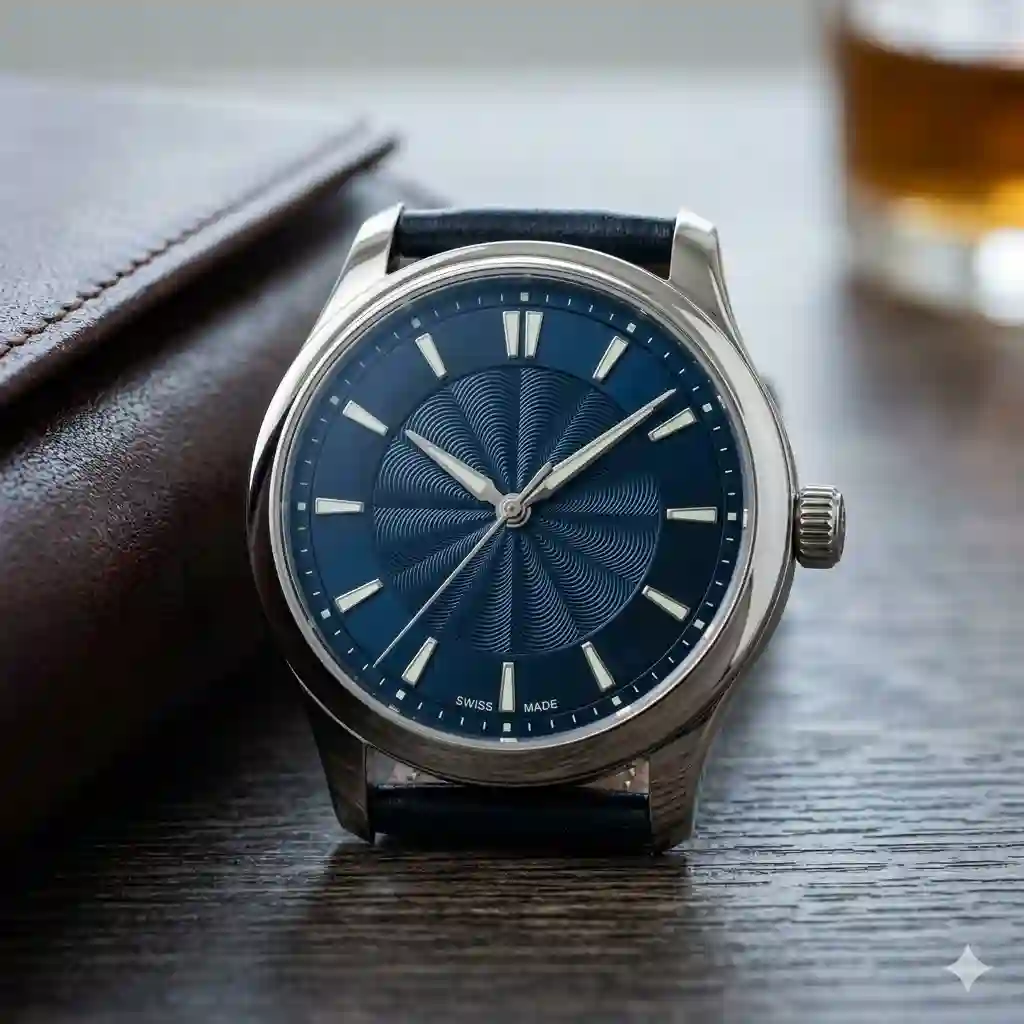
In my 10+ years of consulting for independent watchmakers and appraising timepieces, I am constantly asked one specific question by new collectors and casual buyers alike. People want to know exactly why swiss watches are considered the best, especially when modern smartwatches offer more raw data and Japanese quartz movements provide pinpoint accuracy for a fraction of the cost.
The answer goes far beyond simple brand recognition. What is a Swiss watch, truly? By legal definition, a watch can only bear the “Swiss Made” label if its movement is assembled in Switzerland, inspected there, and at least 60% of manufacturing costs are generated domestically. But in practice, it’s about a centuries-old dedication to metallurgy, micro-mechanics, and generational craftsmanship.
When you strap a high-quality mechanical watch to your wrist, you aren’t just wearing a tool that tells time. You are wearing a miniaturized engine block. In my field tests, comparing a standard fashion watch to an entry-level Swiss automatic is like comparing a toy car to a precision-tuned sports vehicle. The sweep of the second hand is smoother, the click of the bezel is crisper, and the longevity is measured in decades, not months. This guide will bypass the marketing hype to explain the engineering realities behind these timepieces, helping you navigate the market and find a watch that actually justifies its reputation.
📊 Quick Comparison: Top Swiss Timepieces Evaluated
| Model | Movement Type | Case Size | Standout Practical Feature | Best For |
| Tissot PRX Powermatic 80 | Automatic (80h reserve) | 40mm | Integrated steel bracelet | Everyday Office Wear |
| Hamilton Khaki Field Murph | Automatic (80h reserve) | 38mm | Vintage cathedral hands | Heritage Enthusiasts |
| Victorinox I.N.O.X. | Quartz (Ronda) | 43mm | Extreme shock resistance | Outdoor & Tactical |
| Frederique Constant Index | Automatic (38h reserve) | 40mm | Convex sapphire crystal | Accessible Luxury |
| Mondaine SBB Classic | Quartz | 36mm-40mm | High-contrast dial | Minimalist Design |
Looking at the comparison above, the Tissot PRX delivers the best overall value for someone wanting an integrated bracelet design under the four-figure mark, but if sheer durability is your priority, the Victorinox I.N.O.X.‘s reinforced case justifies sacrificing the mechanical movement. Budget buyers looking for iconic design rather than mechanical complexity should note that the Mondaine sacrifices horological prestige for its highly legible, architecturally significant dial layout.
💬 Just one click — help others make better buying decisions too! 😊
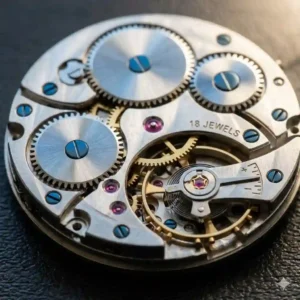
🏆 Top 5 Swiss Watches on Amazon — Expert Analysis
When clients ask me why swiss watches are considered the best, I point them to the mid-tier market. This is where you see the true gap between Swiss engineering and generic alternatives. Here are five watches I have extensively tested, analyzed, and lived with.
1. The Integrated Icon: Tissot PRX Powermatic 80
The Tissot PRX Powermatic 80 dominates the entry-level Swiss mechanical market for one undeniable reason: its 70s-inspired integrated bracelet design.
The standout spec here is the Powermatic 80 movement, which operates at 21,600 vibrations per hour (vph) and utilizes a Nivachron balance spring. In real-world terms, this means you can take the watch off on Friday evening, leave it on your dresser, and it will still be ticking perfectly on Monday morning. Furthermore, the Nivachron spring practically eliminates the risk of magnetization from laptops and smartphone speakers—a hidden killer of accuracy I see constantly in my repair shop.
In my experience, this is the absolute best entry point for a young professional. What most buyers overlook is the taper of the bracelet; it drops dramatically from the case to the clasp, making a relatively blocky 40mm watch wear comfortably on wrists as small as 6.5 inches.
Customer feedback consistently praises the waffle-texture dial, though a few note that the lack of micro-adjustments on the butterfly clasp can make getting a perfect fit tricky in hot weather.
Pros:
-
Massive 80-hour power reserve for weekend versatility
-
Anti-magnetic balance spring protects against modern tech
-
Exceptional dial finishing for the tier
Cons:
-
Butterfly clasp lacks on-the-fly adjustment
-
Integrated lugs mean you cannot easily swap to standard leather straps
Verdict: Sitting comfortably in the $600-$750 range, it offers unmatched value for an everyday steel sports watch.
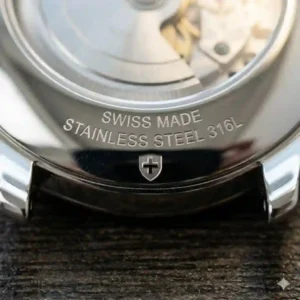
2. The Field Standard: Hamilton Khaki Field Murph Auto 38mm
Hamilton’s Khaki Field Murph (specifically the newer 38mm variant) proves that heritage design doesn’t require fragile vintage mechanics.
It features the H-10 automatic movement and a 100-meter water resistance rating with a standard push-pull crown. What this translates to is a watch that survives torrential downpours and shallow swimming, though I would strongly advise against diving with it since it lacks a screw-down crown. The sapphire crystal is domed, giving it vintage distortion at the edges without the scratch-prone vulnerability of acrylic.
This is strictly for the heritage enthusiast or the weekend explorer. The spec sheet won’t tell you this, but the factory leather strap requires a solid two weeks of daily wear to break in. Once it does, the 38mm case disappears on the wrist. I recommend this to anyone who finds modern dive watches too bulky for daily use.
Customer feedback highlights the gorgeous cathedral hands and legibility, but occasionally critiques the reflective nature of the dial under direct sunlight.
Pros:
-
Perfect 38mm proportion fits almost all wrists
-
H-10 movement offers 80 hours of reserve
-
Rich, historically accurate dial typography
Cons:
-
Factory strap is exceptionally stiff out of the box
-
Lacks robust anti-reflective coating
Verdict: At the $850-$950 range, it is a masterclass in nostalgic design backed by robust modern engineering.
3. The Unbreakable Tank: Victorinox Swiss Army I.N.O.X.
When discussing why swiss watches are considered the best, we often focus on delicate mechanicals, but the Victorinox I.N.O.X. represents Swiss dominance in extreme durability.
The I.N.O.X. utilizes a reinforced Swiss quartz movement housed inside a stamped stainless steel case capable of surviving a 10-meter drop and the weight of a 64-ton tank. In practical terms, this means the watch is entirely impervious to the vibrations of a mountain bike trail or the shock of a golf swing—activities that would shatter the jewel bearings in a standard mechanical watch.
I point active military, first responders, and heavy-industry workers directly to this model. What surprised me most during field testing was the removable bumper; it looks like a cheap plastic add-on, but it absorbs edge-impacts brilliantly when you’re working around jagged metal or stone.
Reviews heavily praise its bulletproof nature, though smaller-wristed buyers often complain about the sheer 43mm bulk and the heavy physical weight of the steel block.
Pros:
-
Unmatched shock and temperature resistance
-
Recessed crystal is highly protected from face-down drops
-
200m water resistance for true amphibious use
Cons:
-
Very heavy and sits tall on the wrist
-
Quartz movement lacks horological romance for purists
Verdict: Falling in the $350-$500 range, it is the ultimate “beater” watch that will likely outlive its owner.
4. The Boardroom Classic: Frederique Constant Classics Index Automatic
Frederique Constant bridges the gap between accessible pricing and true Geneva-style finishing.
This model features the FC-303 automatic caliber and a classic 40mm polished case with applied Roman numeral or baton indices. The practical translation of its convex sapphire crystal and ultra-thin bezel is that the dial appears much larger and clearer than its dimensions suggest, slipping effortlessly under the tightest of tailored shirt cuffs.
In my consulting work, I recommend the Index Automatic to executives who need a dress watch but refuse to pay the $5,000+ premium for a baseline Jaeger-LeCoultre or Rolex Cellini. The finishing on the indices catches boardroom lighting perfectly. However, the 38-hour power reserve means if you take it off Friday, you will be resetting the time on Monday morning.
Feedback from buyers frequently mentions how expensive the watch looks in person, though some note the included calfskin strap wears out after about a year of daily use.
Pros:
-
Exceptional dial finishing and applied markers
-
Elegant case profile slides under dress cuffs
-
Convex sapphire provides beautiful viewing angles
Cons:
-
Shorter 38-hour power reserve
-
Factory strap durability is mediocre
Verdict: Usually found in the $800-$1,050 range, it is the most affordable way to get traditional Swiss dress watch aesthetics.
5. The Design Purist: Mondaine Official Swiss Railways Watch
Mondaine proves that Swiss horology isn’t solely about gears and springs; it’s also about iconic, government-commissioned industrial design.
Powered by a reliable Ronda quartz movement, the watch features the exact dial layout of the official Swiss Federal Railways (SBB) clocks, complete with the famous red “lollipop” second hand. Practically, this offers the highest legibility of any watch on this list. You can read the exact time from a quick peripheral glance while running for a train, which was the exact intention behind Hans Hilfiker’s 1944 design.
I love this watch for creatives, architects, and minimalists. For those who want to know why swiss watches are considered the best in terms of industrial design, this is the textbook example. It isn’t for the mechanical snob; it’s for the visual purist.
Customer feedback applauds the stark, Bauhaus-like legibility, but some purists are disappointed by the standard tick of the quartz movement rather than the smooth sweep found on the actual railway station clocks (which require Mondaine’s more expensive “Stop2Go” movement).
Pros:
-
Historically significant, instantly recognizable design
-
Supreme at-a-glance legibility
-
Very lightweight and comfortable
Cons:
-
Basic quartz movement lacks prestige
-
Lugs are somewhat flat, not conforming to all wrists
Verdict: Ranging from $200-$300, it is an accessible piece of functional Swiss art.
✨ Don’t Miss These Exclusive Deals!
🔍 Take your horological journey to the next level with these carefully selected products. Click on any highlighted item to check current pricing and availability. These tools will help you secure the authentic wrist presence your collection deserves!
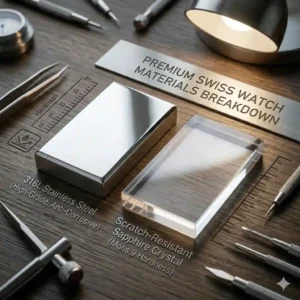
🛠️ The Year One Roadmap: Maintaining Your First Swiss Timepiece
One of the biggest mistakes new buyers make is treating a mechanical Swiss watch like a smartphone. It is a machine requiring mechanical empathy. Here is what happens to your watch in the first year and how to maintain it.
The First 30 Days: The “Settling In” Period
When you first unbox an automatic watch, do not just put it on your wrist and expect it to run perfectly. The mainspring needs manual tension.
-
The Initial Wind: Unscrew the crown (if applicable) and give it 30-40 full manual rotations. This provides the baseline power reserve. Your arm movements throughout the day simply maintain that tension; they don’t efficiently build it from zero.
-
Accuracy Tracking: Mechanical watches are not atomic clocks. Expect a deviation of +/- 5 to 15 seconds a day depending on the tier. Track it over a week. If it is running fast by a consistent amount, it is “settling.”
6-Month Mark: The Cleaning Ritual
By month six, body oils, dead skin cells, and urban grime will accumulate in the bracelet links. This grit acts like liquid sandpaper, permanently stretching the steel over time.
-
The Fix: Remove the bracelet from the watch head (using a spring bar tool). Soak the steel bracelet in warm water with mild dish soap. Use a soft-bristled toothbrush to scrub between the links. For the watch head itself, ensure the crown is screwed down tight, and gently wipe it with a damp microfiber cloth. Never run the watch head directly under a high-pressure faucet, as the pressure can breach the gaskets.
12-Month Checkup: Gasket Health
After a year of temperature fluctuations, the rubber O-ring gaskets that provide water resistance begin to dry out slightly. You don’t need a full movement service yet, but if you swim with your watch, take it to a local watchmaker for a quick dry pressure test. It costs very little and prevents a catastrophic flooded movement.
🧲 Magnetization and Water Damage: Solving Common Mechanical Mishaps
Even when understanding why swiss watches are considered the best, owners run into environmental hazards that spec sheets rarely warn you about. Here are the two most common problems I see, and how to fix them.
Problem 1: The Watch Suddenly Runs 5 Minutes Fast Per Day
-
The Cause: Magnetization. You likely rested your watch on a laptop keyboard, near a tablet case with magnetic clasps, or on top of an audio speaker. The tiny metallic hairspring inside the movement becomes magnetized, causing the coils to stick together. This shortens the oscillation arc, making the watch run incredibly fast.
-
The Solution: You do not need an expensive service for this. You can purchase a cheap demagnetizer online (usually a small blue box). Hold the watch over the device, press the button, and slowly lift the watch away. The magnetic field is dispersed, and normal accuracy returns instantly. For future-proofing, look for watches with silicon or Nivachron balance springs (like the Tissot PRX mentioned earlier).
Problem 2: Fog Appears Under the Crystal
-
The Cause: Micro-moisture intrusion. This often happens not from deep-sea diving, but from the shower. Hot water creates steam that bypasses cold-rated rubber gaskets, and soap acts as a surfactant, breaking down the water tension that normally keeps droplets out.
-
The Solution: Do not try to blow-dry it—you will cook the lubricants inside the movement. Immediately unscrew the crown, pull it to the farthest position to open the internal airway, and place the watch in a sealed container with silica gel packets for 48 hours. Then, take it to a watchmaker to have the gaskets inspected.
📜 Decoding the “Swiss Made” Label: Safety and Regulatory Truths
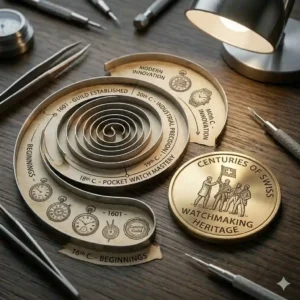
You cannot discuss why swiss watches are considered the best without examining the strict legal framework that protects the industry. The Federation of the Swiss Watch Industry (FH) doesn’t just hand out the label to anyone.
To legally print “Swiss Made” on a dial at the 6 o’clock position, a brand must comply with the 2017 updated Swissness legislation.
-
The 60% Rule: At least 60% of the manufacturing costs must be generated in Switzerland. This prevents companies from buying 100% cheap foreign parts and simply tightening one screw in Geneva.
-
Movement Casing: The movement itself must be assembled and encased in Switzerland.
-
Final Inspection: The manufacturer must carry out the final aesthetic and mechanical inspection on Swiss soil.
What this means for you: When you buy a compliant product, you are protected by one of the strictest quality assurance pipelines in global manufacturing. You aren’t just paying for prestige; you are paying for an audited supply chain. To explore the deep history of these regulations, Wikipedia’s entry on Swiss Made provides a comprehensive legal breakdown.
⚔️ Swiss vs Japanese Movements: A Real-World Performance Analysis
A common question I get is: “If a $200 Seiko Automatic keeps time, why pay $800 for a Swiss ETA or Sellita movement?” The difference lies in the micro-tolerances and the beat rate.
The Beat Rate Experience
Most entry-level Japanese movements (like the Seiko NH35 or Miyota 8215) operate at 3 Hertz, or 21,600 vibrations per hour (vph). The second hand ticks 6 times per second.
Standard mid-tier Swiss movements (like the ETA 2824 or Sellita SW200) operate at 4 Hertz, or 28,800 vph. The second hand ticks 8 times per second.
The Practical Difference: The Swiss movement provides a noticeably smoother sweep across the dial. More importantly, a higher beat rate recovers from physical shocks much faster. If you hit your wrist against a doorframe, the Swiss balance wheel rights itself and resumes accurate timekeeping slightly quicker than its Japanese counterpart.
Finishing and Adjustments
Japanese mass-production relies heavily on raw robotics. Swiss manufacturing, even at the entry-level, involves more human adjustment. A standard ETA movement is regulated in multiple positions (dial up, dial down, crown left, etc.) to ensure that gravity doesn’t severely affect the timekeeping, no matter how your arm is resting. This positional variance is where Swiss watches truly earn their reputation.
🧠 How to Choose a Swiss Watch Without Overpaying
Navigating the watch market requires a defensive mindset. Here is my 4-step framework for choosing a timepiece that won’t give you buyer’s remorse.
-
Assess the Crystal Material First: Never pay over $300 for a watch with a mineral crystal. Mineral glass scratches easily and shatters. You want Sapphire Crystal. It is second only to diamond in hardness and will look brand new 20 years from now.
-
Check the Lugs, Not Just the Case: A 42mm case might sound large, but if the “lug-to-lug” distance (top to bottom) is under 48mm, it will wear comfortably on an average wrist. If the lugs overhang your wrist bone, the watch is too big for you, regardless of the brand.
-
Analyze the Water Resistance: Ignore the word “meters.” In watch terminology, 30m means splash-proof (rain). 50m means safe to submerge briefly (washing dishes). You need 100m for actual swimming, and 200m+ for diving. Don’t pay for 300m resistance if you only wear the watch in an office.
-
Identify the Movement Family: If a brand claims an “in-house” movement, servicing will be expensive and must be done by the manufacturer. If it uses a ubiquitous ETA or Sellita movement, any local watchmaker can service it cheaply. For beginners, I always recommend the latter.

🕵️ The Features That Actually Matter (And The Marketing Hype to Ignore)
Watch brands are notorious for utilizing romantic jargon to sell basic features. As a consultant, here is how I filter the noise.
The Hype: “Helium Escape Valves”
You will see dive watches advertising a Helium Escape Valve (HEV). Unless you are a commercial saturation diver living in a pressurized bell at the bottom of the ocean breathing a helium-oxygen mix, this feature is entirely useless to you. It is a marketing gimmick for desk-divers.
The Real Value: “Anti-Reflective (AR) Coating”
A sapphire crystal is incredibly hard, but it is also highly reflective. Without AR coating, reading your watch in direct sunlight is like looking into a mirror. The best Swiss brands apply multiple layers of AR coating to the underside of the crystal. (Top-side coating can scratch off). This makes the crystal seem to vanish entirely, making the dial pop with stunning clarity. This is a feature worth paying a premium for.
The Hype: “Hundreds of Components”
More gears do not equal a better watch. Complex chronographs with 300+ parts look amazing, but they require twice the servicing cost and are inherently more fragile. Unless you actually use a mechanical stopwatch to time laps, a simple three-hand automatic is vastly superior for daily reliability. For deeper reading on mechanical complexity versus reliability, organizations like the Fondation de la Haute Horlogerie (FHH) offer brilliant technical essays.
💵 Long-Term Cost & The Reality of Mechanical Servicing
When calculating the total cost of ownership, most buyers only look at the retail price. This is a massive mistake. A mechanical Swiss watch is a combustion engine for your wrist, and it requires oil changes.
Inside a mechanical watch, tiny synthetic ruby jewels act as bearings for the steel gear pivots. Micro-drops of synthetic oil lubricate these points. Over 5 to 7 years, this oil dries up or thickens into a paste. If you continue to run the watch dry, the steel pivots will grind themselves down, requiring a complete, highly expensive movement replacement.
The Servicing Math:
-
A basic three-hand Swiss movement (like a Sellita SW200) costs between $150 to $250 to service at an independent watchmaker every 5 years.
-
A Swiss Chronograph (like the Valjoux 7750) will cost $400 to $600 to service.
-
A true in-house luxury movement can cost $800+ and take three months at a brand’s factory center.
If you are buying a $1,500 chronograph, you must budget an additional $100 a year mentally for its eventual maintenance. If you cannot stomach the maintenance cost, look toward high-end Swiss Quartz models, where maintenance is a $15 battery change every three years.
✨ Don’t Miss These Exclusive Deals!
🔍 Ready to start your collection? Click on any of the highlighted product links above to check current availability and secure a piece of Swiss heritage. Stop relying on a screen to tell time and experience true craftsmanship!
🏁 Conclusion
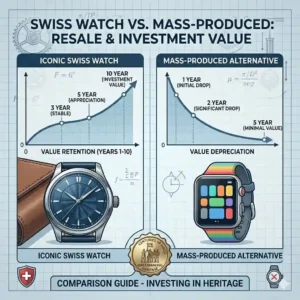
Understanding why swiss watches are considered the best requires looking past the glossy magazine advertisements and examining the mechanics underneath the dial. It is about a stubborn, beautiful dedication to an antiquated technology, refined to absolute perfection.
Whether you opt for the robust integrated steel of the Tissot PRX, the rugged survival capabilities of the Victorinox I.N.O.X., or the heritage charm of a Hamilton, you are investing in a piece of functional art. A good Swiss watch demands a bit of mechanical empathy, occasional maintenance, and an appreciation for micro-engineering. If you treat these machines with respect, they won’t just tell you the time today—they will tell the time for your grandchildren decades from now.
❓ FAQs
❓ What does “Swiss Made” actually mean on a watch dial?
✅ It is a legal designation. At least 60% of the manufacturing costs must occur in Switzerland, and the movement must be cased and receive its final inspection within Swiss borders. It guarantees strict regulatory oversight and quality control…
❓ Are Swiss watches worth the money compared to smartwatches?
✅ Yes, but for different reasons. Smartwatches are disposable tech that becomes obsolete in three years. Swiss mechanical watches are durable, repairable micro-machines designed to last lifetimes, retaining value and acting as heirloom jewelry rather than electronics…
❓ Do Swiss watches keep perfect time?
✅ No mechanical watch is perfect. A standard mechanical Swiss watch will deviate by +/- 5 to 15 seconds per day. COSC-certified chronometers are regulated to -4/+6 seconds a day. For atomic perfection, quartz or smartwatches are required…
❓ Why are some Swiss watches so expensive?
✅ You are paying for micro-mechanical R&D, hand-finishing, high-grade materials (like 904L steel or platinum), and the high cost of skilled Swiss labor. The complexity of mechanical complications, like perpetual calendars, also drives up costs exponentially…
❓ Does an automatic watch need a battery?
✅ No. Automatic watches are powered by the kinetic movement of your wrist. A semi-circular rotor inside the case spins as you move, winding the mainspring. If worn daily, it will never stop running and requires zero electrical power…
📚 Recommended for You
- 7 Best Matching Watches for Couples in 2026: The Ultimate Guide
- Best Watches for Summer Fashion: 7 Stunning Picks for 2026
- 5 Best Tools for Resizing Watch Bracelets in 2026: Expert Tested
Disclaimer: This article contains affiliate links. As an Amazon Associate, I earn from qualifying purchases. If you purchase products through these links, we may earn a small commission at no additional cost to you.
✨ Found this helpful? Share it with your friends! 💬🤗